

This story was updated on April 17 at 8:23 a.m.
Introduction
The Center for the American Experience (CAE), a new center promising “nonpartisan dialogue and fearless debate,” is coming to The New School next fall.
The center is co-directed by Natalia Mehlman Petrzela, professor of history at The New School for Social Research and Eugene Lang College of Liberal Arts, and Julia Sonnevend, associate professor of sociology and communications at NSSR and Lang.
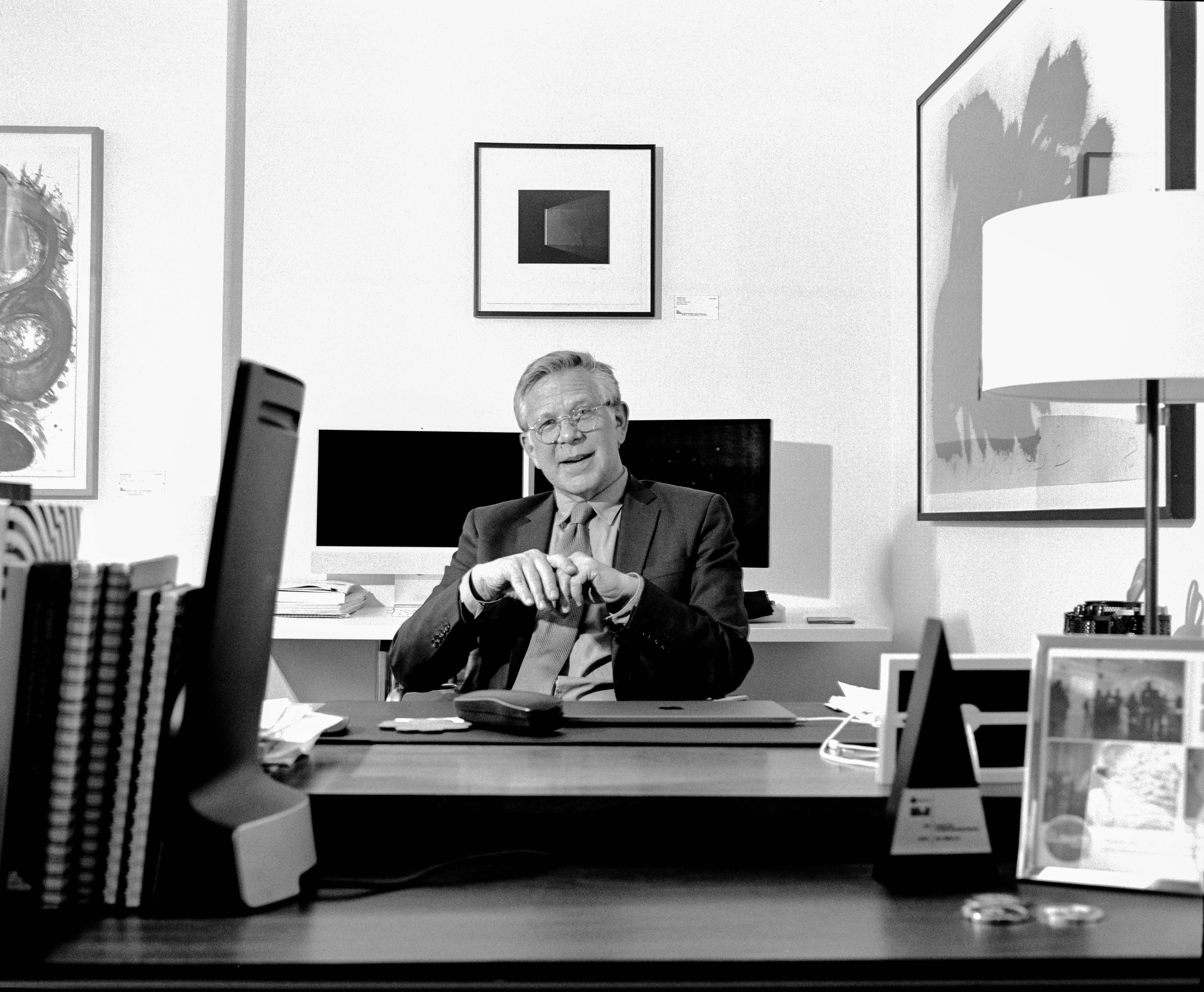
While Petrzela and Sonnevend are the daily leaders of CAE, the center is overseen by Richard Kessler, provost and executive vice president for academic affairs.
CAE is “faculty-initiated and faculty-led” and entirely externally funded, Kessler wrote in a Feb. 25 email announcement.
With an official launch date scheduled for Sept. 9, CAE comes amid escalating financial and identity crises at The New School, and turmoil across the U.S. and globe.
Since students began circulating a planning document last December, backlash has been almost immediate. Ryder Glickman, vice chair of the University Student Senate, said he opposes the center. Other students and faculty say its undisclosed funding and the views of its leadership conflict with The New School’s progressive identity.
The New School Free Press sat down with Petrzela, Sonnevend, and various students to explore how the center came to be, what the center’s directors plan for it, and the community’s concerns.
Origins, finances, and plans
The idea for the center came out of private messages Petrzela would receive after writing opinion essays and speaking out against the “dominant discourse on campus,” Petrzela said.
“I would get emails and DMs from faculty members, from students, from staff members at The New School saying, ‘Wow, I agree with you,’” Petrzela said. “‘You couldn’t say that in a faculty meeting. Thanks for speaking up.’”
Petrzela said she and Sonnevend approached University President Joel Towers and Kessler with the idea.
“They were really into it, with the massive caveat — ‘If you can raise outside money,’” Petrzela said.
CAE has since received about $150,000 in donations from individuals and plans to meet with foundations for further funding, according to Petrzela.
Petrzela and Sonnevend would not share the names of donors with NSFP. Sonnevend said some centers do not list their donors and that CAE’s donors would not be anyone recognizable. Petrzela said she couldn’t share names because they haven’t been publicly announced.
Glickmen sent a request for more information on funding. While Petrzela and Sonnevend in their responses did not disclose funding, they said information about funding will be made public in September when CAE officially launches.
CAE is a commemoration of the 250th anniversary of the U.S. and “a university-wide initiative for interdisciplinary inquiry into the United States’ past, present, and future and its place in the world and in our lives,” according to Kessler’s email.
Petrzela said the center is a response to “what I would characterize as the politicization of education right now, kind of across the political spectrum.” Sonnevend, similarly, said it is hard to find spaces like the CAE because of the media and political environments.
“What I would like to have is a space where we have these open, free debates, where we can share those ideas, where I don’t know what will come out, we will see which solution is best given the topic,” Sonnevend said.
CAE will exist first as a network and organizer of programs and events — like Marx in America, a twice-sold-out conversation and soft launch for CAE on March 9. The audience for the event, where Andrew Hartman and Petrzela discussed his book Karl Marx in America, included Sonnevend, Kessler, Towers, Executive Dean of Lang Christoph Cox, and Executive Dean of NSSR T. Alexander Aleinikoff.
Similarly, CAE’s official launch on Sept. 9 will feature a performance of Charles Ives’ Variations on “America” by the Mannes Orchestra and a discussion with historian Walter Isaacson on his new book about the Declaration of Independence.
As funding permits, CAE will also become a dedicated physical space, Petrzela said. The space would house seminars, a small library, and an informal student workspace. Longer‑term plans for CAE include mini‑grants, fellowships, and opportunities with New York City organizations
A planning document obtained by NSFP provides further details about the center’s potential plans. The document outlines potential speaker series, university courses, student fellowships, and international student workshops in cities including Budapest, Kyiv, Tel Aviv, and Shanghai.
The document also lists possible partnerships with organizations such as the Hebrew University of Jerusalem and mentions a potential “global advisory board” made up of “distinguished scholars and civic leaders.”
Petrzela said the document was aspirational rather than guaranteed or final, and based on where the directors have existing institutional connections.
“So is that going to happen? I mean, that would be great,” Petrzela said. She added that everything depends on funding.
The planning document also listed a third director, Jessica Pisano, a professor of politics at NSSR. Kessler’s Feb. 26 email however, did not include her name.
NSFP asked Sonnevend and Petrzela why Pisano left the project. Sonnevend said Pisano simply decided to step back from the center, referring to her as a “close friend.” Petrzela said Pisano “had other responsibilities right now” and called her a “close and respected colleague.”
NSFP reached out to Pisano with questions about CAE, including why she dropped the project. Pisano replied that she is no longer involved with the project and said she passed the questions to university communications to answer.
University communications provided a statement but did not answer why Pisano left.
Petrzela and Sonnevend “are creating a needed space for The New School community to investigate, challenge, and engage with the American narrative,” Merrie Snead, associate director of university communications, wrote in a statement. “We look forward to seeing the innovative and interdisciplinary work that will come from [CAE].”
Stay tuned for the second part of this article, which centers on community concerns over the center.
A previous version of this article incorrectly said Glickman’s request for funding information went unanswered. The corrected article states that while Petrzela and Sonnevend replied, they did not disclose funding details, but said the information will become public in September when CAE formally launches.

Leave a Reply