
This article was updated on April 20 2026 at 3:21 p.m.
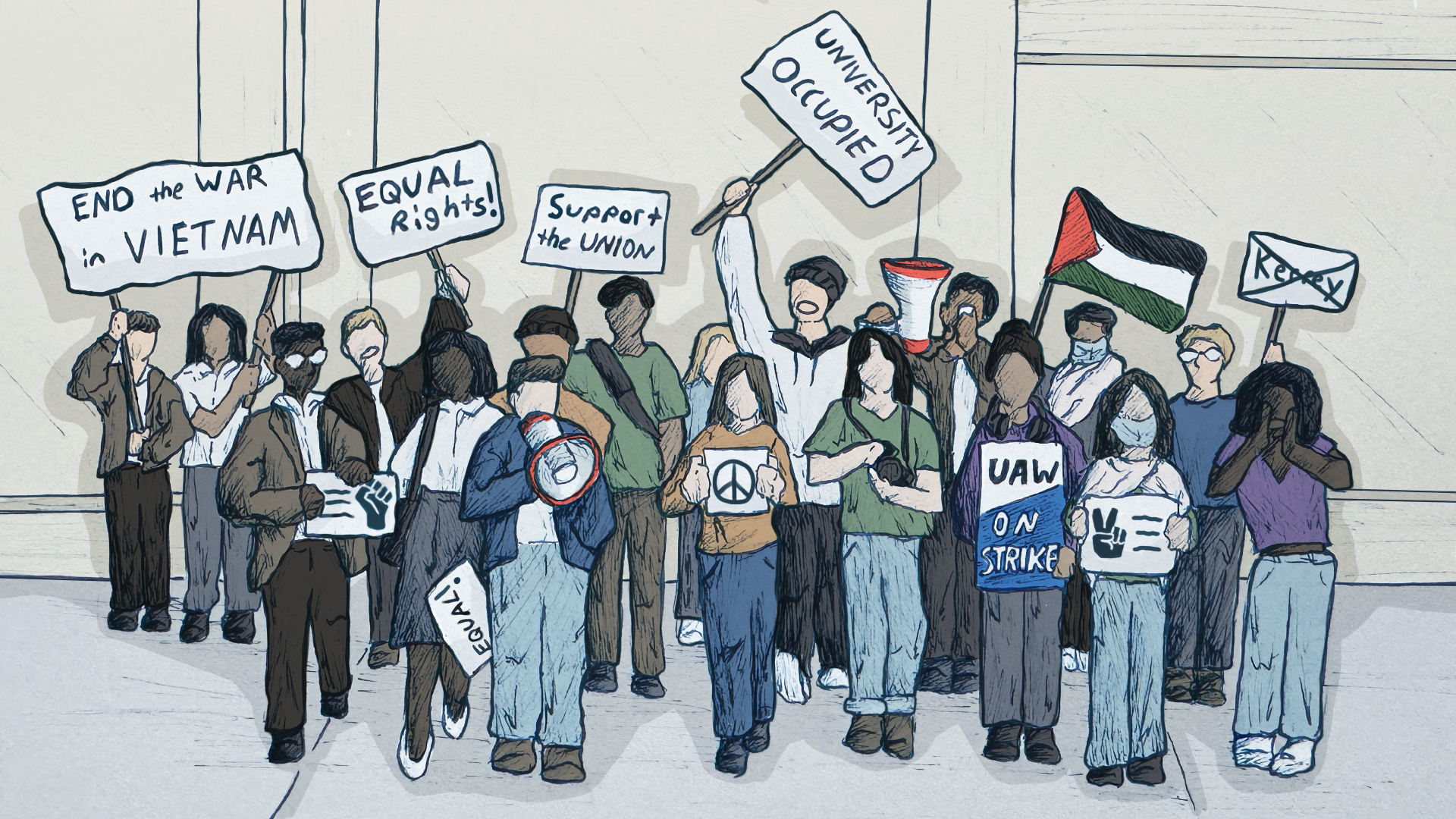
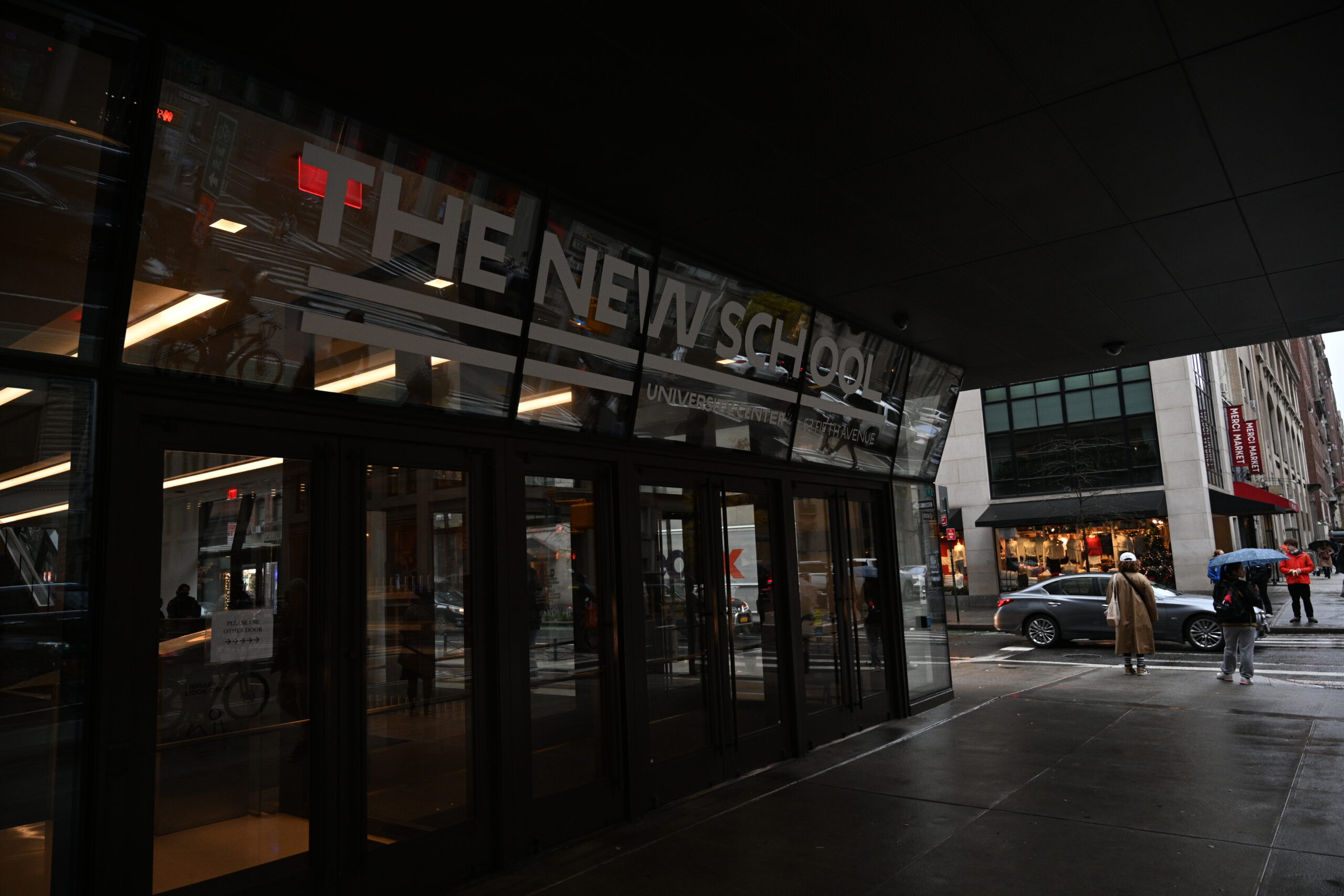
Faculty, students, and staff have been outspoken about the consequences of The New School’s ongoing restructuring, which is meant to tackle a deficit last estimated by administrators to be $48 million. Community members say the restructuring, which comes amid a nationwide trend of cuts to the humanities, threatens The New School’s history and identity.
So far, the restructuring this academic year has predominantly impacted Eugene Lang College of Liberal Arts and The New School for Social Research. Of the 16 minors and the 23 majors to be cut or paused next semester, humanities programs bear the brunt of the gutting. Courses are also being slashed across the university.
Additionally, PhD admissions at NSSR have been paused for the 2026 academic year, despite proposals by trustees to temporarily fund new cohorts.
The New School was founded in 1919 as The New School for Social Research. It served as a refuge for scholars who pursued intellectual freedom and left-leaning politics in social research and liberal arts.
“The values of NSSR are of crucial importance in this political moment, in which higher education is struggling to survive in court. The New School administration is taking a DOGE-style approach — antidemocratic, fast, furious, and reckless, accelerating the demise of critical thought from within,” a post on e-flux Notes, linking to an open letter to University President Joel Towers and the board of trustees, said.
The letter has over 1,600 signatures from students, faculty, and staff.
The University Student Senate’s Declaration of Principles, submitted on Dec. 15, 2025, says The New School’s restructuring is “a systemic disinvestment from quality education, and threatens the progressive legacy and integrity of The New School itself.”
Before they founded The New School, scholars Henry Dana and James McKeen Cattell had been dismissed from their positions at Columbia University in 1917 for their opposition to World War I. Eventually, Columbia professors Charles Austin Beard and James Harvey Robinson also resigned.
Then, Herbert Croly, one of the first editors of the progressive, left-leaning New Republic, joined together with Dana, Cattell Robinson Beard, and others to draw up plans for a “new school” — one where ideological pandering to power would not be tolerated. The 1919 “Proposal for an Independent School of Social Science” argued that the circumstances over the past two and a half decades called for a “new type of leadership in every field of American life.”
“I came to Lang with the intent of going to grad school [at The New School]. I wanted to spend my four years at Lang, studying under NSSR professors, many of whom I’ve seen online and read their books,” Parker Trager, a second-year double major in history and philosophy at Lang, said. “I feel as if the education I was promised is being stripped from me.”
Trager said around 10 of the courses that could’ve counted towards his major requirements are completely gone, and many of his friends and professors are considering transferring and leaving TNS.
“There’s less interest in the classes now, because people feel like quality education is going to be worse — it feels very different,” Trager said.
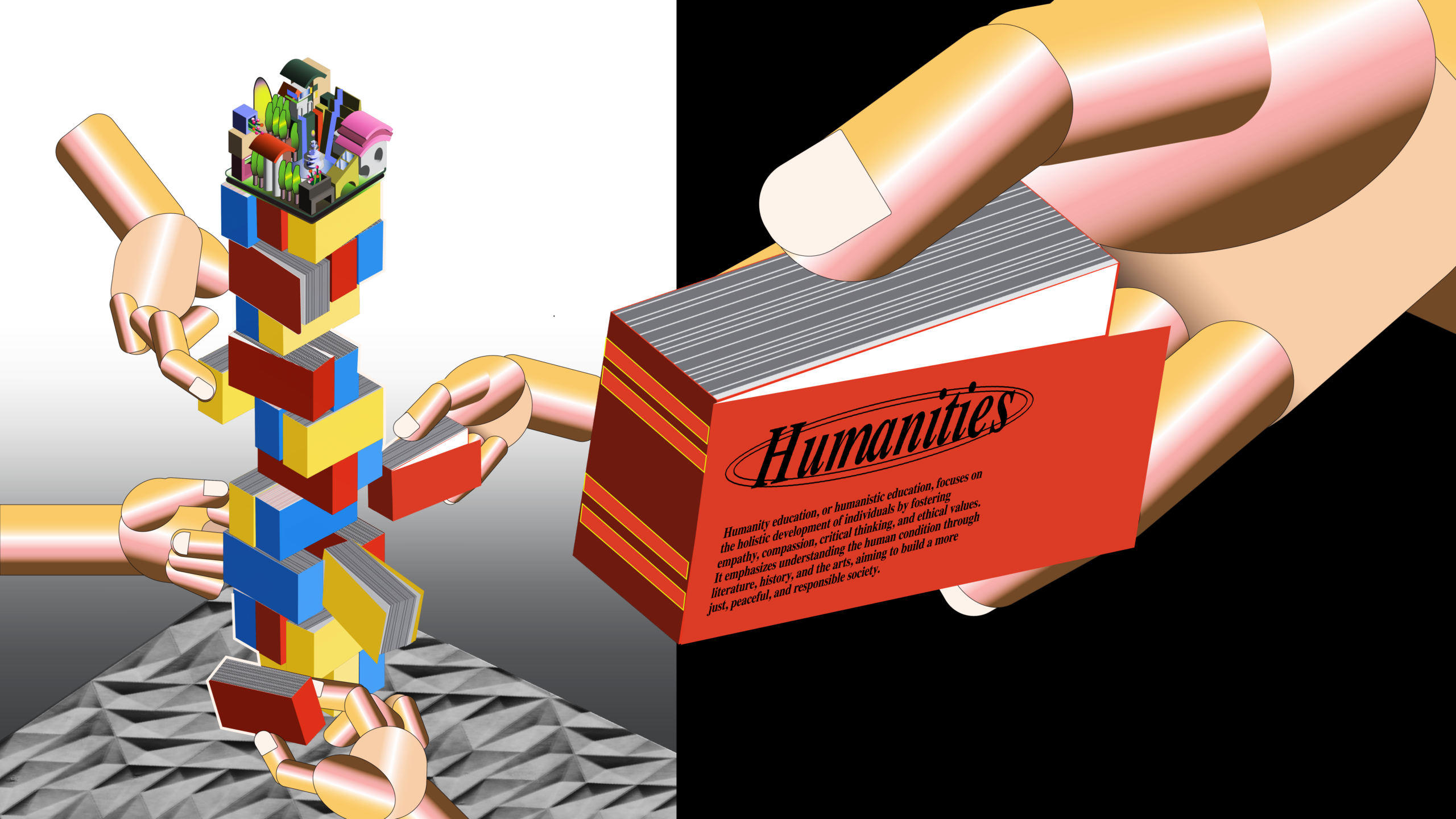
The New School’s restructuring comes amid a vast nationwide trend of cuts to the humanities.
From West Virginia University’s elimination of nearly 30 majors in 2023, to suspended doctoral humanities admissions at Boston University, institutions across the country are scaling back liberal arts and humanities programs in response to budget deficits and modern pressures, according to an opinion article by Yizhi Feng for The Centipede.
“The National Endowment for the Humanities has canceled most of its grant programs and started putting staff on administrative leave, as its resources are set to be redirected toward supporting President Trump’s priorities,” journalist Jennifer Schuessler said in a New York Times article titled “Trump Administration Moves to Cut Humanities Endowment.”
Texas A&M University recently announced it will be cutting its women’s and gender studies degree program in order to comply with a policy implemented by the university’s system board of regents. The board mandated that “faculty may not advocate ‘race or gender ideology’” without approval from the campus president, according to an article in The Texas Tribune by journalist Jessica Priest.
Montclair State University, a left-leaning liberal arts university in New Jersey, is undergoing an intense restructuring of its humanities programs similar to that of TNS. At first, the university was looking to completely eliminate all of the departments in its College of Humanities and Social Sciences, while keeping the college and the majors.
“We basically had to get international press in order to get them to back down from this. But they’re still insisting on [a lot],” Associate Professor of English at Montclair State University Adam Rzepka said in an interview with the New School Free Press.
Now, Montclair State University is restructuring multiple departments by merging them into four thematic schools.
“We don’t know what they are, we don’t know what they’ll be called, and we don’t know what they’re for, or who will run them,” Rzepka said.
TNS admin have similar plans to create what they call the “two college model,” which would merge Lang with NSSR and Parsons School of Design with the College of Performing Arts.
The 1919 proposal for The New School intended to eliminate “presidents and deans and the usual administration retinue and cut the overhead expenses to the minimum.” Rzepka believes the nationwide higher education challenges stem from universities incorporating a corporate management model.
“There’s only one world in which that is a sensible thing to do, and that’s the private equity world, which comes in, takes companies, [and] imposes dramatic, drastic austerity on the workforce … slashes everything that people like about the company, and overloads it with debt,” Rzepka said.
Maggie Koozer of the provost’s office in academic affairs at The New School said in an interview with the New School Free Press, “the goal is not elimination, but reimagining how these disciplines can be strengthened and elevated in a ‘New School way.’”
Koozer said faculty are heavily involved in evaluating strengths and weaknesses within academic programs and “are now driving the redesign process and collaborating across departments and colleges in ways that are new for curriculum development.”
Executive Dean at Eugene Lang College of Liberal Arts Christoph Cox said in an interview with the New School Free Press that low enrollment is another one of the reasons for program cuts and redesigns.
“The question is: how can we rethink [these programs] to make them more compelling and relevant?” he said.
Cox said he fully understands concerns students may have about the state of their current academic paths, and that “current students will still graduate with their declared majors.”
Additionally, he said he recognizes the importance of student perception and noted how administrators need to “better communicate our commitment.”
Cox stressed the need for humanities in today’s world. “I don’t envision Lang without history, anthropology, sociology, or global and environmental studies. The aim is redesign, not removal.” Later in the interview, he said, “That’s why these areas remain central to Lang and The New School’s future.”
Koozer had a similar message, saying, “The world needs liberal arts, humanities, and social sciences more than ever. Students trained in these disciplines can translate critical thinking into real-world change.”
At Montclair State, proposed changes have gone beyond restructuring departments.
Rzepka said that about a year ago, Montclair State University’s provost circulated a slideshow to faculty about university restructuring. Rzepka said one of the slides contained lists saying “what’s in” and what to “say goodbye to.” As for what’s in: AI-generated materials were listed, Rzepka said. As for what the university can say goodbye to: text-heavy materials were listed.
“The idea is … in courses, you don’t assign Jane Eyre or Shakespeare, you assign AI-generated versions of those things, and AI materials, so you don’t need the professor,” Rzepka said.
Eric Kelderman, a senior writer for The Chronicle of Higher Education, said in an interview with the New School Free Press that, in the years to come, he thinks “there will be continued pressure on humanities programs.”
“Over the past decade, we’ve already seen many cuts, particularly in foreign language programs,” Kelderman said. At The New School, four of the 16 minors being cut are languages. “More foundational disciplines — history, political science, sociology, anthropology, philosophy, literature — face larger, ongoing questions,” Kelderman said.
Kelderman said “nearly all of higher education” is experiencing problems similar to The New School. The value in humanities is there, he said. Annual surveys by the American Association of Colleges and Universities show employees value soft skills, like those taught in humanities, alongside technical skills, according to Kelderman. The problem is balancing humanities with financial constraints.
“That’s the million-dollar question,” Kelderman said. “Actually, a multi-million-dollar question.”
A previous version of this article inaccurately stated that the restructuring at Montclair State University proposed to discontinue the College of Humanities and Social Sciences. The updated version of this article clarifies that the departments in the college were proposed to be eliminated, while the college and majors would remain.



Leave a Reply