
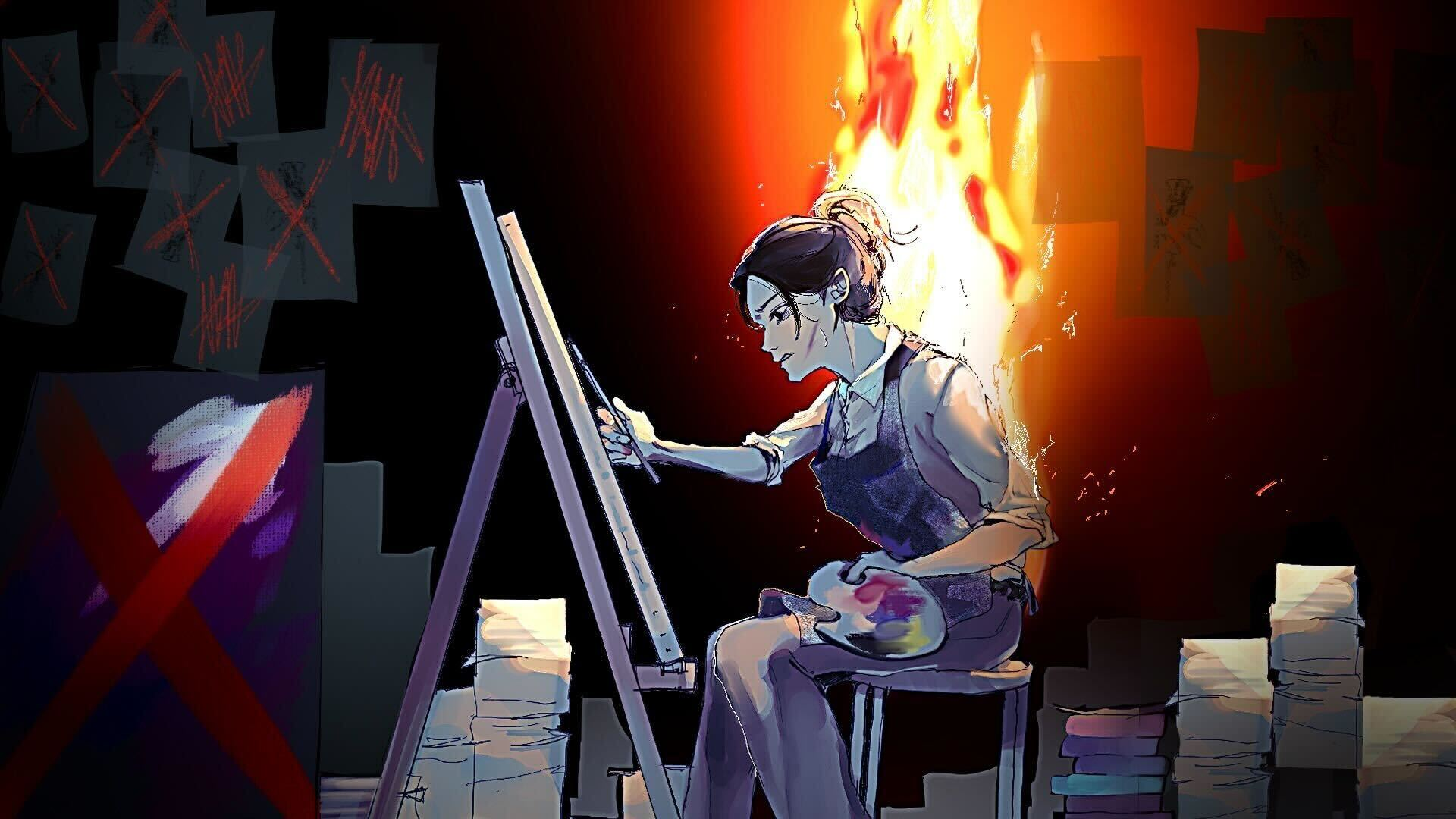
Until recently, a typical weekday for creative writing master’s student Adeline Saunders looked like this: she’d wake up in the late afternoon or early evening to commute from Harlem to class, which lasted from 7:00 p.m. to 9:30 p.m. Instead of relaxing with friends afterward, she usually headed back uptown to squeeze in some time for homework or her freelance copyediting gig until her night shift as a newsroom editor began. She’d work from 2:30 a.m. to 11 a.m. before collapsing in bed, waking up, and doing it all over again.
Unsurprisingly, this schedule proved to be unsustainable, but Saunders is far from the only artist pushing herself to extreme lengths to make money while creating art. This lifestyle feels necessary for many students in a city where 43 percent of all renter households are rent-burdened, meaning that they spend more than 30% of their income on rent, according to the New York City Rent Guidelines Board.
The roughly 2,400 graduate students at The New School especially feel the burden of bringing in an income to survive, as they’re typically less likely to receive tuition support than undergraduate students, according to the American Council on Education. Piecing together part-time and freelance work helps pay the bills, but students say it comes at the price of burnout.
That’s certainly true for Mal Ward, a second-year master’s student studying poetry and fiction at The New School for Social Research. She works about 60 hours a week, catering, doing contract work for an instructional design company, and working a nine-to-five as a software instructor. Until recently, she also worked at a nonprofit.
Ward knows that students who don’t work have more freedom to create art, whereas she feels constant pressure to write in the limited time she can allot to it. “I don’t sleep the regular amount of hours that most people who are in their mid-30s would be sleeping,” she said. She struggles most with juggling the “anxiety that you’re not going to get things done on time, but also trying to hold up the things you’re doing to support yourself so that you have the opportunity to learn,” she said.
Lingering financial stress exacerbates feelings of exhaustion and burnout for Ward, who’s trying to pay the interest on her student loans before it adds up. “Even though I’m paying consistently on the loans while I’m in school, the amount feels like it’s barely changing,” she said. “That’s probably really why I feel the pressure to work a lot –– because I don’t have any financial help from parents or tons of money that I’ve saved up.”
For Kyle McCrea, a filmmaker and photographer studying creative writing, burnout and financial stress often obstruct his creative process entirely. “Every step of the way, something has to take a backseat, and more often than not, it’s the art,” he said. “During the day I’m [at my full-time work study job]. At night, I’m doing classes, so by the time I get home, I’m not feeling that great and really only have time to make something to eat and go to bed.” He tries to set aside weekends for his short films, but sometimes weeks go by without him making progress.
His rent and the cost of buying and developing film keep him from quitting his freelance and full-time jobs, not to mention living expenses and tuition. Despite his packed schedule, he’s trying to overcome his exhaustion. “Art can be a habit,” he said. “Avoiding art cannot.”
Dominic Piacenza wants to push past exhaustion too, but it’s hard. As a second-year creative writing master’s student, he works as a bartender, wine shop clerk, teaching assistant (TA), liaison for incoming students, and research assistant. These jobs add up to roughly 50 hours a week. The cost of his apartment, which he got before grad school when he worked a more advantageous job, makes him and his girlfriend rent-burdened, so he can’t afford not to work.
“I’ve really had to carve out hours [to write],” he said. “Something had to give, I just don’t see friends and family.” He makes time for his novel when he can — 45 minutes here and there, or waking up at 6 a.m. after bartending to write.
He doesn’t feel he has great options in terms of avoiding burnout. “There are times where I had to just not go to class, not go to work, not do anything,” he said. His research assistant job is remote, which helps, but bartending offers no leeway in terms of squeezing in extra writing time.
Similarly, his one-hour, one-way commute from Sunset Park to the bar where he works in Bedford-Stuyvesant is lost time. “I spend five extra hours a week commuting,” he said. He can’t be productive in transit aside from occasionally reading an assigned book. “On the train ride home, I’m beyond exhausted, and it’s not possible,” he added.
Saunders had the same problem when she worked nights. Now she works as a TA for roughly seven hours a week on top of her freelance copywriting gigs. “Rent is just incredibly expensive, and so is grad school even though I have a good sum for my scholarship,” she said. “It’s still incredibly expensive to get a master’s degree in America.”
She worries about her ability to sustain a creative career in New York, where writing jobs are scarce because the market is so saturated. In the short-term, “when I take on new jobs, obviously that’s taking up space, not only my time, but also in my mind,” she said. “So the creative process does get a lot more difficult because I have to think about so many other things.”
Working overnight caused the worst burnout for her. “It messes with your circadian rhythm,” she said. “I’m going to be 100 percent candid here. I think that was the first time I’ve ever had a panic attack.” She constantly felt anxious about not doing as much as she wanted to do for her classes, and during that semester when she worked nights, she only wrote a couple sentences of her book.
These moments of depletion scare her. “If I lose the ability to tap into my imagination, then my career is gone,” she said.
Empathetic professors and reintegrating herself into her creative community have helped. But like Ward, anxieties over student loans linger for Saunders. In addition, while some professors are sympathetic to these struggles, Ward doesn’t feel that they always understand the mental load of financial pressure and the stress of having to “stay up until 4 a.m. the night before to finish because it was the only time you could,” she said.
With tuition raising by 3.5 percent next year, according to an email from the university, students worry about continuing to make art and being able to fully enjoy the extra programming their tuition pays for while working so much.
“I have to forgive myself a little bit for letting things fall through the cracks,” Piacenza said. “But I think that that’s also been the hardest part because it’s not a matter of making things better. It’s just a matter of being okay with the things that you can’t control.”
Leave a Reply