
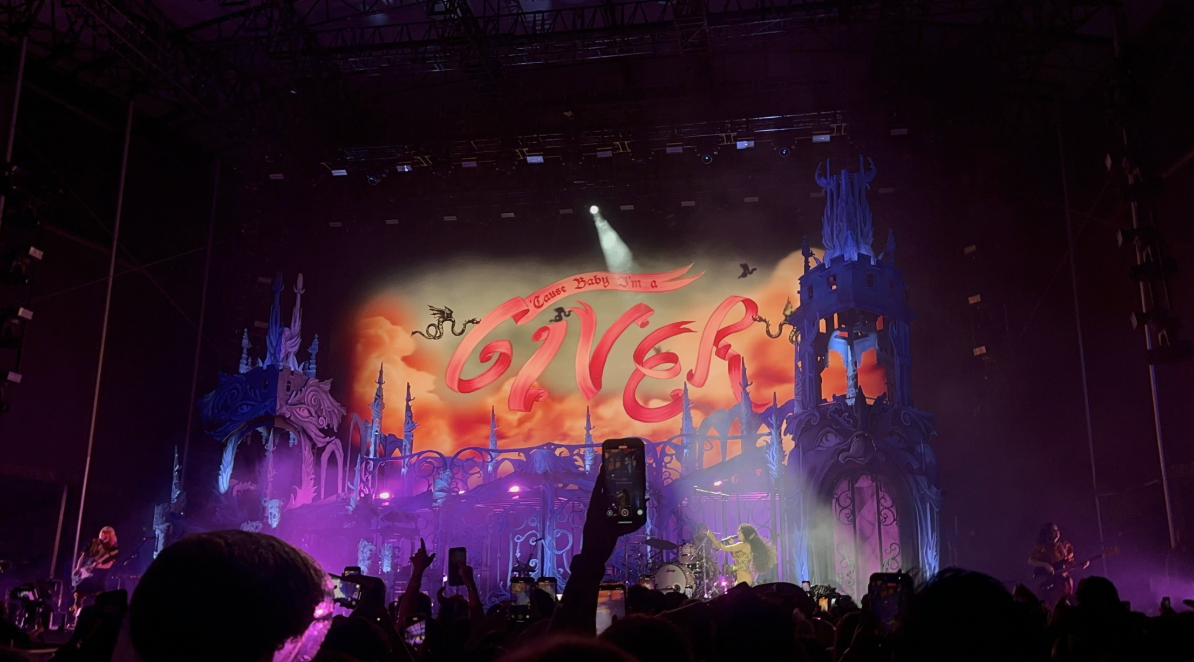
“You shut the fuck up!”
Four words, one photographer, and suddenly Chappell Roan — born Kayleigh Rose Amstutz, raised in Missouri, internet-famous before she was arena-famous — became a controversial topic. The clip spread the way you would expect: fast, and stripped of context. What it doesn’t show was the year she’d just had: “Good Luck, Babe!” peaking at number four on the Billboard Hot 100, listeners flooded back to her debut album, arenas replacing local parks. Sudden, enormous, largely unasked-for fame. And fame, it turns out, comes with expectations.
The backlash was almost immediate — and entirely predictable. Roan’s brand, if you could call it that, had been built on warmth: on drag aesthetics and small-town queerness and lyrics about acceptance and being okay with who you are. So when she snapped back at a photographer, the internet couldn’t quite agree on what it was seeing — a betrayal of her image or the most honest expression of it. For her die-hard fans, there was no contradiction at all.
Gracie Gathings has 232K followers on Instagram, where she runs @Chappellroanhub, a fan account that acts as a space to share updates and news about Roan. “Everyone calls her a bitch and a terrible person because she speaks her mind, but I think it’s because it’s a woman speaking her mind,” Gathings said in November 2025.
The distinction matters to Gathings: Roan isn’t being difficult, she’s consistent. Standing up for yourself, maintaining a boundary, refusing to absorb disrespect quietly — these are things men are permitted to do without footnotes. When women speak up for themselves, there’s suddenly a conversation to be had. “She is the proof,” Gathings said, “that feminism needs to exist.” What Roan is modeling, in Gathings’ view, isn’t rudeness. It’s the radical, still-controversial act of deciding your comfort is non-negotiable.
This was not the last time Chappell Roan sparked discussion among fans about her boundaries as a public figure. On March 21, 2026, during a hotel breakfast in São Paulo, a security guard allegedly confronted an 11-year-old girl and her mother, accusing the child of harassing Roan. According to the mother, Catherine Harding, her daughter had done nothing more than walk past Roan’s table. Roan addressed the situation on Instagram and said the security guard hadn’t acted at her request, and claimed it was a misunderstanding. The security guard himself also confirmed he was not hired by Roan or acting upon her personal request. But by then, the damage was done. A photographer at an awards show is one thing. A child at breakfast is another. The reaction from this moment was rooted in the fact that her fans were starting to see her as daunting rather than the safe space she once was.
The story didn’t stay confined to Roan’s fanbase for long. Harding’s partner, Jorge Luiz Frello Filho — also known as Jorginho —- is a Brazilian footballer with his own considerable following. When he weighed in on social media, the incident crossed into territory that had nothing to do with pop stans arguing in comment sections. Suddenly the question wasn’t just whether Roan was being too difficult — it was whether the version of her that fans had been defending all along was real.
When speaking with Gathings again in April of 2026, she, once again, wasn’t ready to be swept up in the controversy. “I think because there was a kid involved, people really like to use that narrative to make it more sensitive,” Gathings said. But she wasn’t ready to leap to conclusions either. Gathings is deliberate about remaining neutral — “I’m not someone who’s parasocial, so if she was mean, I’ll be like, she was mean. But at the same time I understand how celebrity dynamics work and how security comes off.” Gathings said. “I just wanted to know the whole story.”
Despite the harsh feedback Roan received after these moments, Gathings does not believe it shifted how genuine fans feel about Roan — if anything, she thinks it recalibrated something. “People approach her with more, I guess, respect,” Gathings said. Whatever the broader internet decided about Roan’s words, her music and the spaces around it have stayed steady. The connection fans build with each other at her shows, among fan accounts, in comment sections — that infrastructure existed independently of Roan’s behavior at any given moment.
Gathings found that out firsthand. Her Instagram had quietly become its own sanctuary. “I feel like it was a space that was needed,” Gathings said. “I feel like it is just kind of a safe ground for people to feel normal.”
As Gathings’ Instagram account gained traction, she faced a problem not dissimilar from what Roan herself faced — Gathings didn’t anticipate the weight of running it. Once she understood that @ChappellRoanHub was a place people came to form opinions, the responsibility of that shifted how she posted. “Because I am a source people come to, I don’t want to add negative energy to her image,” Gathings said.
Despite occasionally wanting to incorporate her own opinions, Gathings does her best to keep @ChappellRoanHub an unbiased source. “The media loves to run with the stories of her being a bitch, and all this stuff … but I think the people who get it, actually understand it,” said Gathings, ensuring that not everyone is looking for something to be mad at. When the public eye is on you, it’s near impossible to sustain the image you created for yourself without others attempting to reshape the narrative.


Leave a Reply