

The New School Chapter of the American Association of University Professors (AAUP-TNS) wrote an open letter to the board of trustees on Jan. 19 criticizing the university’s plans to cut faculty and programs. The letter also offered solutions meant to increase collaboration between trustees, administrators, and faculty.
The letter details seven alternative strategies the faculty believe could resolve the financial crisis without damaging academic programs.
This letter comes as a response to TNS’ restructuring efforts to address a budget deficit last estimated to be $48 million.
The AAUP argued that one of the restructuring measures, faculty cuts —- including the “voluntary separation” or “early retirement” offers —- could weaken the university’s reputation, enrollment, and Carnegie R2 research status.
Carnegie R2 research status is a national classification given to universities with high research activity, showing that research is a major part of the school’s mission.
According to the letter, the faculty reduction offers have already generated “significant reputational damage,” and are “disproportionately affecting world-renowned programs in the humanities and social sciences.”
Citing both an exaggerated claim made by the administration of a “multi-year deficit of $30 million,” and consultant-driven decision-making, the AAUP urged trustees to consider alternative strategies that encourage collaboration between faculty and leadership, and preserve the university’s long-standing interdisciplinary foundation.
“We don’t disagree that there is a financial crisis at The New School. We understand that,” Heather Davis, associate professor and director of cultural and media studies, said. “What we believe should be happening is that leadership should pursue levers and mechanisms that are not destructive and that won’t lead to a downward spiral.”
The letter also mentions AAUP-National’s Recommended Institutional Regulations on Academic Freedom and Tenure, which, according to the letter, states that “prior to the termination of faculty appointments, the faculty should be involved in a determination of whether ‘all feasible alternatives . . . have been pursued.’”
This includes, “expenditure of one-time money or reserves as bridge funding, furloughs, pay cuts, deferred-compensation plans, early-retirement packages, deferral of nonessential capital expenditures, and cuts to noneducational programs and services, including expenses for administration,” the letter said.
The letter provides these as some examples of solutions, and stresses that these methods should occur before the termination of staff and faculty.
Additionally, the letter highlights concerns about growth in administrative salaries — which “over the decade prior to 2024 grew by 4.8% annually, while faculty salaries barely grew in line with revenues (2.9%) — as well as a lack of key recruitment staff, and a reliance on external consultants, such as the EAB consulting firm, as reasons why these issues are at the core of the university’s current financial hardships and institutional challenges.
A separate analysis released last semester by members of The New School for Social Research (NSSR)’s economics department similarly found that administrative salaries and professional services spending grew at a faster rate than university revenues, arguing that the deficit stems from administrative cost growth rather than faculty compensation or PhD programs.
Davis said factors such as “program closures” and the “evacuation of student services” are exactly what caused the spiral in question.
“Programs, faculty expertise, and continuity are why people come here. Full-time faculty are essential to maintaining program integrity,” Davis said.
Proposed alternatives
The letter proposed seven alternatives to cuts.
1. The letter called for the university to take a closer look at program costs and activities by improving its financial modeling: “The New School lacks much of the accounting data necessary to make a credible estimation of the costs and revenues attributable to specific programs.”
2. Invest in student recruitment and retention:
The AAUP-TNS stated that student recruitment and retention should be the university’s top priority.
They said that a major issue with the university’s retention rate is Parsons’ reliance on its student body, which is 43.5% international, claiming that it is a “risky proposition” as “nationwide, new foreign student enrollments fell by 17% in fall 2025, and could plunge further (and, as of January 15, 2026, student visas are now even further restricted).”
The letter proposed that the keys to retention are a discounted tuition rate and an increase in student-facing staff that seek to recruit high school students.
3. Rein in executive salaries and professional services costs:
The letter called for the University Budget Committee and Financial Transparency Council to gain access to data needed to generate alternative approaches, “including the reduction of the number and pay of administrators, and of the expenditure on external professional services provided by consultants, lawyers, accountants, and lobbyists.”
4. Shed unnecessary real estate holdings and leases:
In addition to student recruitment and retention, Davis pointed out that much of the university’s financial crisis stems from “poor real estate decisions.” She said, “while we understand some leases can’t be exited immediately, the university should be exploring every possible mechanism to exit bad deals — especially dormitories, which should be profitable.”
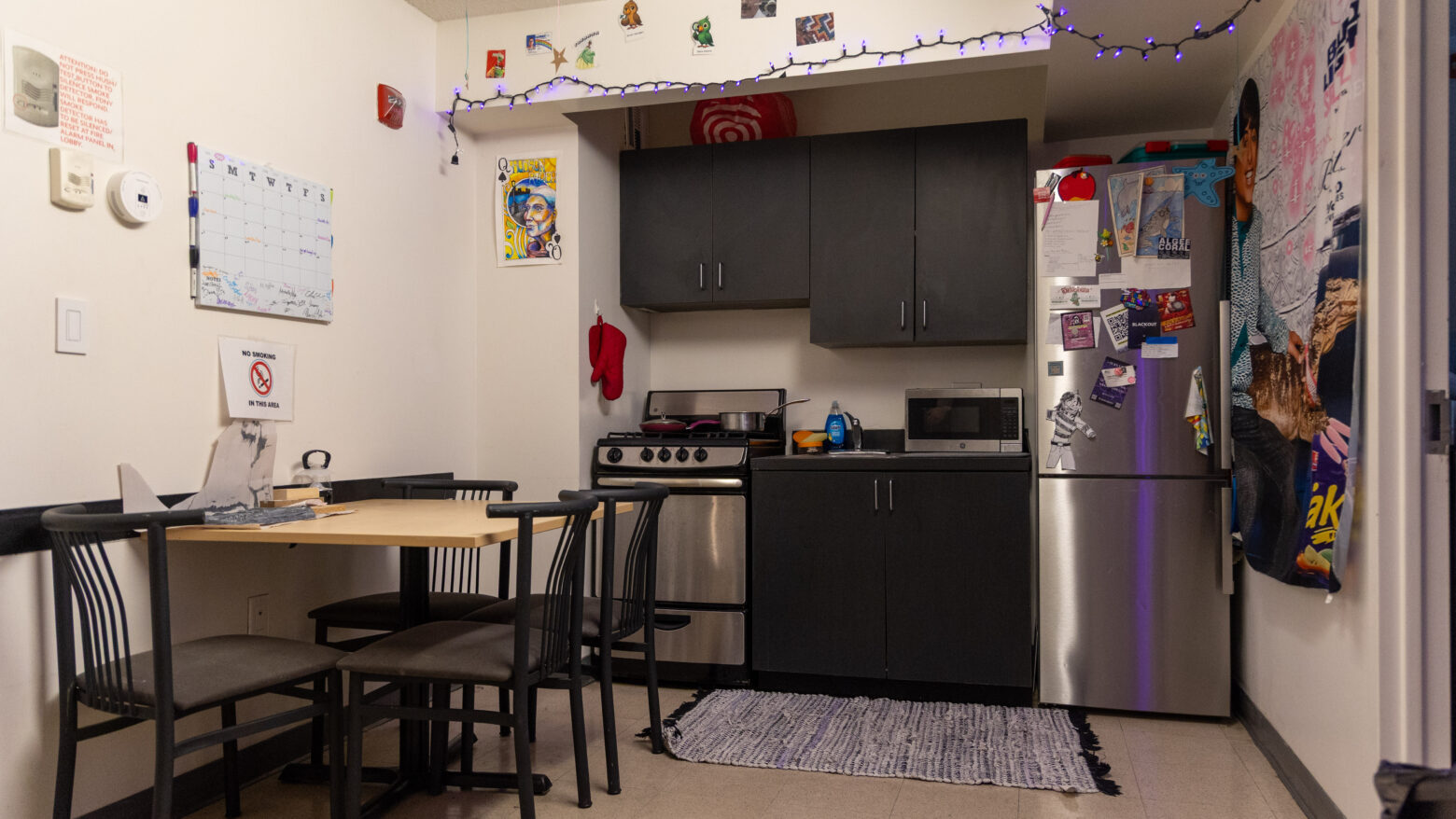
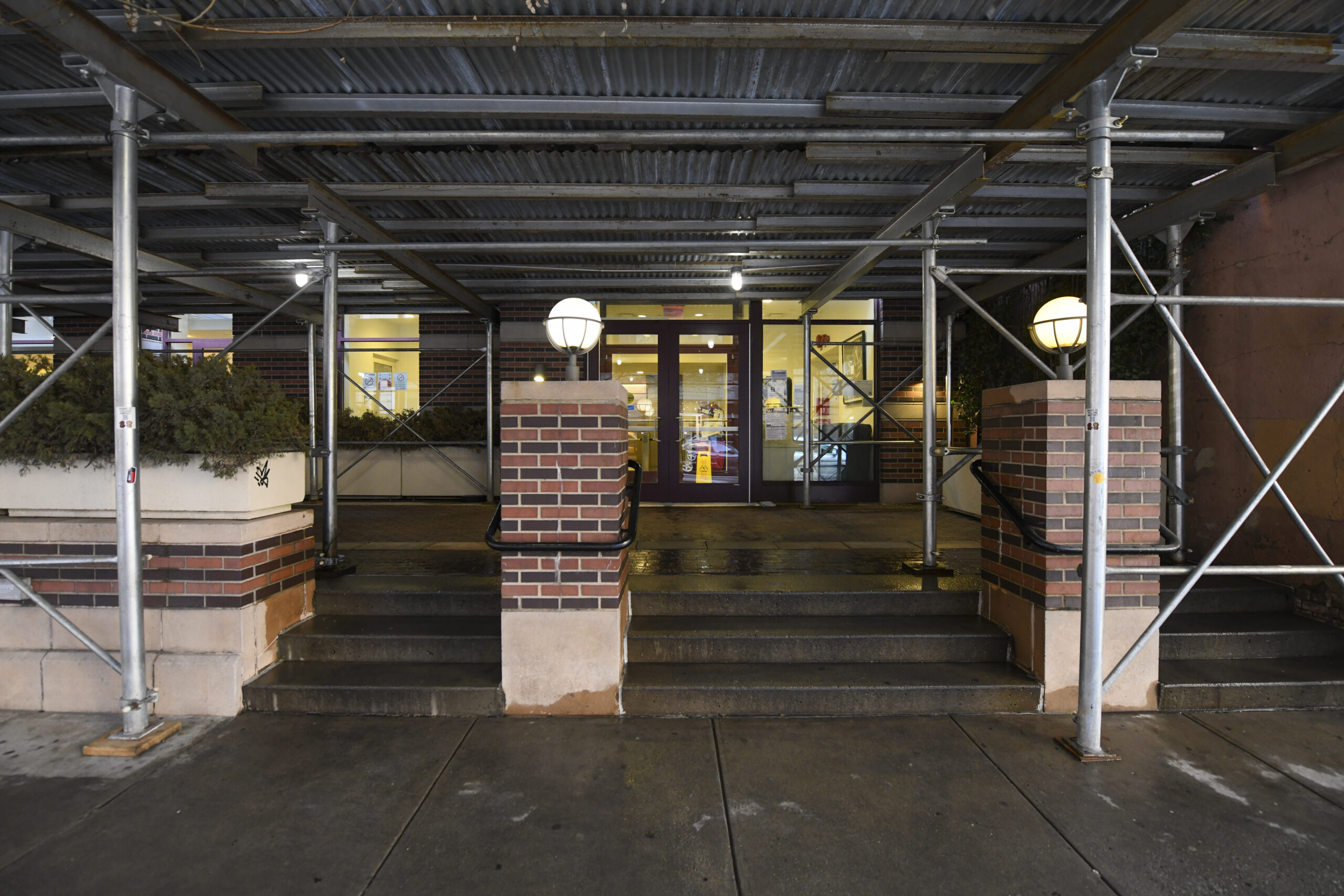
According to the letter, the university currently loses $13 million per year on dorms and dining halls.
“It’s absurd that in New York City, The New School can’t make money on real estate when nearly every other institution does,” Davis said.
5. Seek creative solutions for debt relief:
The letter said, “a large portion of our deficit is interest and serviceable debt,” and that all opportunities to renegotiate debt and lease obligations should be explored.
6. Raise the endowment appropriation and invest in areas of weakness as part of a
turnaround plan:
Faculty argue that the board already authorized a sizable endowment disbursement to pay for voluntary separation packages. They propose an alternative use: to address “weak enrollment management and advising, poor fundraising, and disrepair and lack of quality in dorms and residence life.”
7. Engage in a robust fundraising campaign:
The letter criticizes the fact that “fundraising has not been a central responsibility for presidents at TNS for over a decade.” The faculty propose tying executive compensation to fundraising targets.
Faculty response
Jeremy Varon, a professor of history, jointly appointed at NSSR and Eugene Lang College of Liberal Arts, and part of the Leadership Council of the AAUP-TNS, said, “the spirit of our letter was to say there is an alternative analysis of the crisis and alternative pathways forward — ones that recognize the reality of the deficit but address it in a way that honors employees, honors their service, [and] imagines a place for them in the future.”
Varon said administrative choices — made with the help of outside consultants, rather than internal perspectives — aren’t intended to benefit the greater good of the university or its faculty members.
“We’re dedicated professionals, we’re working harder than ever for our students, even as we don’t know if we’ll still be here,” he said, after sharing the concerns many students have expressed to their professors given the uncertainty surrounding program cuts and faculty lay-offs.
“Leadership frames this as compassion and bold leadership where making tough choices — firing people — proves decisiveness. And then we become the victims of those choices,” Varon said.
In a statement to the New School Free Press, Merrie Snead, associate director of communications at The New School, said, “We are aware that many members of the university have shared feedback, ideas, and proposals.”
Varon, however, disagrees with the narrative that administration execs are truly aware of or acknowledging the issues at hand.
“The response was silence. No reply. No engagement. The letter went to the board and the president. They could have challenged our analysis, but instead there was nothing. Town halls are scheduled, but the consistent message is they don’t want to hear from us,” Varon said.
“We fear the president and provost are shielding the board from any sense that alternatives exist,” Varon said. “So, quite literally, we’re speaking through the media.”



Leave a Reply