
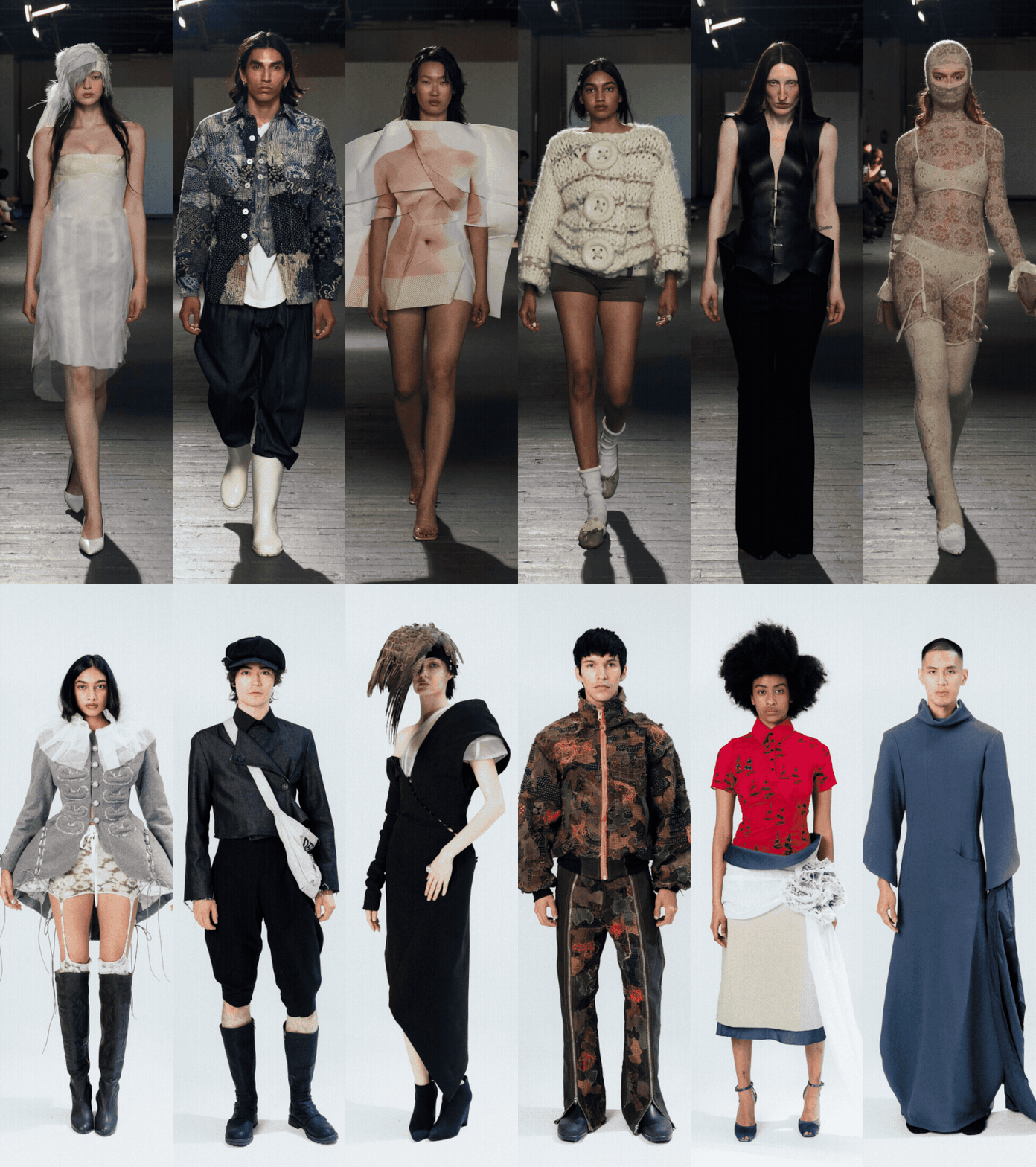
DIALECTIVE’s student-organized runway showcase returned for its fourth annual show, FOR THE RECORD, on Saturday, May 16. Hosted at Please Space in Red Hook, Brooklyn, this year’s roundup presented 20 emerging designers from Parsons School of Design, the Fashion Institute of Technology, and Pratt Institute.
Founded in 2022 by Parsons BFA fashion design graduates Helen Sotropa, Grace Gordon, Zhexuan Katherine Hu, and Runtan Desmond Du, DIALECTIVE was built on a simple premise: student designers deserve more. Since its first runway showcase, the organization has given a platform to more than 81 emerging designers. It also runs a year-round showroom in East Williamsburg and pairs designers with industry mentors throughout the process.
For the first time, DIALECTIVE extended its reach beyond Parsons to include designers from FIT and Pratt, a move to grow the organization’s footprint across New York’s fashion design schools and rising creative communities.
“Our goal was to make DIALECTIVE bigger, better, and known by more people,” said Daphnie Yang, a 2026 runway director and presenting designer in the showcase herself. “Building a wider reach within the New York community was our goal, and I believe we have achieved it.”
This year, the BFA Parsons fashion design program selected 31 designers from a graduating class of roughly 205 to show their thesis work on the Parsons runway — a sharp contrast from the previous year, when all students had the opportunity to present. The decision drew criticism from students and the broader creative community.
This reality made DIALECTIVE’s stage feel even more necessary. For the directors, it was simply more of a reason to show up for student artists.
“To be a part of a project that supports these designers when they aren’t able to receive that support anywhere else just motivates me to work harder, to get more press, to build a better team, to build this runway as successful as it can be so that the designers get the recognition and the visibility that they deserve and hopefully the opportunities and networkings from being in the show,” Yang said.
The show runs entirely on that shared belief. DIALECTIVE operates as a nonprofit, with all proceeds funding the runway and seeding the next cohort. This year’s team raised over $21,000 through a series of fundraising events, including film screenings and an art gallery, up from $0 when they started.
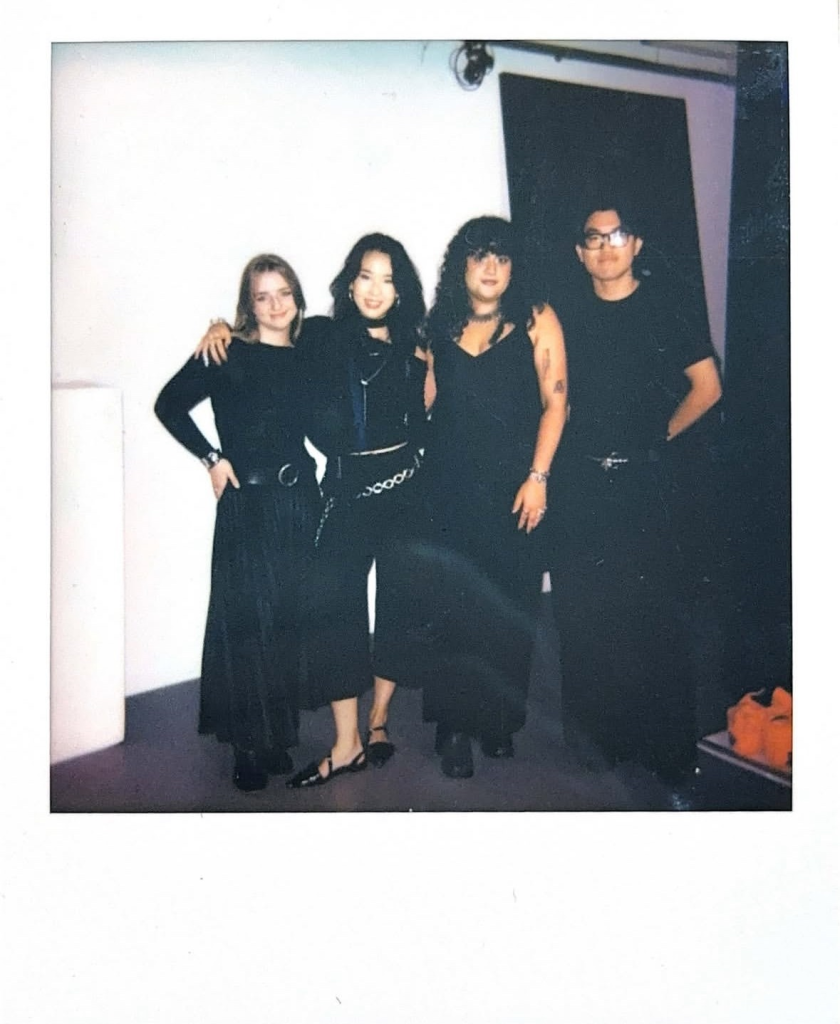
The four runway directors this year — pictured left to right: Elissa Dziersk, Parsons ‘26, Daphnie Yang, Parsons ‘26, Mahima ‘Palika’ Sirikulthada, Parsons ‘26, and Will Park, Columbia University ‘26 — spent nearly a full academic year building the show from the ground up, juggling venue sourcing, casting, budgeting, production, and more, alongside their own major thesis. “In order to do something creative in New York City … you really have to become an entrepreneur,” Park said. Photo courtesy of Dialective
For Park, the standard was never in question, challenging the notions of a student-run collection. “I want to hold myself to a higher standard because my collaborators are really cool too … does that not make them professional just because they’re students?”
Designers are selected through a panel of five judges. This year’s panel judges included Peter Do, creative director and founder of his eponymous label, and Marissa Petteruti, the director of men’s RTW at Rag & Bone, among others.
What followed was 20 collections, where each designer could present up to five looks.
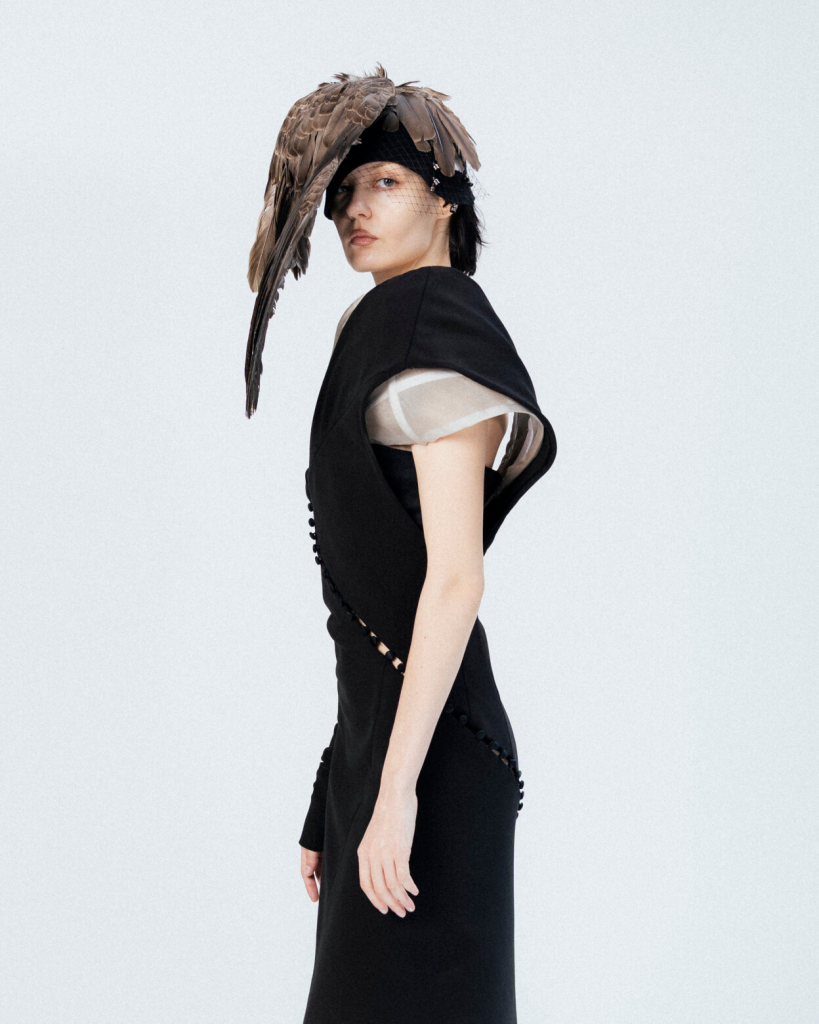
Photo courtesy of Alicia Zhu
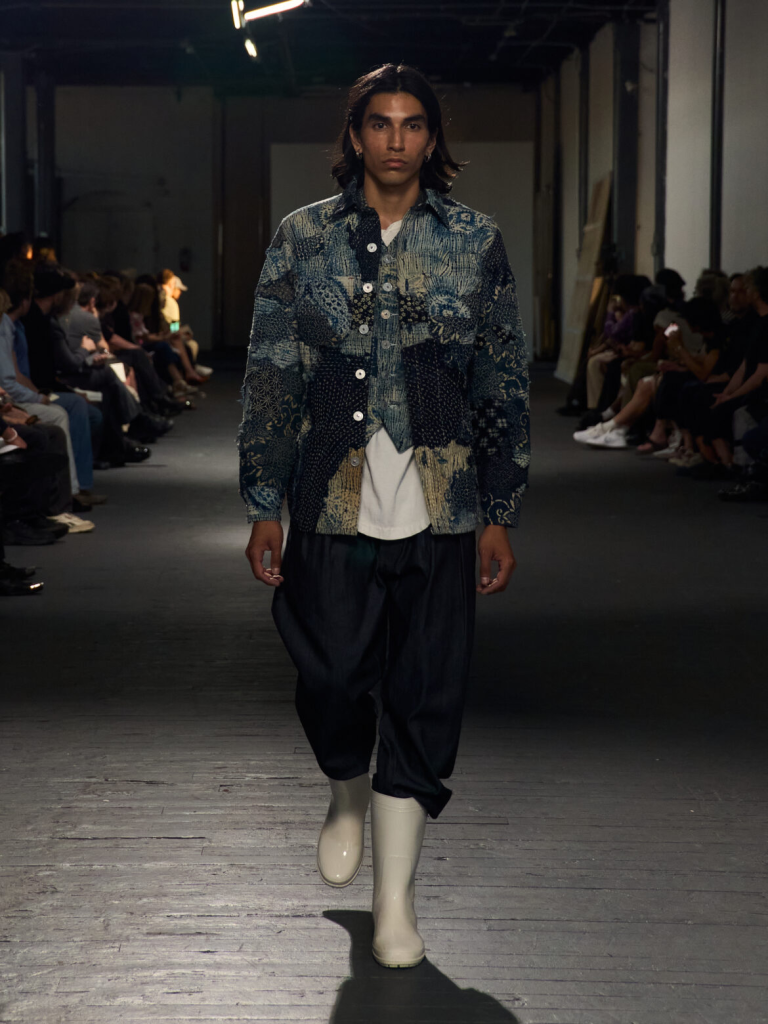
Photo courtesy of Thiha Min Zin
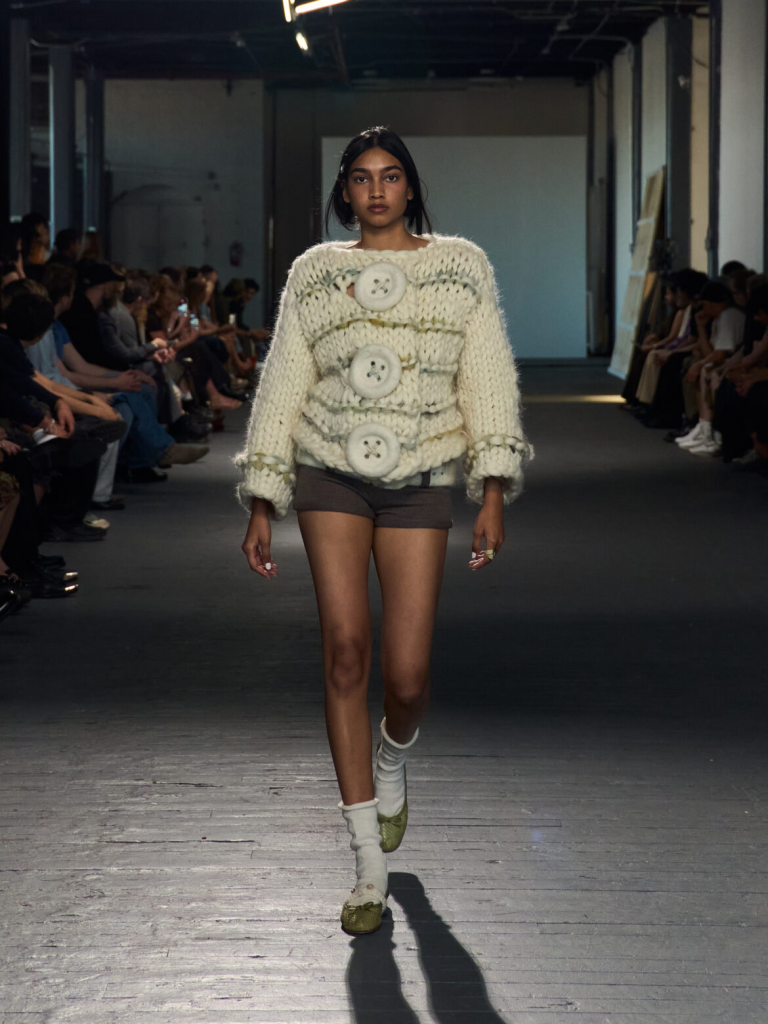
Photo courtesy of Thiha Min Zin
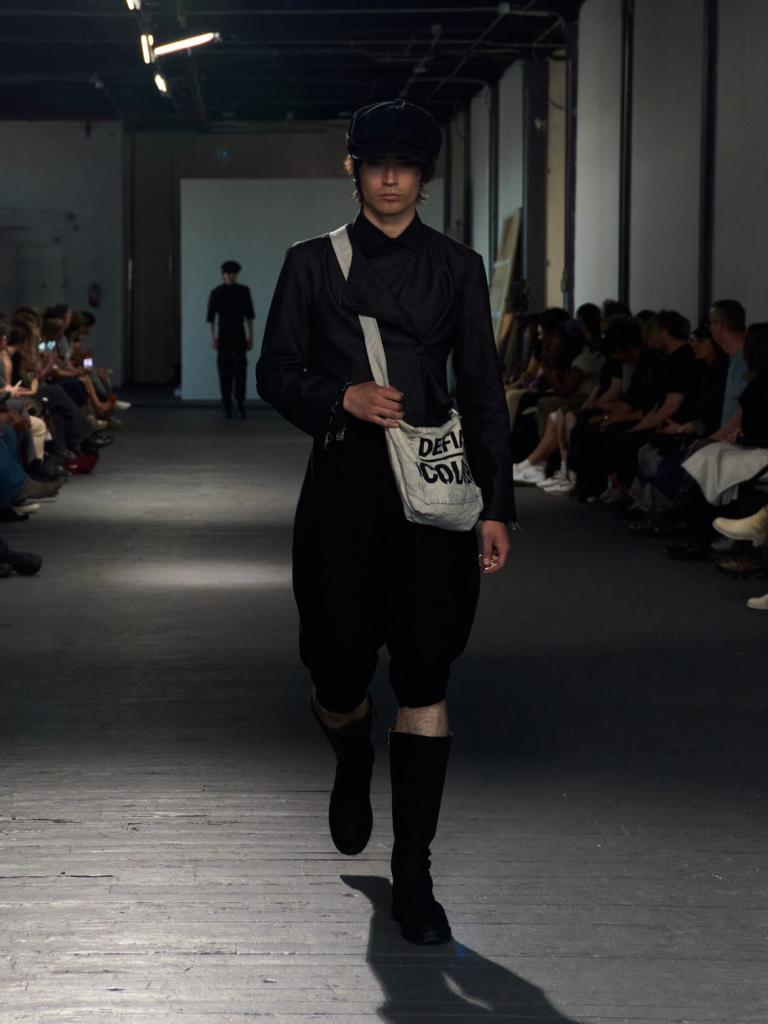
Photo courtesy of Thiha Min Zin
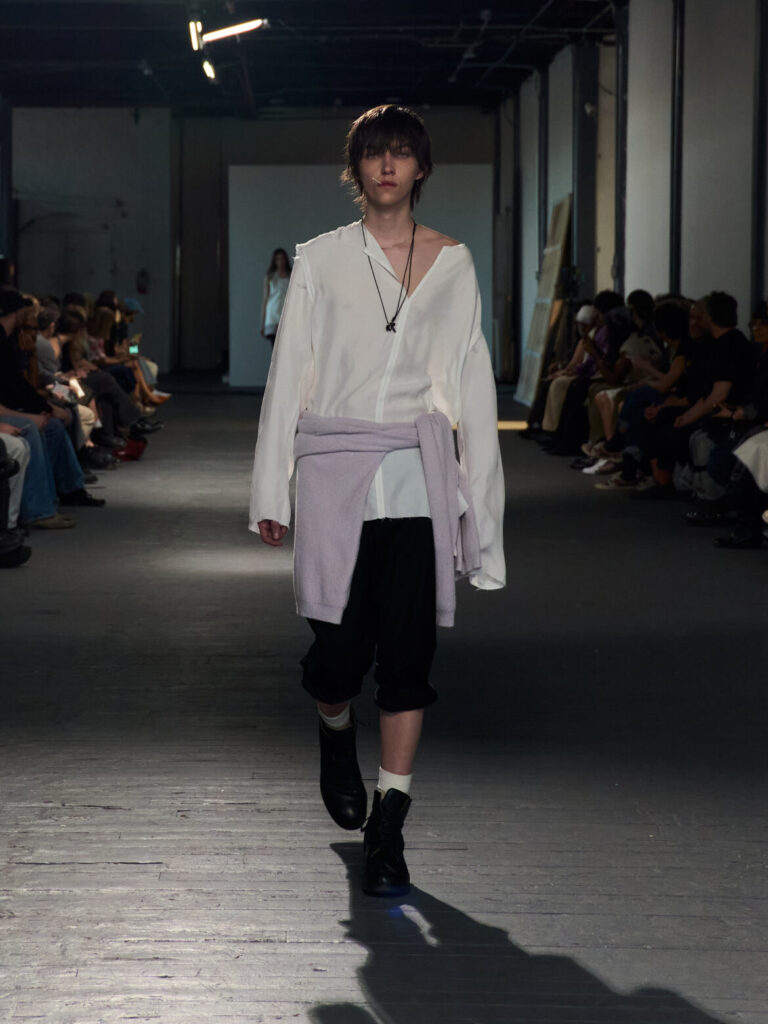
Photo courtesy of Thiha Min Zin
Opening with Blue Achenbach, Parsons fashion design ‘26, the designer explored gauzy dresses in sleek, whimsical forms. Devlin Ebisu, Parsons fashion design ‘26, threaded identity through camouflage denim, pulling from vintage Japanese textiles and a military lineage. Rachel Marino, Fashion Institute of Technology ‘26, took to knitted structural forms with a playful twist. Eddie Bolton, Parsons fashion design ‘26, moved through 20th-century labor and military uniforms to explore transmasculine identity. Carter Bright, Parsons fashion design ‘26, banked on the idea of translation through precise tailoring.
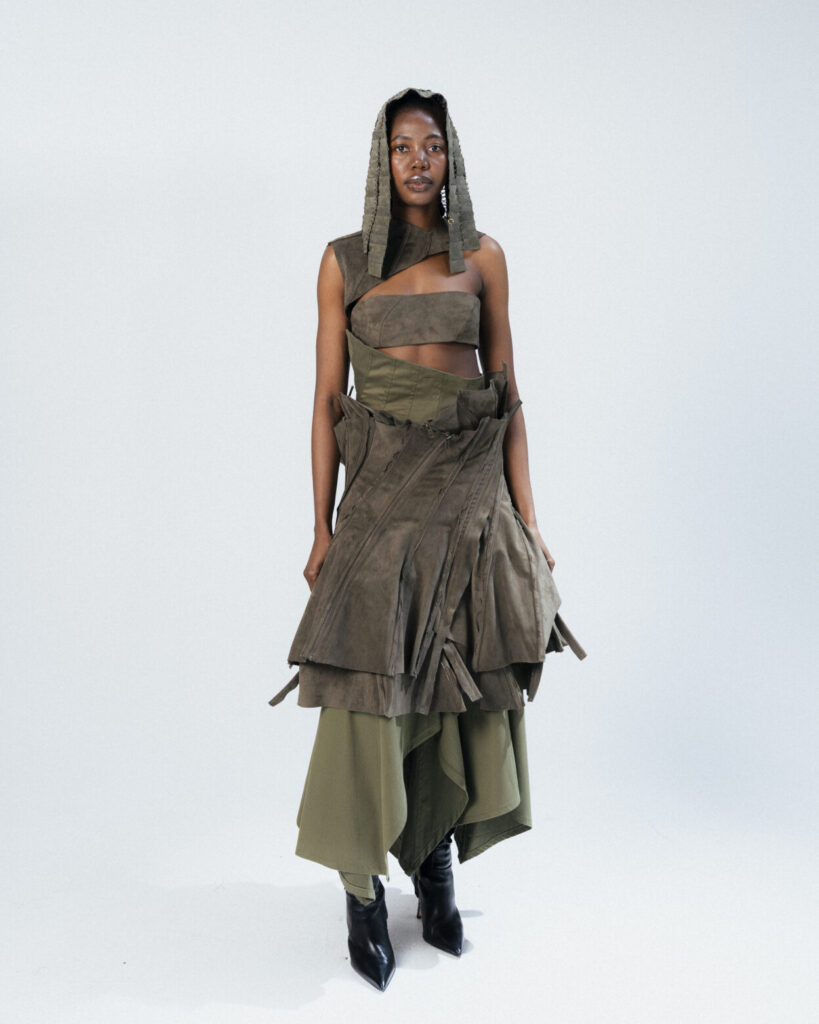
Photo courtesy of Alicia Zhu
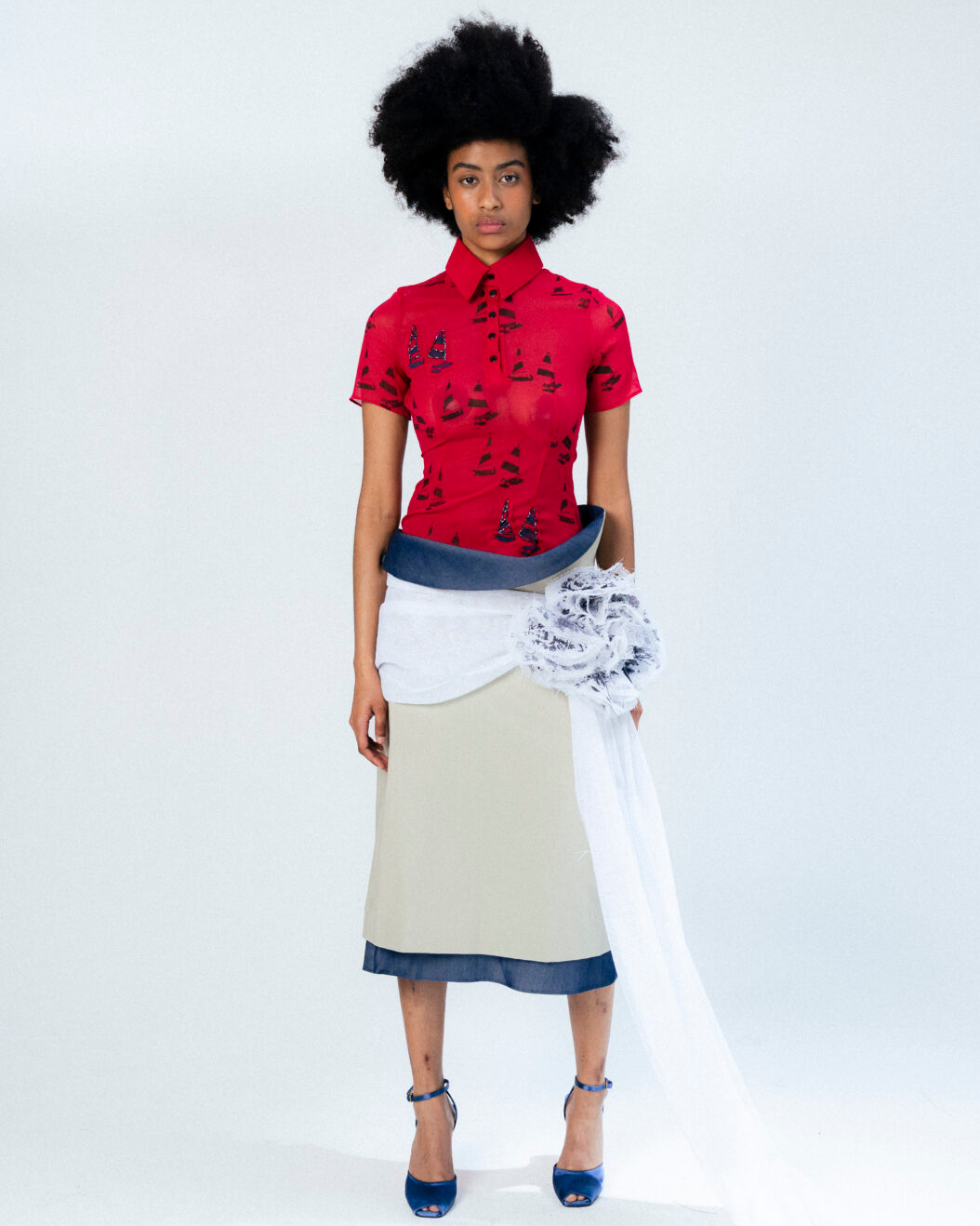
Photo courtesy of Alicia Zhu
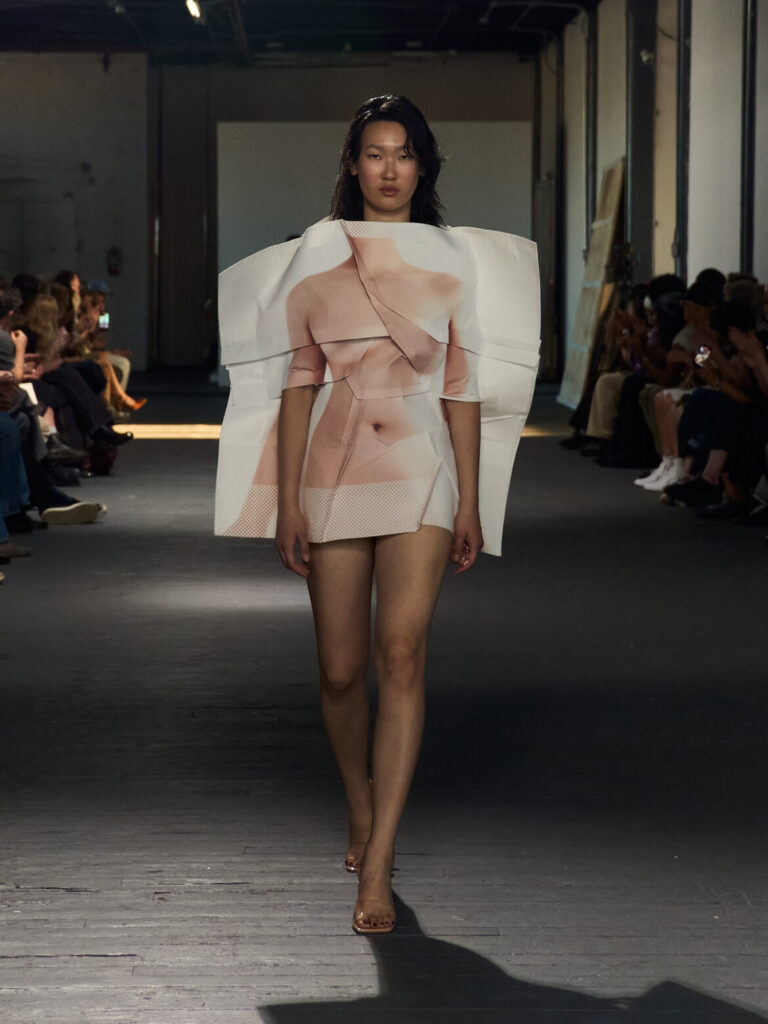
Photo courtesy of Thiha Min Zin
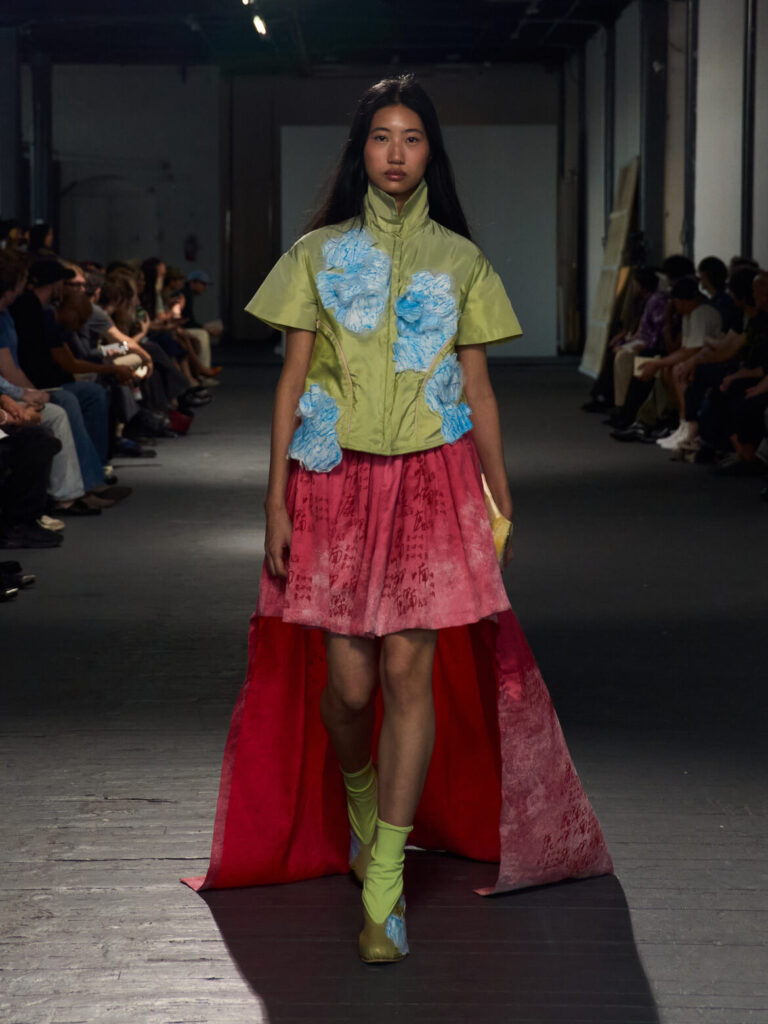
Photo courtesy of Thiha Min Zin
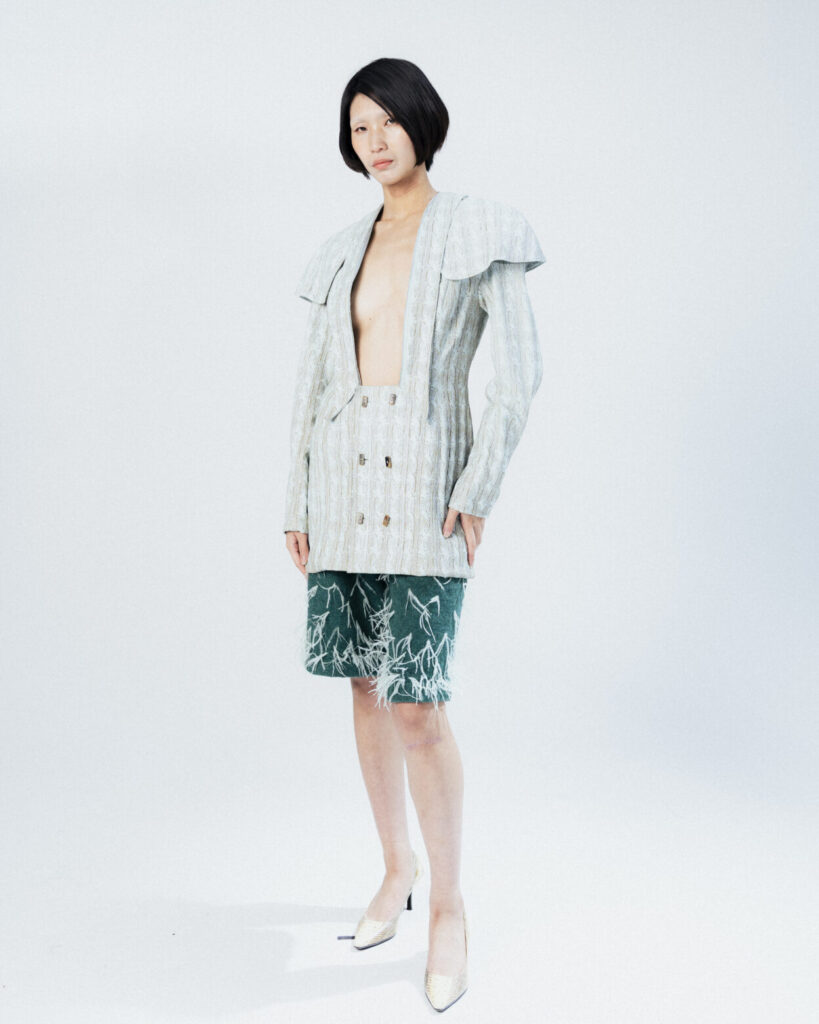
Photo courtesy of Alicia Zhu
Jasmine Cheung, Parsons fashion design ‘26, turned to demolition; post-industrial rubble reimagined as textile, mapping how destruction becomes material. Cameron Hall, Parsons fashion design ‘26, presented tender dresses mixed with a sportswear flair. Yi Nan Kang, Parsons fashion design ‘26, presented bright pastels and billowing silhouettes drawn from childhood memory. Xingyi Liu, Pratt fashion design ‘26, took to boxy and untethered forms against a backdrop of constant movement. Marina Magré, Pratt fashion design ‘26, leaned theatrical, with antique-inspired silhouettes.
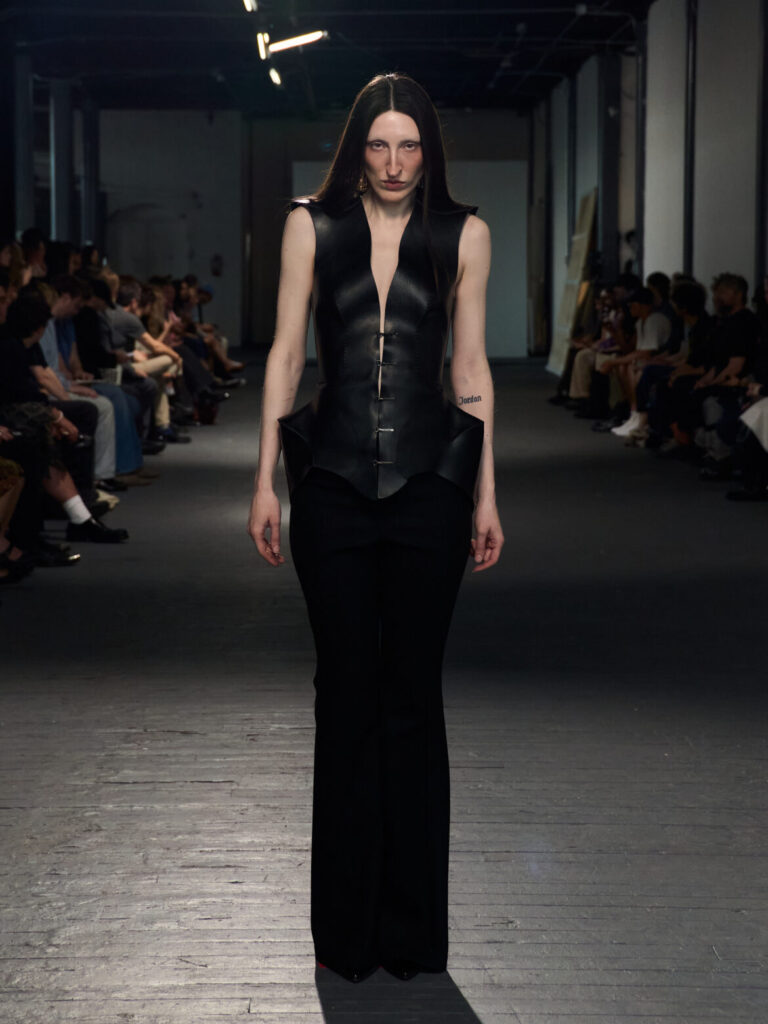
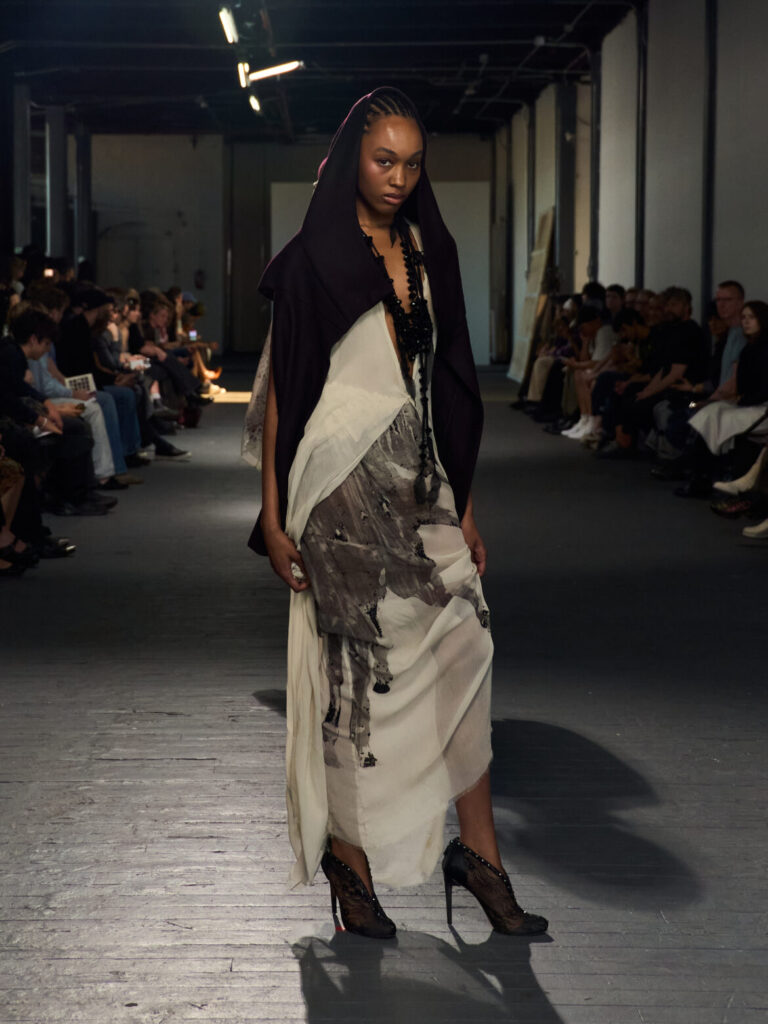
Photo courtesy of Thiha Min Zin
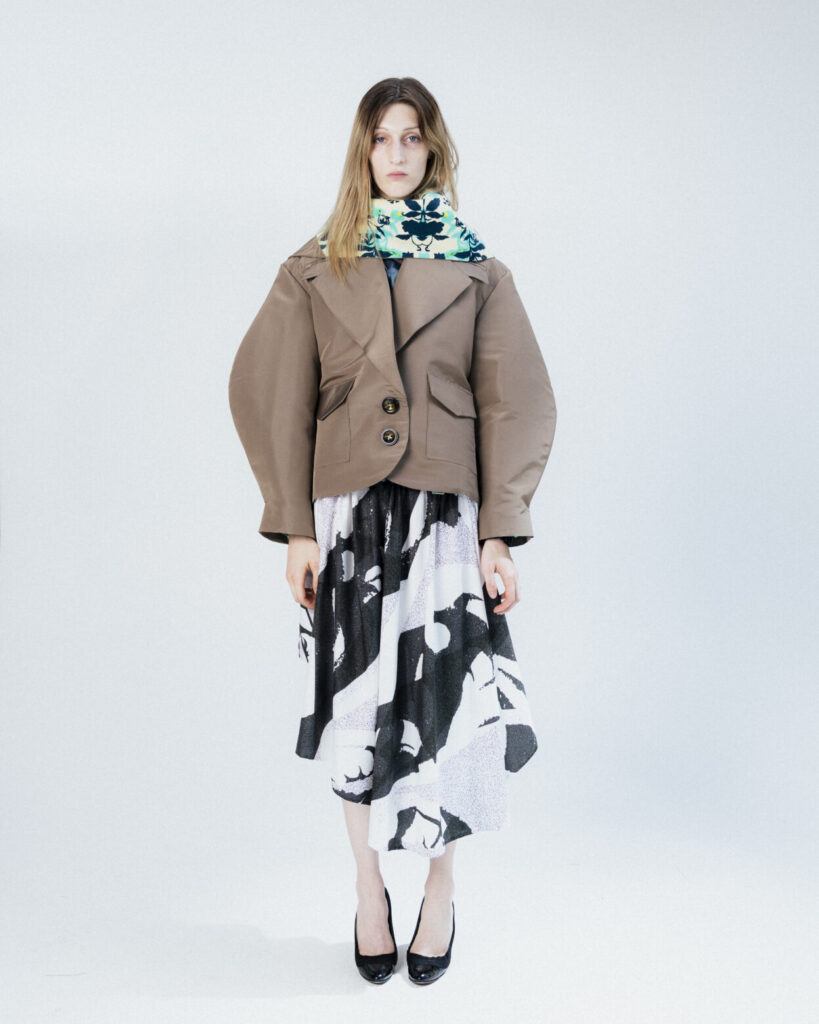
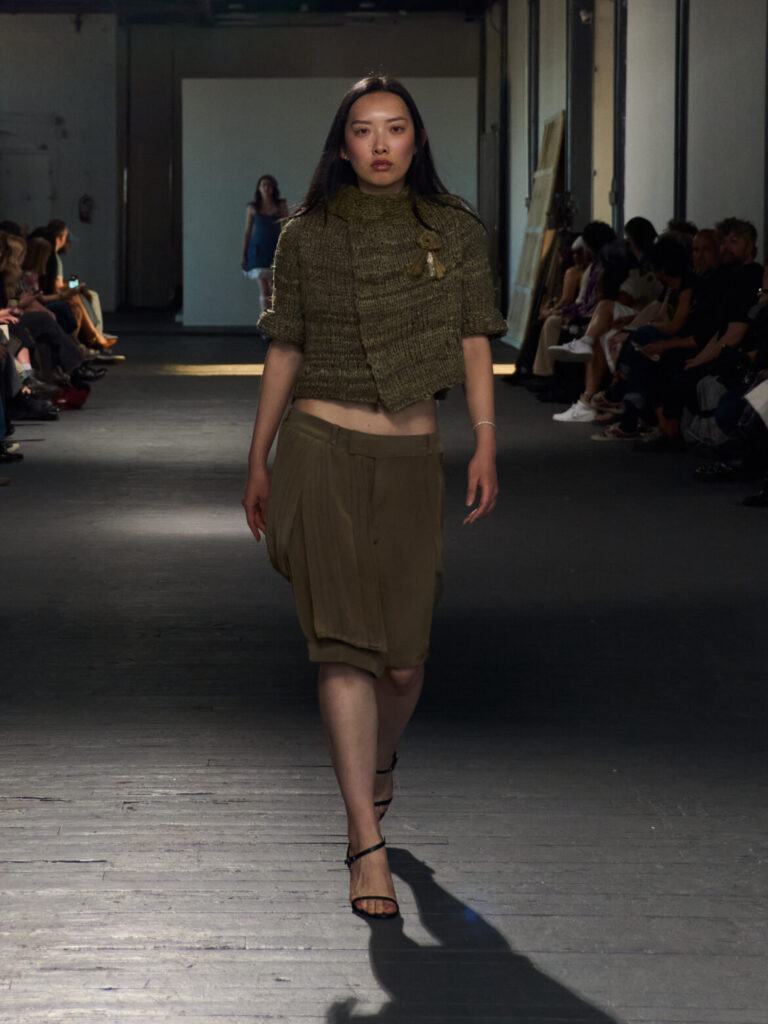
Photo courtesy of Thiha Min Zin
Christopher Markquart, Parsons fashion design ‘26, rode into precision, with defined tailoring inspired by horsemanship. Malia Quigley, Parsons fashion design ‘26, traced the legacy of lawless women through fringe and leather. Lia Skøien Rydelius, Pratt fashion design ‘26, explored the middle ground between the folk dress and the rigid uniform. Suhani Sinha, Parsons fashion design ‘26, centered on handwork and material exploration, inspired by her grandmother.
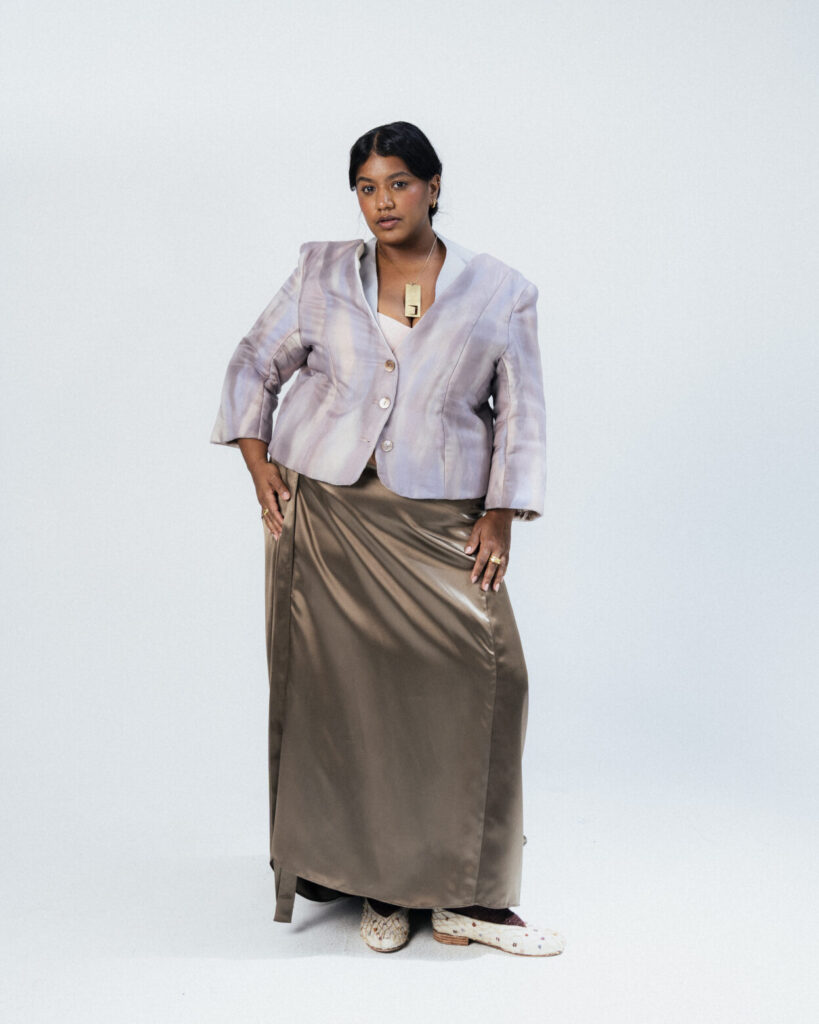
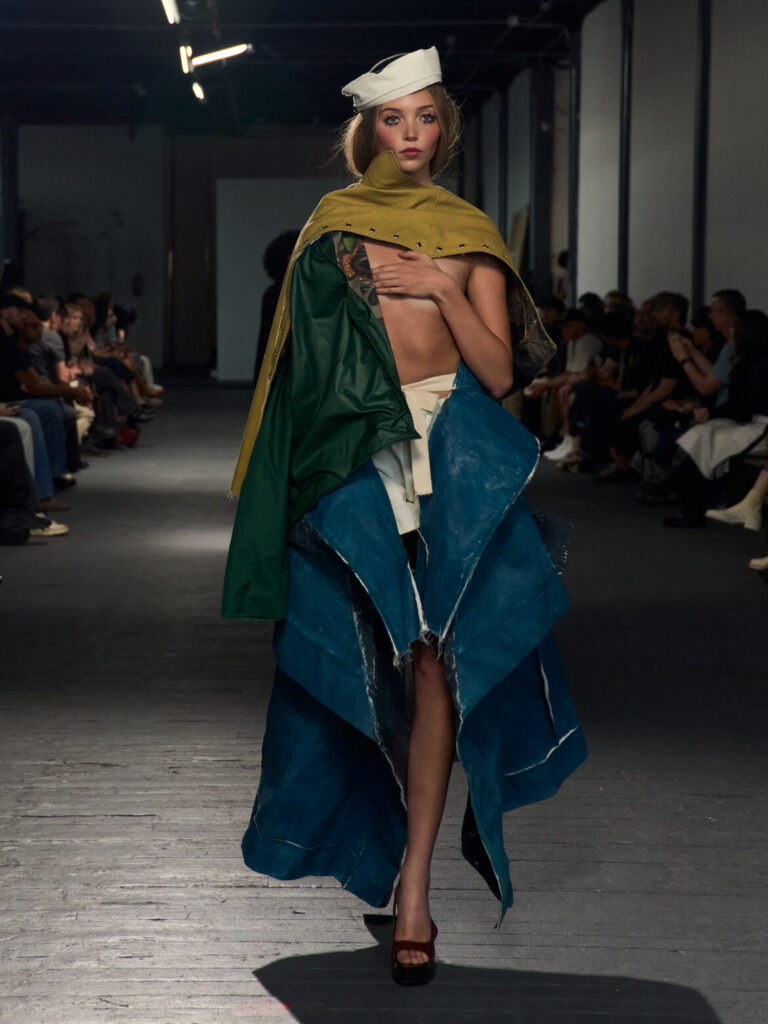
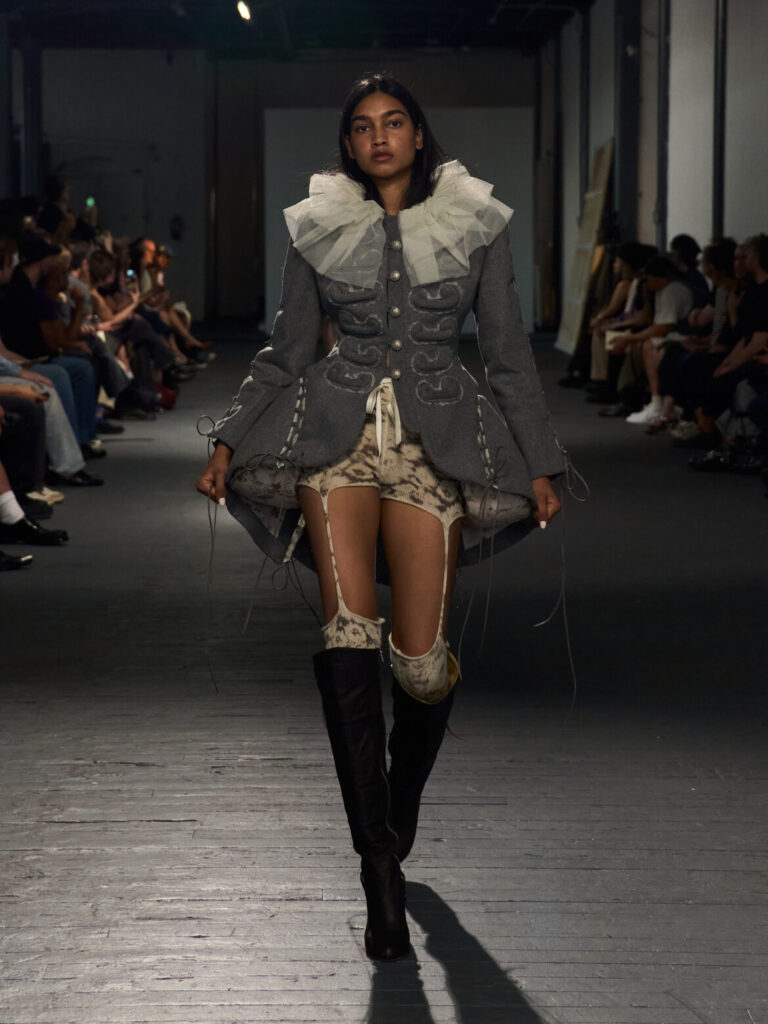
Photo courtesy of Thiha Min Zin
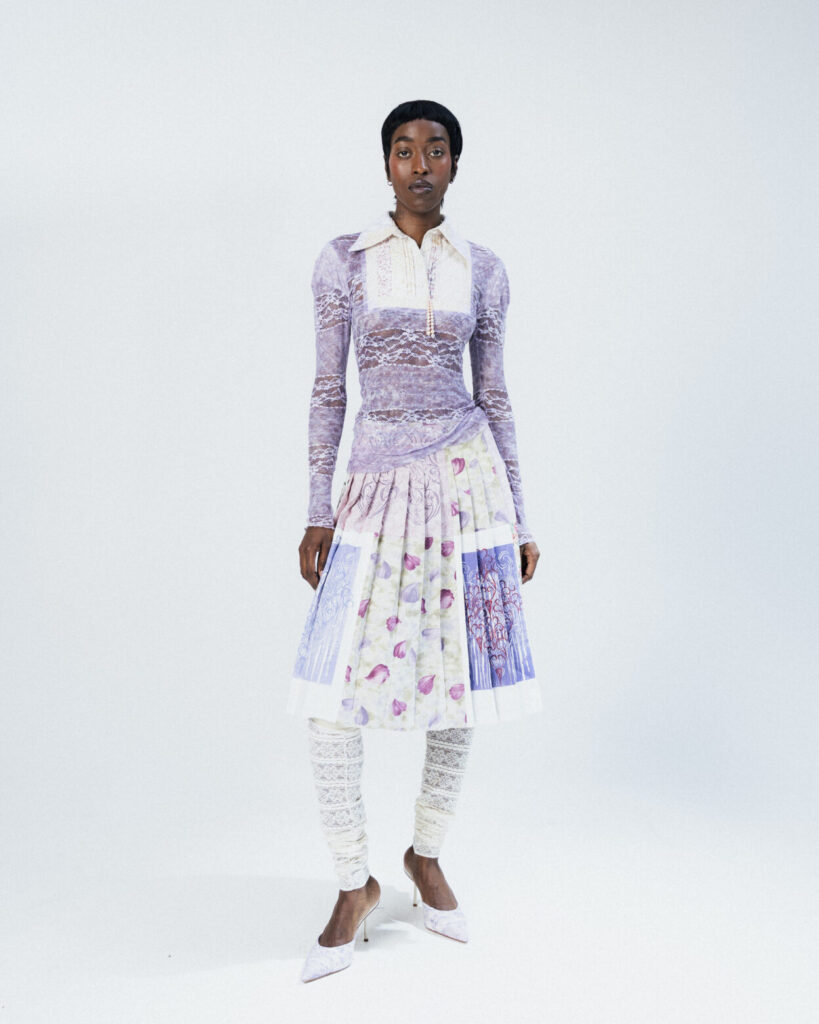
Photo courtesy of Alicia Zhu
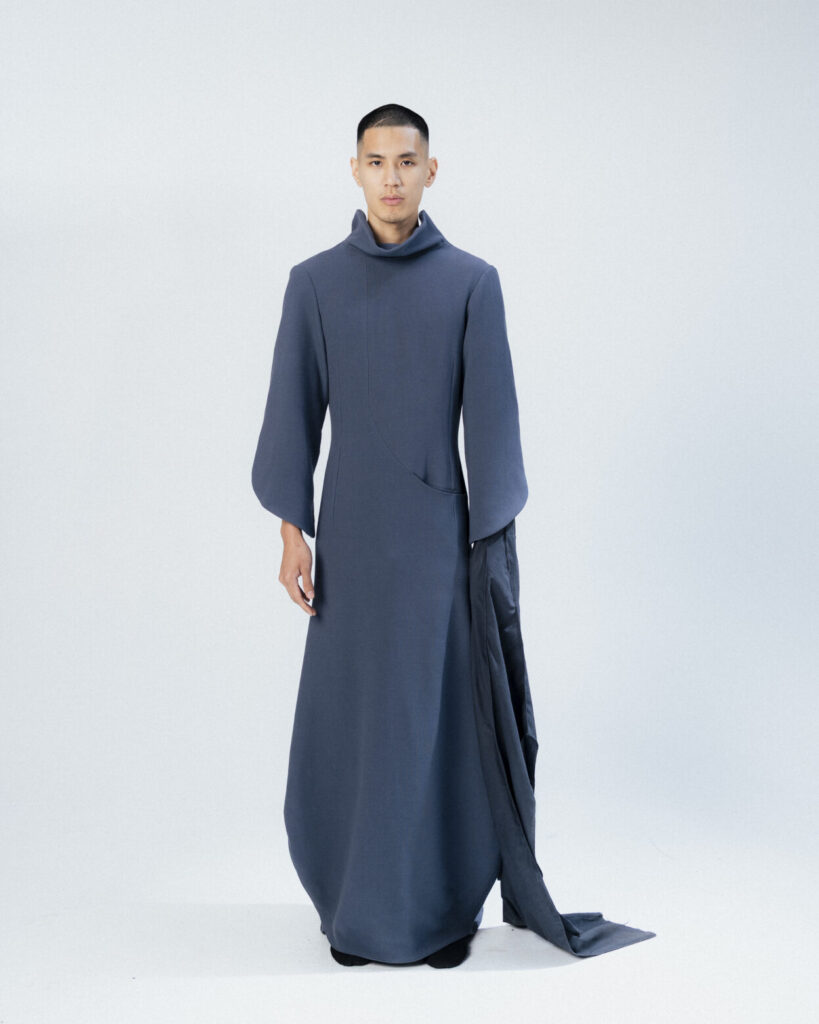
Photo courtesy of Alicia Zhu
Mahima ‘Palika’ Sirikulthada, Parsons fashion design ‘26, tracked the body through space and how it is often surveilled. Gigi Genivia So, Parsons fashion design ‘26, married function and performance through deep hues and theatrical silhouettes. Tamara Trujillo, Parsons fashion design ‘26, took to shimmering forms to explore the meaning of loss. Mayra Tuncel, Parsons fashion design ‘26, kept things close to the body, soft knitted forms in lace tones. Amina Walker, anchoring on her heritage, took to quilted forms of plaids and stripes through patchwork. Daphnie Yang, Parsons fashion design ‘26, influenced by sculpture, leaned into the construction through a mirage of grey forms anchored by identity.
Following the show, Dialective Co-Founder Grace Gordon wrote, “To take an idea that’s burning in your heart and spend hours of your time executing. It is a rare thing. It’s a beautiful thing. And it’s wonderful that we have been able to develop a platform for people in their early twenties to do this.”
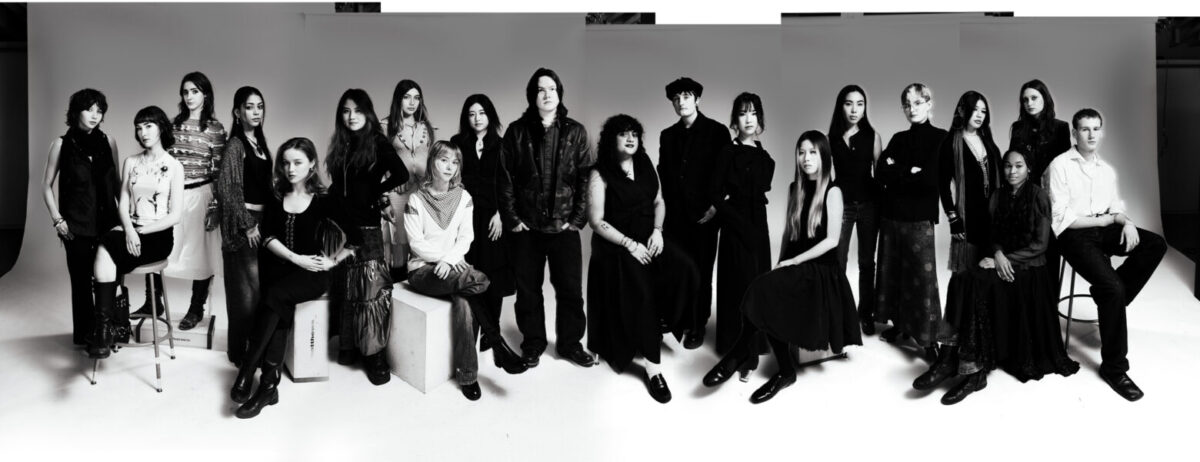
2026 DIALECTIVE designers. Photo courtesy of Alicia Zhu
Leave a Reply