
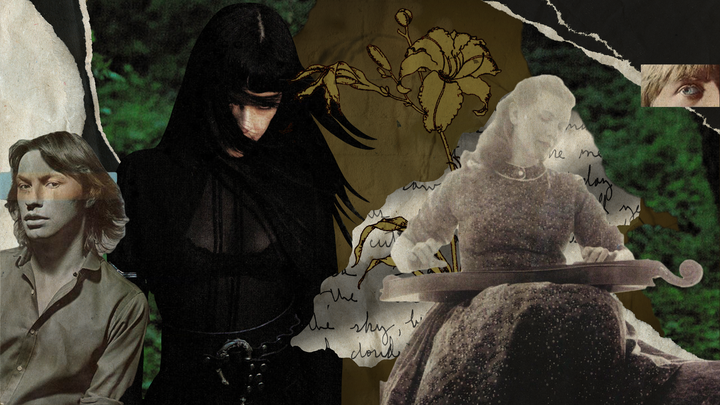
I would like to issue a warm welcome to the first installment of New School Sound Check: the hot-off-the-press series where we dive into the music tastes of fellow New School community members. With winter in full swing, it’s the perfect time to cozy up inside and explore new music. For this week’s installment, I asked folks to tell me about a lesser known, but personally formative album. So without further ado, let’s jump into the introductory edition of New School Sound Check:
Indie’s Recommendation
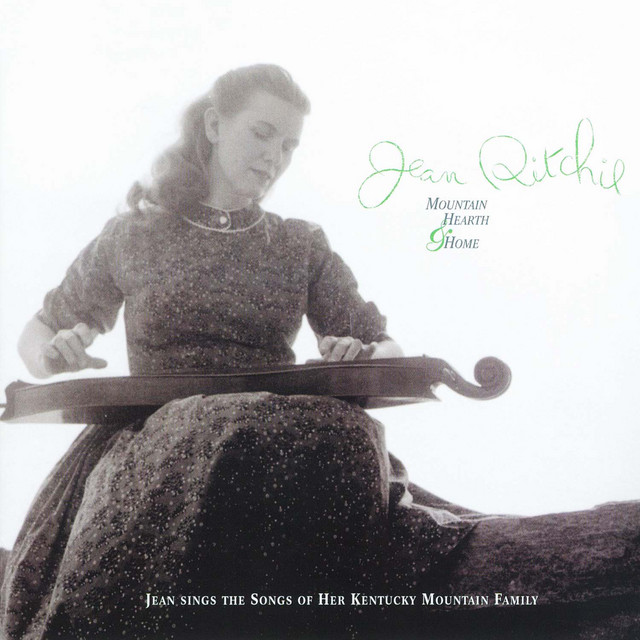
Mountain Hearth & Home
Jean Ritchie
2004
Indie is a third-year art & philosophy student at Eugene Lang College of Liberal Arts. They recommended Jean Ritchie’s Mountain Hearth & Home, a 2004 compilation of songs originally recorded between 1948 and 1950 under Elektra Records. Jean Ritchie, often dubbed “the mother of Folk,” was an Appalachian dulcimer player known for her contribution to the American folk revival movement and her repopularization of the Appalachian dulcimer.
For Indie, Jean Ritchie’s music was a gateway into their current interest in Smithsonian Folkways Recordings, the nonprofit record label for the Smithsonian Institution dedicated to archiving American music. Indie said that Ritchie’s music has inspired them to explore more Appalachian and American folk music and consider music archival work as a future career path.
Mountain Hearth & Home’s extensive 37-track run provides the perfect playground to showcase Ritchie’s impressive vocal range. Her sharp, crooning voice oscillates between songs, at times morphing into a resounding and full-bodied instrument, like on the track “Let the Sun Shine Down on Me.” On other songs, she sets the burner to simmer and allows the gentler notes of her voice to shine through in a shimmering waver, as can be heard in the song “With Kitty I’ll Go.” Paradoxically, her voice can be both haunting and comforting, reflecting the melancholy of slowly dissipating tradition contrasted against Ritchie’s conservational attempts to combat the inevitable erasure of culture.
Fans of this album should check out Reverend Kristin Michael Hayter’s 2023 project SAVED!, Elizabeth Cotten’s 1989 reissue of Freight Train and Other North Carolina Folk Songs and Tunes, and Jackson C. Frank’s 2004 re-release Fixin’ to Die.
Adam’s Recommendation
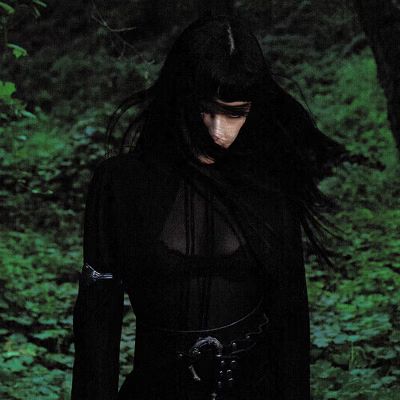
Melt
Not for Radio
2025
Our next album comes from Adam, an exchange student from Amsterdam studying at The New School. Their recommendation is Not For Radio’s 2025 album Melt. Not For Radio is the solo project of María Zardoya, the lead vocalist of the indie-pop band The Marías. Adam, who has been a fan of The Marías since 2019, was first exposed to Melt at an upstate listening party.
Adam described the album as possessing a cold and introspective atmosphere, commenting that its sound feels like “dark green and rain.” This perfectly reflects the origins of the album’s creation, which Zardoya wrote in upstate New York in the middle of the winter.
Melt represents a deviation from the more commercial sound of Zardoya’s work with The Marías. While still operating within the echoing corridors of a tender musical dreamscape, Melt embraces some of the more ethereal and uncanny elements of dream-pop by slowing down the tempo and opting for a darker sort of relaxation. The smooth transitions from sultry jazz-inspired high hats to low-fi electronic drum kits create a dynamic interplay between the album’s contrasting motifs of romantic optimism and synthetic somberness — a choice that forms a fascinating yet subtle sensation of push and pull.
Fans of Not For Radio’s Melt should check out Felt’s 1982 album Crumbling the Antiseptic Beauty, The American Analog Set’s 1996 album The Fun of Watching Fireworks, and Frou Frou’s 2022 EP Off Cuts.
Maggie’s Recommendation
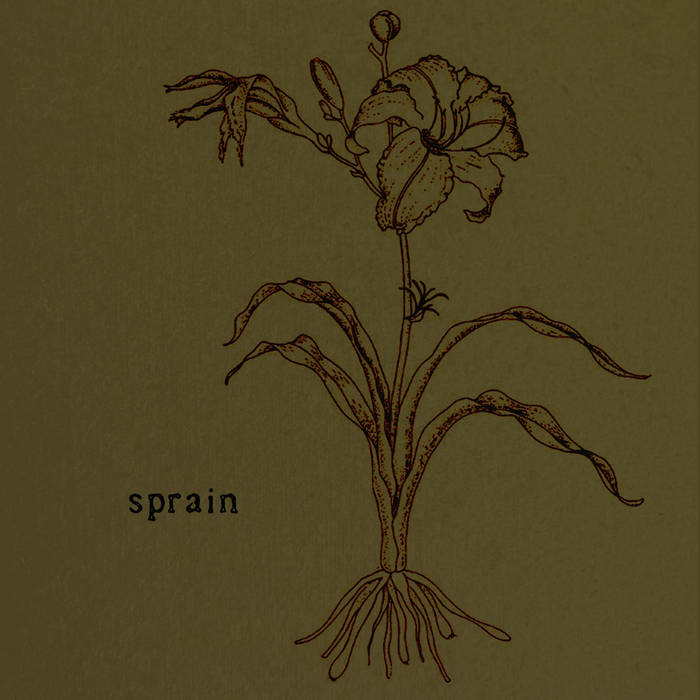
Sprain (EP)
Sprain
2018
Maggie, a fourth-year literary studies major at Eugene Lang College of Liberal Arts, recommends Sprain’s self-titled 2018 EP. Maggie was first introduced to the EP last summer by a friend, and their mutual adoration for the project helped cement their bond. They began performing covers of the tracks, eventually leading to the formation of their own band.
Maggie described the album as primarily soothing and introspective, although a sudden shift in the EP’s sound unexpectedly appears halfway through, temporarily embodying an intensity that evokes anger and discontent. The short five-track run manages to cover a lot of ground by gradually adjusting the tension between songs, culminating in a satisfying emotional release in the EP’s fourth song, “Deliver Us,” before entering into a period of recovery and processing in the final track, “Snowing.” Though tied together by the project’s slowcore tendencies and yearning lyrics, the scattered emotional outbursts punctuate flashes of sentimental expression that borrow elements from both folk punk and math rock.
Fans of Sprain’s self-titled EP may enjoy Bedhead’s 2014 compilation album 1992-1998, Tram’s 1999 release Heavy Black Frame, and Acetone’s 2017 compilation album 1992-2001.
Carlos’ Recommendation
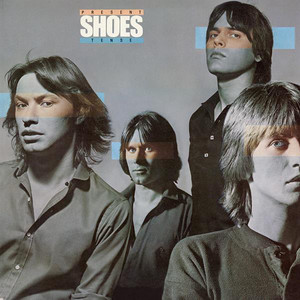
ALT TEXT: Present Tense album cover
Present Tense
Shoes
1979
Present Tense, the 1979 Elektra Records release from the band Shoes, is recommended by third-year urban studies student Carlos. He discovered the album while combing through his father’s personal record collection. Carlos described the album as a work of wholesome, late-’70s power-pop songs, notable for its catchiness and boyish innocence. He said the tracks were “like candy.”
While a self-described aficionado of the power-pop genre, Carlos had only encountered vague allusions to Shoes before finally exploring their discography. Despite their agreed-upon excellence, the band elusively toured, and thus never achieved true fame; but their lack of popularity certainly doesn’t mean an absence of skill.
The tracklist of Present Tense is chock-full of effortlessly confident earworms that can’t help but make you bust a move. Littered with punching bass lines, swinging guitar riffs, and knock-your-socks-off power chords, this 1979 release is a masterclass in sonic misdirection. Present Tense hides a dark secret, as the upbeat optimism of the instrumentation manages to successfully obfuscate the bleeding heartache coursing throughout the album’s dejected lyrics.
The album is equal parts invigorating and lamentable — an earnest and dogged attempt to represent the complexity of romantic love; a love that simply refuses to quit no matter how choppy the waters may become.
For those enamored with Shoes’ unique brand of power-pop, check out Jellyfish’s 1993 album Spilt Milk, Ween’s 2000 project White Pepper, and The Merrymakers’s 1998 release Bubblegun.
That wraps it up for the first installment of New School Sound Check. I hope you feel a little bit closer to the members of our community after discovering how these albums have directly impacted some of those around us. At the very least, I hope you walk away with an exciting new piece of music. Make sure to tune in for our next installment where we’ll be discussing more recommendations!
Signing off,
Cougar
Featured Music
Mountain Hearth & Home by Jean Ritchie
SAVED! by Reverend Kristin Michael Hayter
Freight Train and Other North Carolina Folk Songs and Tunes by Elizabeth Cotten
Fixin’ to Die by Jackson C. Frank
Melt by Not For Radio
Crumbling the Antiseptic Beauty by Felt
The Fun of Watching Fireworks by The American Analog Set
Off Cuts by Frou Frou
Sprain by Sprain
1992-1998 by Bedhead
Heavy Black Frame by Tram
1992-2001 by Acetone
Present Tense by Shoes
Spilt Milk by Jellyfish
White Pepper by Ween Bubblegun by The Merrymakers





Leave a Reply