
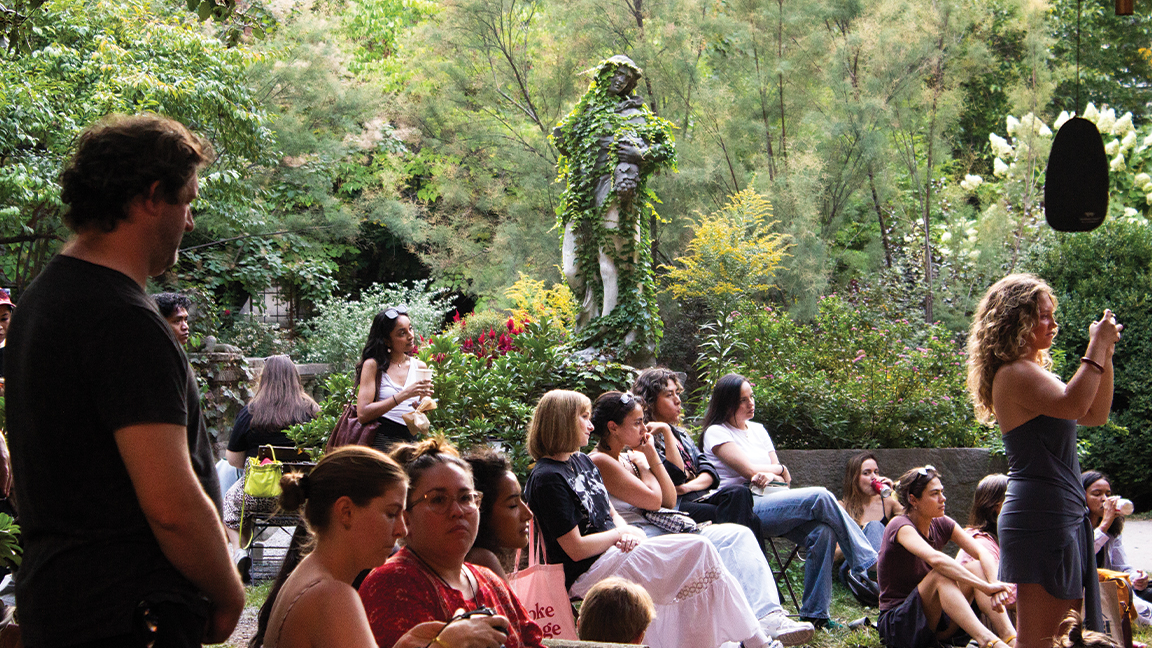
Poets, friends, and neighbors gathered in the Elizabeth Street Garden in Nolita for the last poetry reading of the season. On Sunday, Sept. 28, the sound of wind chimes and chatter filled the air as folks embraced and spread out colorful picnic blankets on the grass. Whimsical statues of goddesses, stately sphinxes, and other animals flanked the gathering crowd.
At 5 p.m., Joseph Reiver — the executive director of Elizabeth Street Garden, Inc., the nonprofit that manages the garden — approached a microphone in front of the gazebo. He welcomed everyone to the garden and explained that the poetry program, which has run biweekly from June until early October for the past five years, gives local writers a space to share their work.
“The big news this year, and it’s kind of a nice thing to be able to end this season with a positive note, is that we saved the garden,” he said. The audience met this news with enthusiastic applause.
From whom was the garden saved? The city government.
New York City owns the property, and prior to Nolita residents’ outrage, officials intended to build 123 units of affordable housing for seniors on the lot as part of Mayor Eric Adams’ “City of Yes for Housing Opportunity” plan.
The need for affordable housing is dire; the city’s vacancy is 1.4%, the lowest it’s been since 1968. But the garden is a beautiful, irreplaceable source of community, its visitors insisted. Affordable housing and green space shouldn’t be treated as opposing needs.
“We worked with many different groups — the community board, a lot of different elected officials over the years — to identify alternative sites in the district, so as not to say you have to lose green space and community green space in order to gain affordability,” Reiver said.
Reiver, the son of the garden’s creator, Allan Reiver, has been one of its main advocates since 2013.
“Every time we found a public site, the city said, ‘Well, we’ll build on that too,’” Reiver said. “Frankly, they said, you could find 10, 20, 30, 40, 50 sites — we’ll build on all those and the garden, which to us was a dismissal of the thousands and thousands of people who have been advocating over the years.”
Some of these advocates volunteer at the garden and read their own writing at the poetry nights. Others, Reiver said, are community members drawn to the garden’s free programming, which includes gardening, yoga, tai chi, live music, movie nights, holiday celebrations, and educational workshops on stewardship.
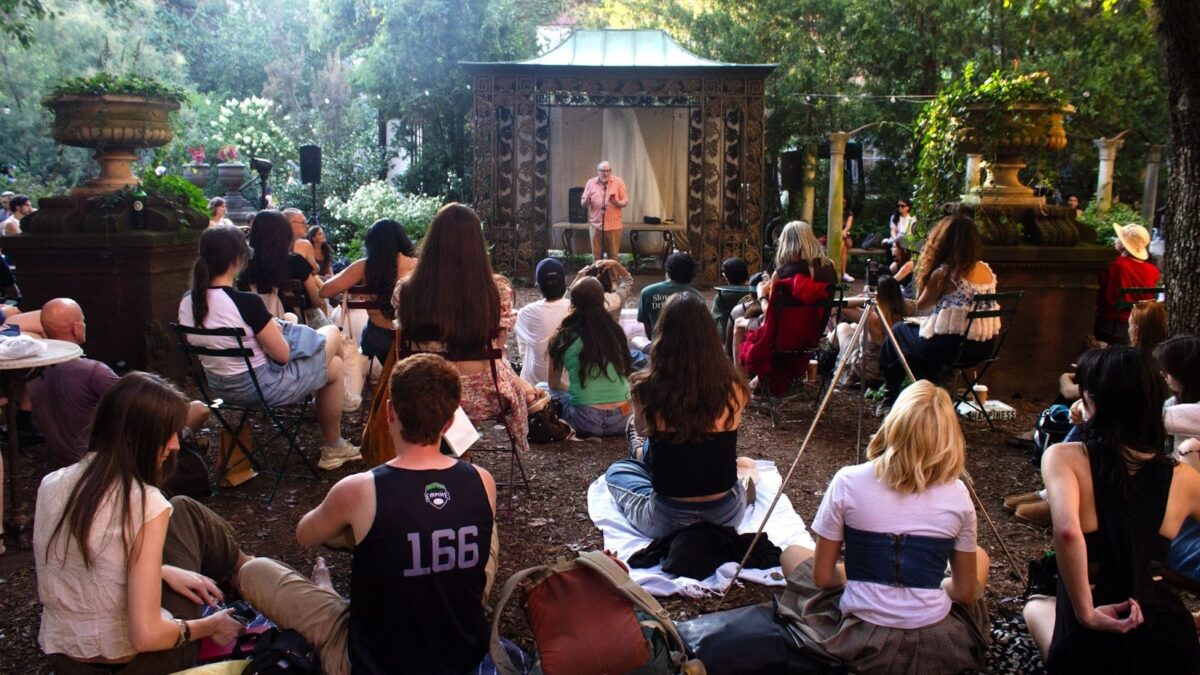
Photo by Lauren Schafer
Natasha King, a therapist who regularly attends the poetry nights, is one of those individuals. She admires the garden so much that when she took to the mic that evening, she read a poem about it. “I love the peace and the quiet,” she said. “Everything’s happening in this garden, whether it’s a breakup, TikTok, or intimate conversations.”
The garden serves as a refuge for everyday moments in an otherwise packed neighborhood.
Bella Pinico, a student and writer at Marymount Manhattan College, finds the space equally inspiring. “Who I am as a person and who I am as an artist — a poet, specifically — is so grounded in nature and flowers and all of the elements,” she said. “So getting to come here consistently has been like almost a ritual for myself through the craziness that life can bring to show up, commit to myself, and put my art into such a beautiful space.”
While there are other places in New York with flowers, the garden is distinct for its ornate sculptures and columns, and for providing a regular, intentional space where writers uplift one another.
Neha Sharma, a poet who has visited the garden since 2017, described the poetry nights as “a great equalizer which brings people together from all walks of life, ages, backgrounds, and whether you identify as a poet or not, this is a place for anyone who just wants to weave words together.”
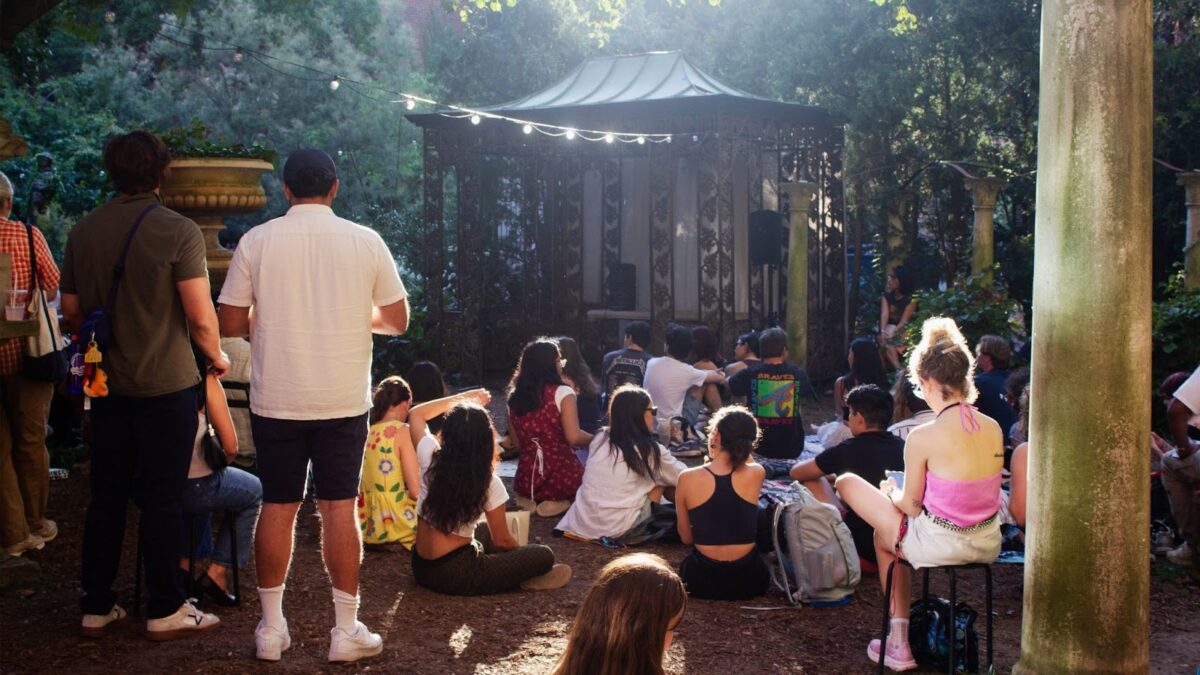
Photo by Lauren Schafer
Sharma shares Reiver’s belief that city officials have falsely framed the choice between affordable housing and green space as inevitable. When the garden received an eviction notice, she helped rally support by sending letters to the mayor’s office and attending protests. She thinks city officials are threatening the existence not just of the Elizabeth Street Garden, but green spaces across the city.
Reiver wants New Yorkers to recognize these threats. He explained that Mayor Adams’ Executive Order 43, issued last year, instructs the city to review all public land for potential housing sites — including community gardens with license agreements that can be terminated with 30 days’ notice.
“The people of New York are kind of given this false sense of claim to public land where the city is like, ‘Yeah, this is a public space. You can steward it. Community gardens are nice, but, you know, we can take this away at any time,’” Reiver said. “The concept of making New York more affordable is weaponized, and then communities are pitted against one another.”
But thanks to individuals like Sharma and Reiver, not only will the garden and its poetry nights continue, but also the city will create more than 620 new affordable housing units across three sites in Nolita: 100 Gold Street, 22 Suffolk Street, and 156-166 Bowery. That’s five times the number of units that would have been constructed if the garden were destroyed. Reiver says the agreement is proof that affordable housing doesn’t have to come at the expense of community spaces.
“The garden itself is like physical poetry,” he said. “Art begets art. And that’s why you have people painting, taking photographs, playing music, writing poetry, and falling in love.”












Leave a Reply