

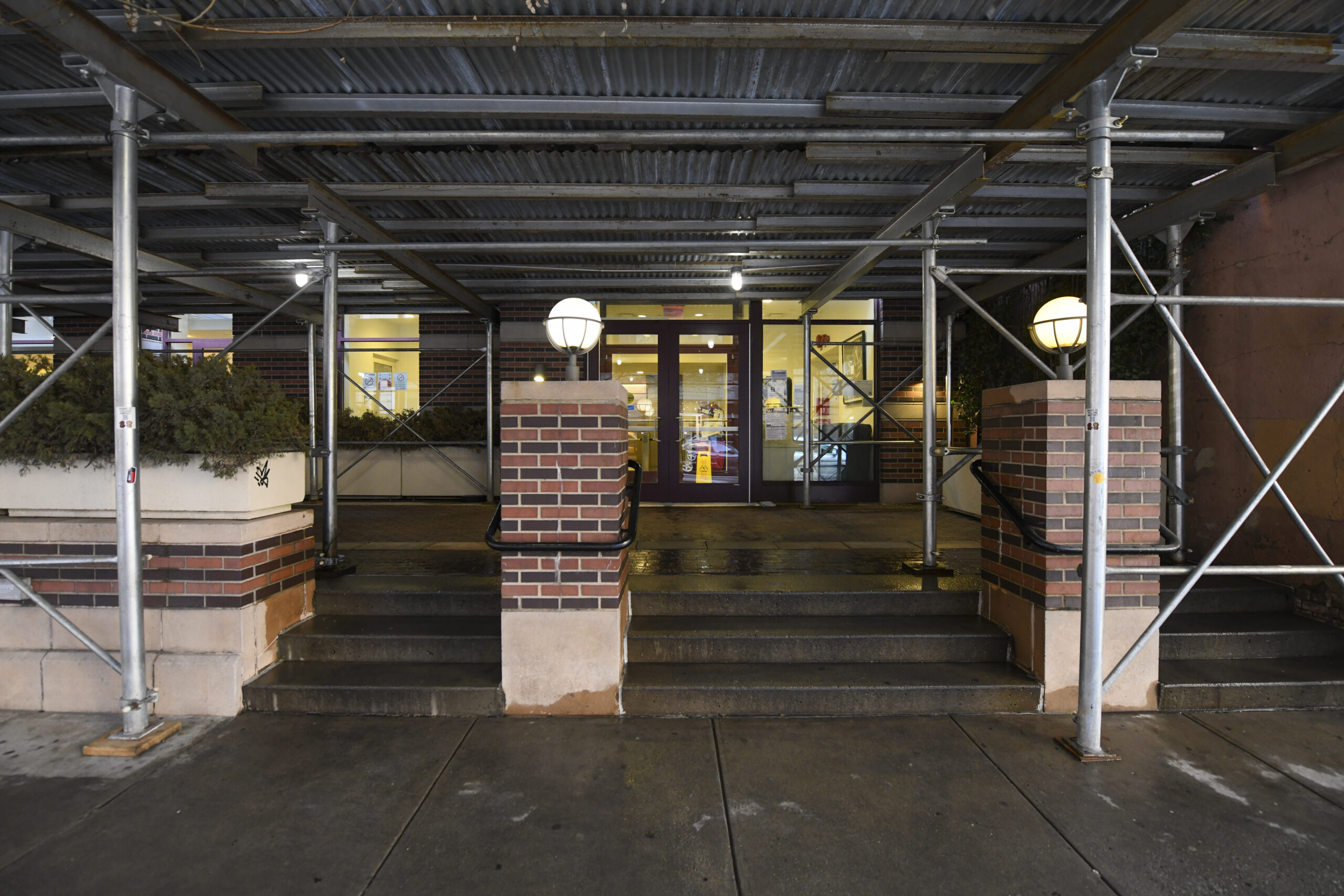
301 Residence Hall has been thrust into the spotlight, amid The New School’s controversial cost-cutting process to resolve an at least $48 million operating deficit.
301 already has a reputation on campus. It loses money. It has a history of problems. And, according to a memo shared on Instagram in December, 301 was a “$500 million insider deal” that “drains” money from the university’s budget to Board of Trustees member Jeffrey Gural’s company, GFP Real Estate.
The Instagram post, shared on Dec. 13 by University Student Senate, The New School’s American Association of University Professors, Part-Time Faculty Union, Student Employees at The New School, and Academics Come Together-United Auto Workers 7902, and Academics Come Together, alleged The New School “paid $65 million for the privilege of giving Gural $9.5 million every year until 2069.”
The reality is more complex.
An investigation by the New School Free Press confirmed that 301’s lease will cost the university approximately $500 million over its lifetime and that the deal involves a Board of Trustees member’s company. However, key claims, including how much GFP Real Estate profits from the arrangement and whether Gural’s alleged ownership stake is accurate, could not be independently verified.
New York State Department of State Division of Corporations records show two Delaware-registered Limited Liability Companies (LLC) behind the deal, both listed at GFP’s address. 301 First Dorm Condo LLC developed the dorm, sold it to the university, and has since surrendered its authority to operate in New York. 301 First Owner LLC, however, remains active. The LLC owns the land 301 is on and collects The New School’s lease payments according to the New York City Department of Finance.
Brian Steinwurtzel, Gural’s nephew and GFP’s Co-CEO, declined to disclose 301 ownership shares, citing “industry practice.” NSFP was also unable to obtain the lease agreement or internal financial documents related to the deal, which are not public records.
In an interview at GFP’s Madison Avenue office, Gural said the 301 deal was arranged by Steinwurtzel. Gural said Steinwurtzel had been converting buildings into housing when The New School allegedly approached GFP looking for a new dorm building. Steinwurtzel then informed Gural of the project.
“I said to the school, I’ll recuse myself, and any money that I make I’ll donate to the school,” Gural said. Gural said the university told him not to speak with NSFP.
Gural said he owns 3% of 301 — separate from GFP’s stake in the building, which Steinwurtzel declined to disclose. GFP also collects a management fee for overseeing the building’s operations, according to Gural, who said the fee covers a property manager’s salary.
During the interview, Gural called for Andrew Sapienza, managing director and controller of GFP, to ask how much GFP makes from the dorm. “$1,000 a month,” Sapienza replied.
“That’s how much, $1,000 a month?” Gural said. “Thank God it’s not $100,000 a month. Now you’re a fucking witness. I had no idea. I took my chances.”
NSFP reached out to Steinwurtzel to elaborate on his involvement, confirm Gural’s claims — including how much GFP makes from 301 — and to break down the LLCs that divide 301’s ownership between GFP and its joint partner, Meadow Partners.
Steinwurtzel did not directly answer any of the questions, saying “industry practice forbids the disclosure of investors and ownership shares.”
The 301 deal adhered to “industry standard practices” and was “structured to avoid any conflict of interest,” according to Steinwurtzel.
Steinwurtzel said the investment “was achieved with highly structured bond financing — at rates far more advantageous to The New School than those available today — with multiple financial institutions. GFP and its affiliates and lenders are to be paid back over the life of the lease through the lease payments.”
In other words, the 301 deal was funded through bonds (loans made by an investor to a borrower, usually corporations or government entities), which TNS repays through its lease payments over the 50-year lease. Steinwurtzel claimed the interest rates set at the time were lower than what the university could get now, though NSFP was unable to verify this.
Steinwurtzel then directed NSFP to speak with TNS administrators.
Francisco X. Pineda, executive vice president for business and operations and chief operating officer at The New School, said the university consulted “two outside firms that provided fair valuation opinions as well as legal opinions on the recusal and the separation of the conflict of interest.”
TNS’s 2020 financial statements, independently audited by KPMG, show that “outside counsel”, consulted by the university, affirmed that engaging with GFP was “in the best interest of and provided substantial benefit to the university.”
“Anyone who thinks that there was anything done here that was unethical is crazy,” Gural said.
A student familiar with the Instagram post, who was granted anonymity due to fear of retaliation, was skeptical of the university’s and Gural’s claims of recusal during the acquisition.
“[It’s] a small, close-knit group of board members. The way that these deals are made … they’re made in closed room discussions. Obviously, a [recusal] is not going to lead to an actual fair process,” the student said.
Another concern mentioned in the Instagram post was a lack of “competitive bidding or any attempt to protect the university’s interests.”
Pineda told NSFP, “I believe that some of the documents I saw, we had looked for a couple buildings, but we couldn’t reach a deal.” Pineda cited limited options, high prices, and that some options were not yet configured as dorms.
Stephen Stabile, who served as The New School’s vice president for finance and business at the time, signed the deed, the power of attorney, and the subordination agreement on the university’s behalf.
The student shared with NSFP a memo written and circulated by Pineda in response to the Instagram post. The memo was not shared publicly, but was circulated among faculty and students who had raised questions about 301, according to the student.
Pineda wrote that claims of any inside deal are “inaccurate and misleading, with no evidence of self-dealing.” His memo explained the basics of 301’s finances and stressed 301’s importance to the university, calling 301 a “Revenue-Generating Asset.”
A history of loss
301 is the only dorm that is leased, not owned. Leasing a building is a common practice for nonprofits and it helps lower costs for students, according to Merrie Snead, associate director of communications at The New School.
The New School pays approximately $10.3 million annually to lease 301, up from $9.5 million when the lease began in 2019, according to figures shared by Snead. The lease includes an 8% rent increase every four years until the lease ends in 2069. The 50-year lease will cost $500 million in annual payments plus interest, according to Snead.
The $65 million figure that was criticized in the memo shared to Instagram is, according to Snead, a legal representation of 301’s monetary value. Snead said it gives The New School ownership rights that let the university avoid property taxes that would result in higher prices for students.
Snead wrote 301’s acquisition was “executed by a prior administration based on enrollment projections and market conditions that no longer exist.” Since 2019, enrollment at The New School has plummeted, now at its lowest in a decade. Snead called the situation a “mismatch.”
The university’s other dorms — Kerrey Hall, Loeb Hall, and Stuyvesant Park — run at a loss, even at full capacity, according to the spring 2025 budget meeting and figures shared by Snead. But 301 has historically contributed far more to the university’s deficit than the other dorms, which are all owned by the university, according to figures shared by Snead.
“It was fair market value,” Pineda said. “Then COVID hit, then the real estate bubble burst, and then we lost. And not just us. All other schools lost a lot of students.”
Tokumbo Shobowale, who served as The New School’s executive vice president for business and operations from 2013 to 2023, declined a request for an interview.
From July 1, 2021, to June 30, 2022, 301’s deficit on an accrual basis (money earned and owed, but not necessarily exchanged) was $3.2 million. In 2025, the deficit was $10.2 million after occupancy dropped to 69% that year, according to figures shared by Snead.
In 2024, the university did not offer 301 as a first-year housing option. That year, the university implemented the first-year housing requirement. 301 eventually became overflow housing for upperclassmen looking for dorms. The lease was not terminated despite administrators assuming it would be, according to the spring 2025 budget meeting.
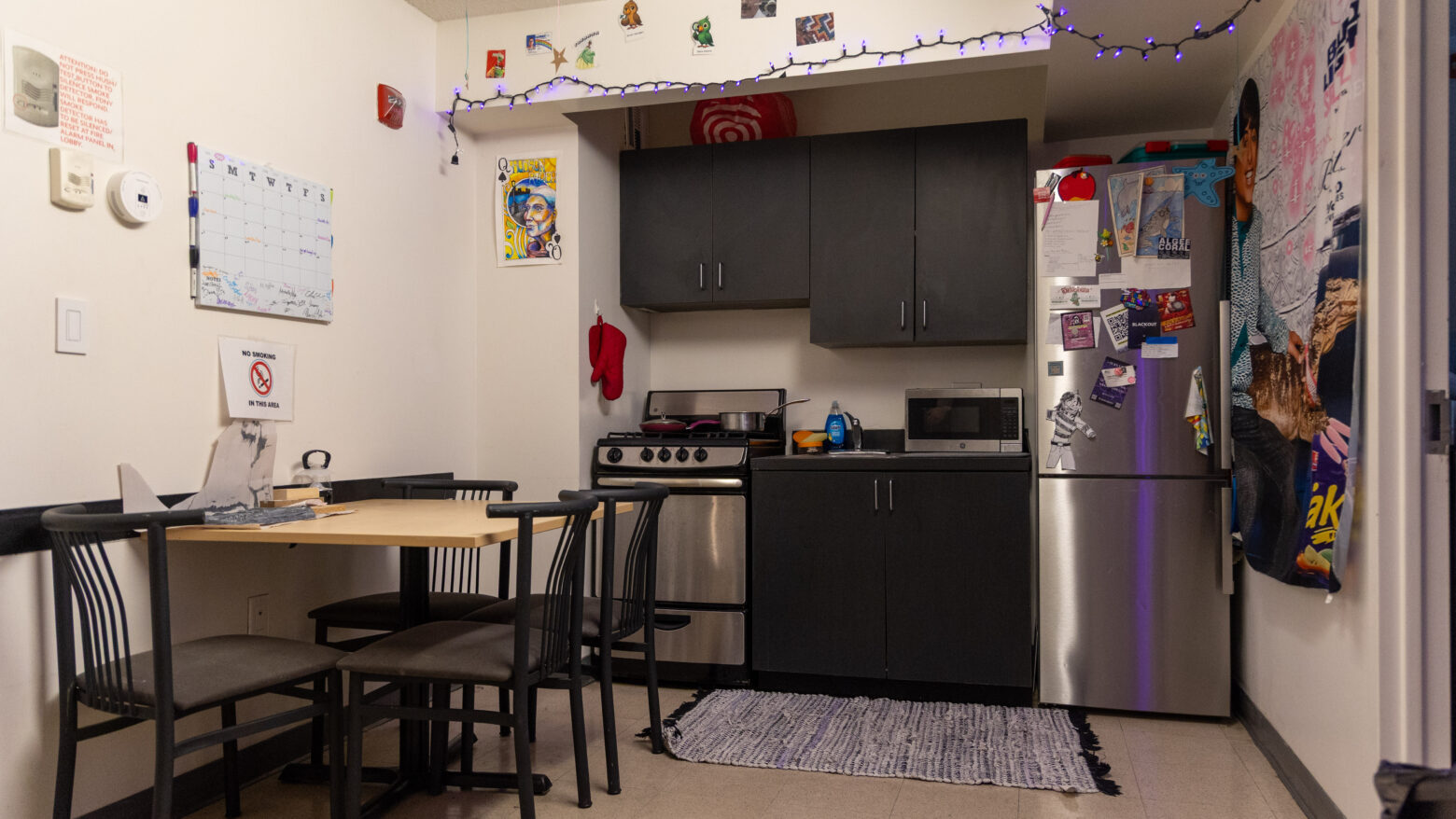
301 is primarily funded by the fee students pay to live there — a double runs over $20,000 per year.
Annual Deficits for 301 Residence Hall
The 301 Residence Hall has been in a budget deficit since opening.
Source: Datawrapper
Annual Occupancy Rates for 301 Residence Hall
The 301 Residence Hall’s declining occupancy rates contribute to its deficit.
Source: Datawrapper
When combined, the university’s dorms ran a $9.9 million deficit from July 1, 2024, to June 30, 2025, on an accrual basis, and spent $4.7 million more in actual cash than they collected. From July 1, 2021, to June 30, 2022, the vacant, for-sale 13th Street dorm generated a $2.5 million loss.
The dorms’ total occupancy hit a four-year low of 78% from the fiscal year between July 1, 2022, and June 30, 2023, when Stuyvesant Park was still being rented.
Annual Deficits for Across Residence Halls
The residence halls are contributing to an overall deficit.
Source: Datawrapper
Annual Occupancy Rates Across Residence Halls
The residence halls’ declining occupancy rates contribute to their deficits.
Source: Datawrapper
Between July 1, 2024, and June 30, 2025, the university reduced housing rates charged to students by about 15%. All but 301 operated close to break-even as occupancy across all dorms was 83%. Last semester, occupancy across all the dorms was at 96%, a four-year high, which administrators have attributed to the freshmen housing requirement and earlier dorm application timelines.
A history of problems and a look to the future
In 2022, a pipe burst and forced seven students to evacuate. On April 2, 2023, a kitchen fire caused sprinklers to flood stairwells and common areas, resulting in 55 students being evacuated. Later that month, all 540 students were forced to move out of 301 following issues with gas lines.
Last semester, flooding caused an electrical outage, according to third-year Literary Studies major and 301 resident Owen Morgan. He noticed the outage when he woke up.
Also, banging and drilling from construction on the building’s facade disrupted students’ peace from mid-September to December. Some students have had construction debris enter their room through the windows. Other students have had workers peer into their windows.
“It literally sounds like an earthquake in the room,” Morgan said in an interview last semester.
301 will be available to students for the 2026-27 academic year, according to a Feb. 4 email to students from University Housing advertising on-campus living. Students of any year can live there.
“I wish I could get all of these leases and come back on a market that’s in a much better position for us,” Pineda said. “But I’m also constrained.”
Pineda said faculty, university administration, the general counsel, and an external counsel all looked at the lease to see if it could be renegotiated or ended without breaking the law.
“Ultimately, no,” Pineda said. “It’s tight, it’s impossible to do it.” He’s still “exploring ways to improve our position,” but also doesn’t “think we can afford to lose the inventory, irrespective of what the agreement is.”
Pineda, in addition, emphasized 301’s accessible units (19 units for students with audio and visual impairments and seven units that are wheelchair-accessible) and its on-site cafe.
Meanwhile, enrollment at TNS continues to plummet. Enrollment next semester is expected, per meeting minutes from the Financial Transparency Council and an email from The Office of The President, to only be 8,400 students — a further drop than last semester’s decade-low enrollment of 8,900 students.
Snead said the drop will result in an “oversupply of beds.”

Leave a Reply