
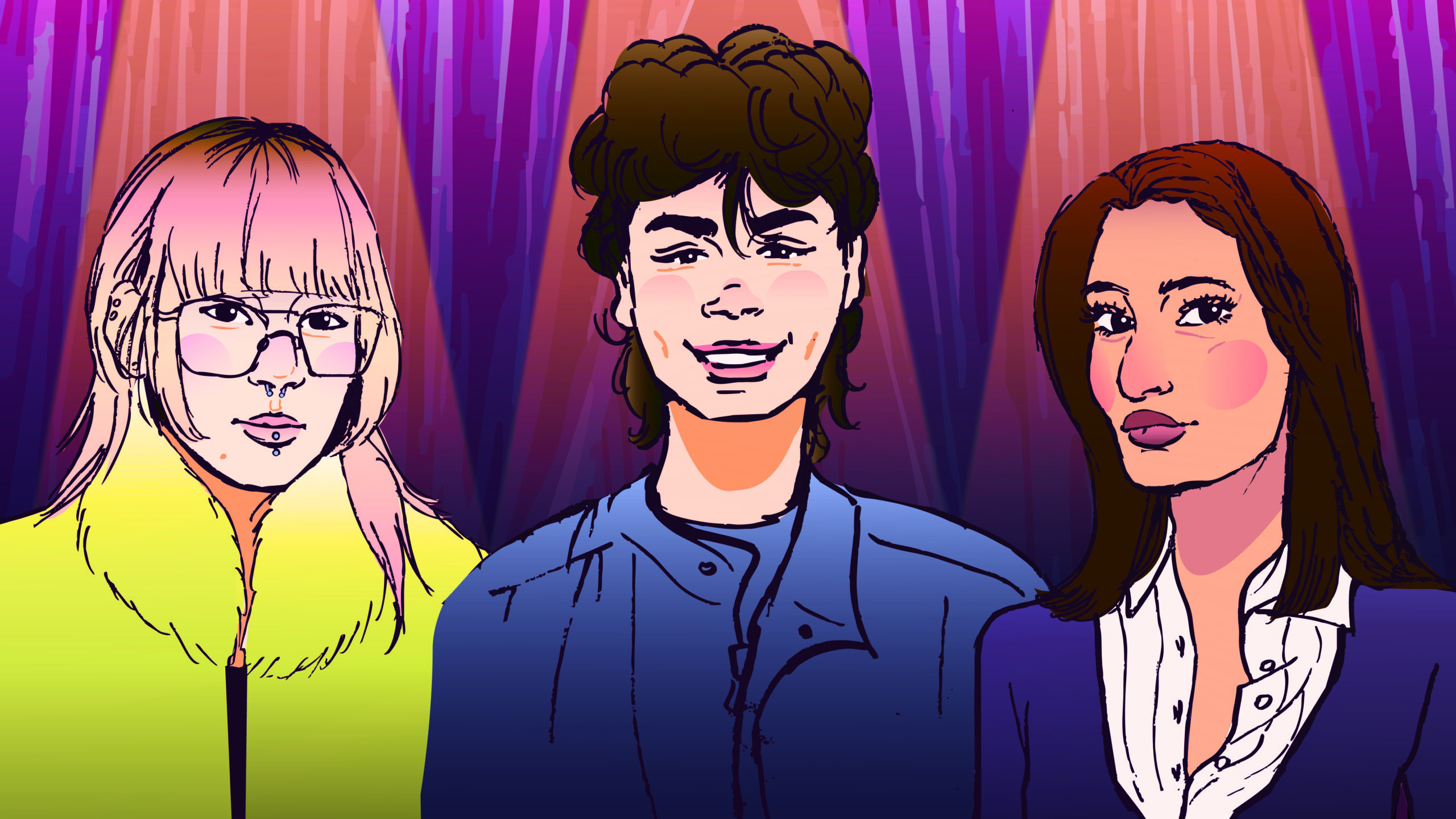
For New York City fashion students, the most electric time of year is always New York Fashion Week (NYFW). For a brief, chaotic stretch of days, the city turns into a moving runway, and students find themselves everywhere at once — backstage, in studio spaces, and hovering just beyond the lights of the front row — gaining hands-on experience with designers they’ve long admired.
While designers often dominate the NYFW narrative, the behind-the-scenes reality often looks different. A show’s success relies on dedicated students and interns. Despite students providing integral work for a collection — dressing models, constructing garments, and handling operational tasks — they are often overlooked and uncredited. This season, three New School students are disrupting the fashion industry standard and carving out space for themselves. Here is a look at some of their work.
Ashlee Calvar
After working three shows this season, Ashlee Calvar, a second-year Strategic Design and Management student at Parsons School of Design, is filled with nothing but gratitude. “I was very proud that the work that I did really came to something that people enjoy,” said Calvar.
Calvar was not new to the chaos of NYFW, having previously worked two seasons as a dresser for Cucculelli Shaheen. This season, Calvar finally stepped into more design-focused roles, assisting celebrity-favorite designer Christian Cowan’s Fall/Winter 2026 show and Veejay Floresca’s debut presentation on the Council of Fashion Designers of America (CFDA)’s Fashion Calendar.
For Christian Cowan, Calvar served as a studio atelier assistant, largely assisting with final finishes of garments before they are shown.
This role didn’t just fall in her lap. It took a few attempts to finally secure the job. “I did actually try to intern with them [Christian Cowan] last season,” said Calvar. Yet after an initial reply, she was left without a follow-up response.
Still, Calvar wasn’t deterred. Through intentional research and relentless outreach, she kept pushing forward. “Every fashion week season, even for brands that I don’t know about, as soon as the schedule drops, I cold email,” Calvar said.
This season, one of those cold emails paid off, landing her a position as a design intern for Veejay Floresca. As a design intern, Calvar was able to take part in both garment construction and contribute to the creative process. “I didn’t really feel like an intern. I felt like an actual partner,” Calvar said.
The glamor of fashion week can be enticing, but students may find themselves compromising basic needs to work on collections. Leading up to fashion week, Calvar balanced running errands for Christian Cowan and 12-hour studio days for Veejay Floresca with a part-time job and school. “I’m going to be honest, I passed out the Tuesday right after fashion week ended,” Calvar said. “It was very exhaustive. But I feel like it was worth it.”
And the hard work paid off. Following Veejay Floresca’s presentation, Vogue Philippines featured photos of Calvar finishing pieces backstage. “I was very surprised to see myself in [the magazine], and I’ll be honest, I started crying on the train,” Calvar said. “It’s very rare to be credited. I think just the concept of being seen is very important, like, across all industries.”
While not every student will end up in Vogue, Calvar hopes more recognition is given to the students who make fashion week possible. “People don’t really think about the interns when it comes to fashion week, but they’re a very crucial part to every show —even just the dressers,” Calvar said. “You can’t really put on a show without them.”
Alex Waterman
For the people working behind the scenes, the day of a fashion show is nothing short of controlled chaos. “It was all a blur,” said Alex Waterman, a second-year student in fashion design and design intern for Veejay Floresca. “The entire day of the show … I took two Celsiuses, and I just had to move and move and move,” Waterman said.
Waterman had only gotten around three hours of sleep the night before, with much of his time devoted to completing the collection.
According to Waterman, he constructed three of the collection’s 41 looks from pattern to finish, while sewing 10 additional looks and altering nearly every garment. The collection focused on featuring diverse bodies, a task requiring the expertise of trained designers. But for Waterman, his work was a natural application of the educational foundation laid by his classes: “One of the big things that I learned last semester was about designing for different body sizes,” he said.
Like Calvar, Waterman also had the chance to offer creative input into the collection’s development. “Obviously, we do it daily in classes, but to actually put it into the real world and then have feedback in real time is something completely different,” Waterman said.
Despite his contributions to the collection, Waterman shies away from taking too much credit. “I like to detach myself from it in a way, just because I was just the seamstress,” he said.
That hesitation, however, points to a broader culture within the fashion industry, where students’ behind-the-scenes work often goes under-recognized, even when it is essential. Vogue Business had reported, “Those working in-house to realise a star designer’s vision (as well as the workers producing the clothes) seldom share any of the spotlight.”
Waterman recognizes how this issue impacts his perception of his work. “I feel like there should be quite a bit more recognition. And I do feel like, oftentimes, the students don’t give themselves enough credit. It’s a weird feeling,” he said.
Ella Devi
New York Fashion Week isn’t just for designers — it opens doors across the entire fashion ecosystem. “People are more familiar with marketing and design, but sales is crucial to any business,” said first-year BA/BFA Literary Studies and Photography student Ella Devi.
For over a year, Devi has held a permanent role in the sales department at LaQuan Smith, where she works on both everyday operations and major moments like NYFW. During the most recent season, she helped with show production and the brand’s Market Week presentation, where collections are shown to buyers, clients, and retail suppliers.
In addition to her work at LaQuan Smith, Devi posts digestible fashion and cultural commentary on her TikTok account, which has garnered nearly 40,000 followers. Part of her work for NYFW includes creating commentary for the latest shows, with her video on Elena Velez’s show attracting nearly 200,000 views.
For Devi, creating content helps her to stand out in a competitive field. “I’m great at my job, and I worked really hard to get that job, but a lot of the opportunities I receive exist because I create content online,” Devi said. “Not only is creating content an attractive thing on a résumé, but it’s also a huge plus for a brand.”
Devi’s career in fashion started unusually early. She first began working in the industry in her early teens, and by 17, she landed her role at LaQuan Smith. Devi leads with her work ethic despite being half the age of her peers. “In my workplace, I’ve earned my position,” said Devi. “At the end of the day, it’s really not about how old you are, it’s how good [you are]… how familiar you are with your responsibilities and your roles.”
After nearly half a decade in this industry, Devi has a deeper perspective on the labor of fashion. “When you’re there [backstage at a show], you feel like your heart is going to stop. You can physically feel the life being siphoned out of you, and your lifespan being cut short,” she said. “So, you know, you have to think, like, do I love fashion this much?”
For Devi, the intensive work isn’t always glamorous, but the final product makes it all worth it. “I really do love the work that we put out at LaQuan. I loved this collection,” she said.
As the rush of fashion week dies down, the work continues at a steady pace until next season. With students eager to break into the industry, intentionality and effort are key. “Andre Leon Talley said, ‘fashion is not art, it’s hard work,’” Devi said. “And I do think it’s art, but, you know, most of it is hard work.”
Leave a Reply