
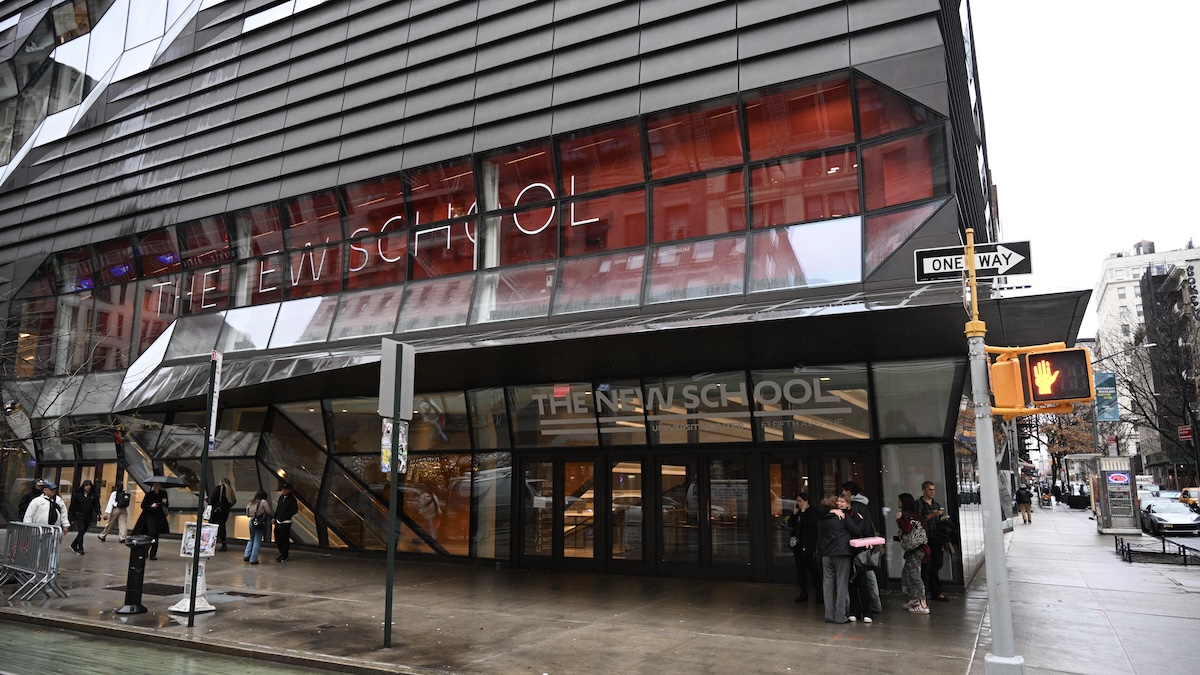
When I enrolled at Parsons School of Design, I expected difficult assignments and long studio hours. I did not expect the biggest challenge to be the chair I was sitting on.
For a school built on design thinking, The New School’s infrastructure often feels like it was an afterthought, and students feel it every single day — in our backs, in our schedules, and definitely in our patience. Ergonomics — making design efficient — feels like a foreign concept, even though we are supposedly being trained to design thoughtful, human-centered systems.
Students attend studio classes that are three hours long on average and rely almost entirely on backless metal stools. Occasionally, I will encounter real chairs, and my reaction to those is the same every time: absolute shock. That is how low the standard has been set. And when functional seating becomes a rare campus event, something is off.
If the chairs test your spine, the printers will test your patience. Fizz, a student forum, is filled with posts asking “why are all the color printers down,” why the machines break so often, or why printing requires such a complicated appointment system in the first place. With the Design Lab chronically understaffed and orientations and appointment slots filling up rather quickly, printing becomes a competition instead of a consistent part of the workflow.
For students who rely on printmaking and large-format work, this inefficiency affects both their convenience as well as their ability to complete final projects on time. When I am paying close to $70,000 a year, basic access to tools should not feel like a bottleneck in my education.
Cooper Sperling, a student worker in the Design Lab, said staffing generally keeps up, but busy weeks reveal the strain. At times, workers and supervisors end up covering long shifts to keep things running. Printer issues, he explained, come from a mix of age, heavy use, limited maintenance, and the occasional student error — from wrong paper to missent files. Finals push the lab to full capacity, and he noted that the space “would benefit from more printers and increased funding.” Much of the job, he said, becomes troubleshooting machines that go down, and he added that student workers themselves could use stronger support and protections.
Elevators across campus add to the list of frustrations. Students complain daily about long wait times, crowded rides, and malfunctioning systems in both residence halls and academic buildings. Fizz posts range from “these elevators take forever” to full rants about racking up tardies, thanks to the lack of punctual elevators.
The Equipment Center adds another layer of logistical strain, especially for photography students. Claudia Vacante, a global studies senior exchange student from Pompeu Fabra University in Barcelona, said that while taking a class at Parsons she had to navigate the system through trial and error, as information appeared scattered across multiple websites. Reserving cameras requires 24-hours of advanced notice, memory cards are not provided, and weekend closures significantly shorten the usable window for assignments.
After forgetting her SD card and being unable to purchase one nearby, she was forced to return home to retrieve it. “I had no choice but to go home and get mine, which left me with only about half an hour to use the camera before returning it,” she said. Because new reservations require 24 hours’ notice, she ultimately had to complete the assignment on her phone. For a school so dependent on media-based coursework, access to essential equipment remains a persistent challenge.
All of this exists alongside an administrative backdrop of financial strain. In a recent university-wide memo, President Joel Towers announced a projected $48 million deficit and a series of cost-cutting measures, including hiring freezes, reduced staffing, and strict limits on departmental spending.
When fewer people are hired and equipment budgets shrink, maintenance gets slower, labs get busier, and systems that already feel weak become even more unreliable.
The New School advertises itself as an institute of progressive, experimental education, but the fundamentals are falling behind the marketing. Students are producing ambitious work, all while navigating broken or inconsistent tools. Supportive seating, reliable printing, functioning elevators, and accessible equipment are not luxuries at a design school. These are the bare minimum requirements to support the kind of work the school expects from us.
Maybe the university is restructuring for the future. But in the present, students are still trying to print, move, sit, and work without unnecessary obstacles. If The New School wants to live up to its reputation for innovation, it needs to start by fixing the basics.

Leave a Reply