
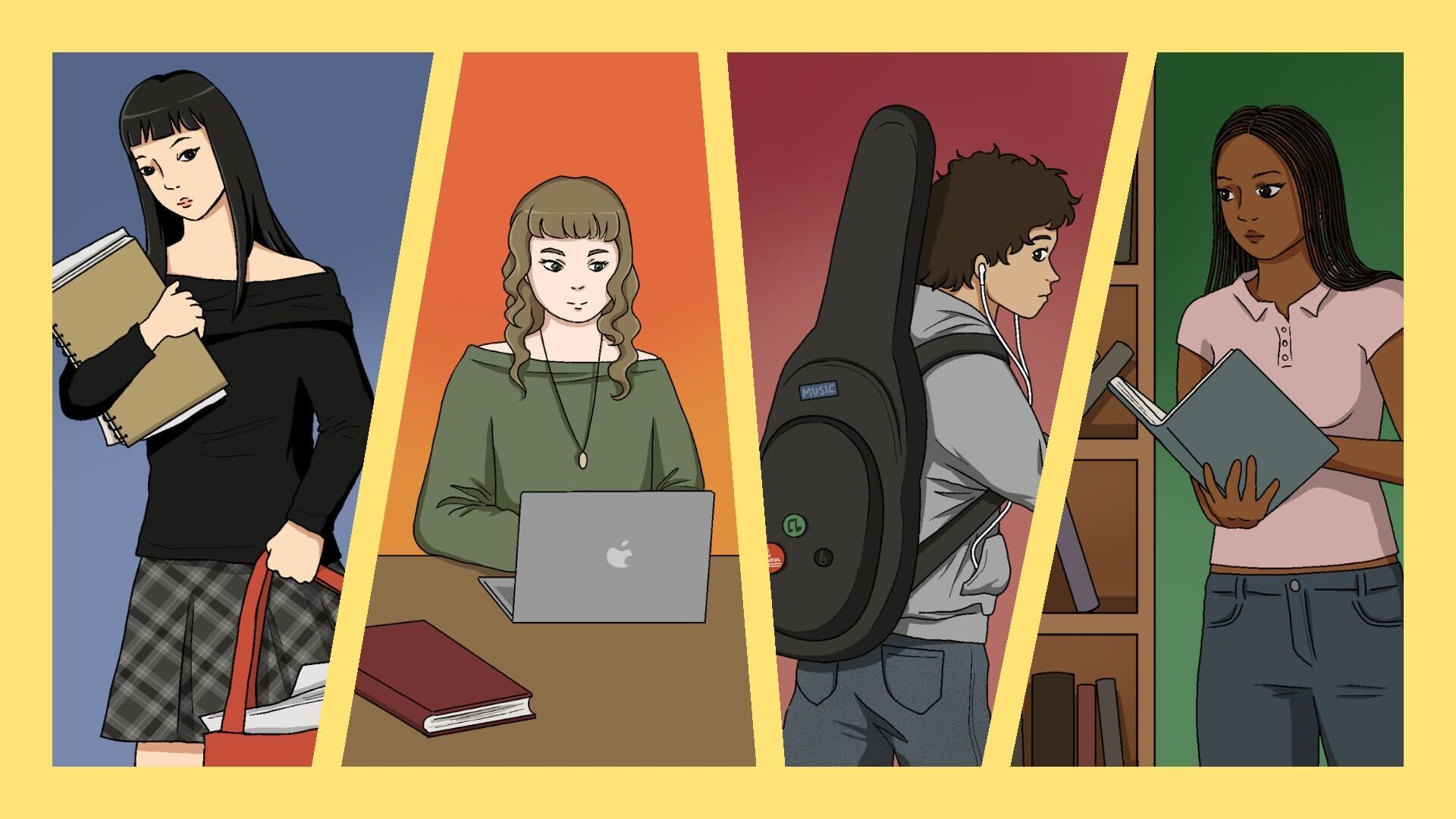
The New School’s restructuring, aimed at addressing a budget deficit last estimated by administrators to be $48 million, has moved fast. Interviews with students across all four colleges show a disconnect between the scale of the changes and student awareness, and, for those who are aware, a sense of helplessness.
Since a Nov. 17 announcement from University President Joel Towers, the school has cut or paused courses, announced a plan to merge colleges under a “two-college model,” paused PhD admissions at The New School for Social Research, and offered staff and faculty buyouts and layoffs. The university will also lay off approximately 15% of its faculty and staff this spring, according to a leaked employee email reported by the New School Free Press on March 24.
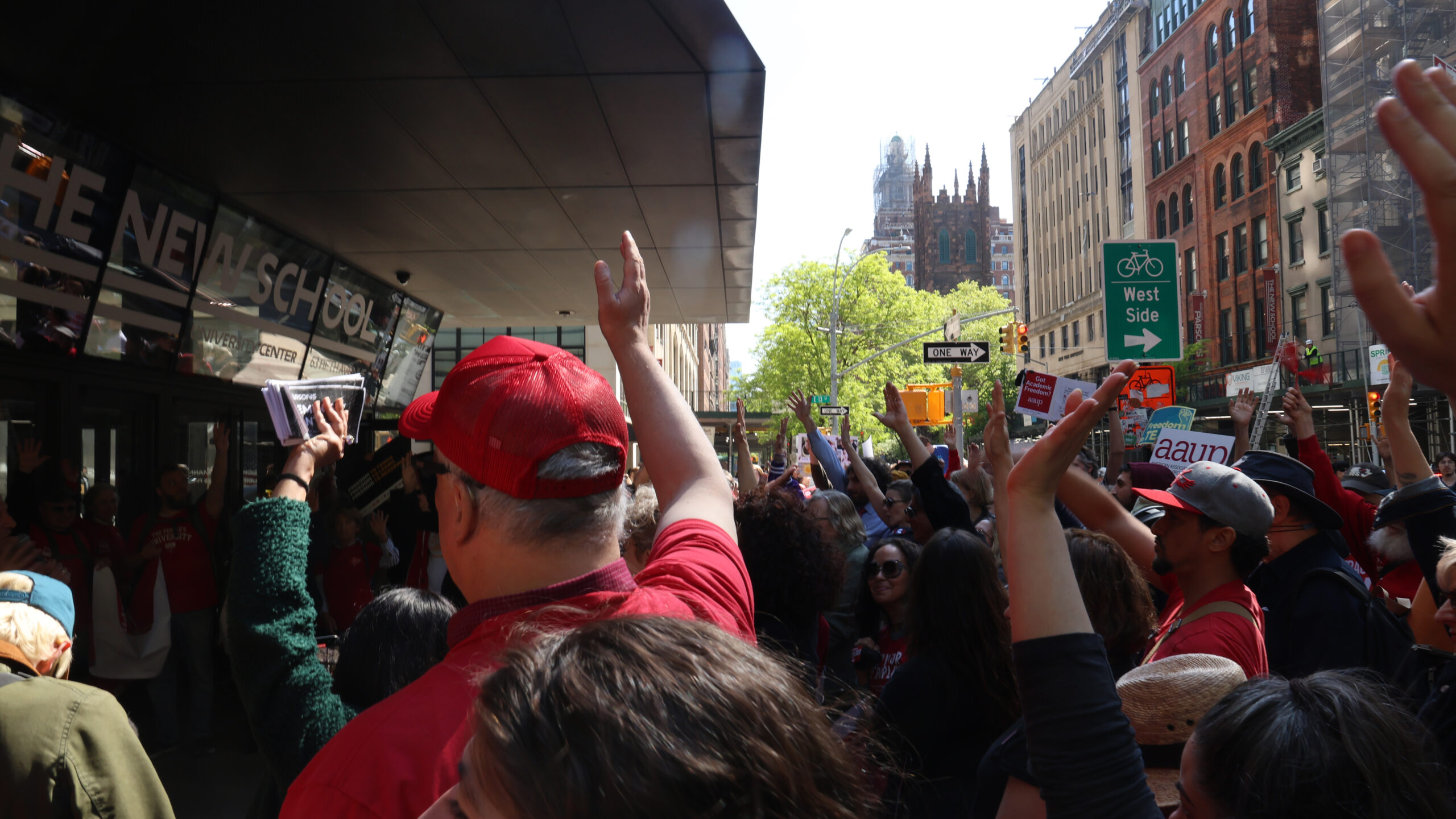
The restructuring has drawn opposition from students, faculty, and staff. More than 100 community members marched to deliver a 10-foot-long letter with over 1,600 signatures to the university president on March 4, the fourth anti-restructuring demonstration this academic year.
In addition, AAUP-TNS wrote an open letter to the Board of Trustees offering alternative strategies. At a rally on March 4, part-time faculty union organizer Raha Rafii told the New School Free Press that she had spoken to students who were “despondent about what’s happening.”
Not all colleges are being hit equally. Of the 16 minors set to be cut this fall, six belonged to Eugene Lang College of Liberal Arts. Lang also saw three majors discontinued indefinitely. Parsons School of Design, by contrast, has seen comparatively fewer changes to its degree programs so far.
However, across all four colleges, a pattern has emerged: many students don’t know the details of what is happening to their school, and those who do feel powerless to stop it.
Eugene Lang College of Liberal Arts
Mae Guttenfelder, a first-year Journalism + Design major at Lang, said her professors had spoken openly about picking up second jobs and losing colleagues. However, she said the information felt intentionally unclear. “I think it’s being kind of purposefully swept under the rug,” Guttenfelder said.
Guttenfelder also said the restructuring upset her, even though her own program appeared unaffected. “There is no Parsons without Lang, and there is no Lang without Parsons,” Guttenfelder said.
Ben Oppenheim, a second-year student at Lang, was largely unaware of the restructuring. “To be honest, I really don’t know too much about it. I think I might have heard about it from some people. I live off campus, so I don’t spend so much time in the general area,” Oppenheim said. He had not heard anything from his professors about the changes.
When told about the scope of the cuts, Oppenheim said the school appeared to be prioritizing its highest-paid administrators. “They’re more interested in maintaining large amounts of tuition and keeping it for the high-ranking people like the dean, as opposed to part-time teachers or even students,” Oppenheim said.
A report by members of the NSSR economics department found that administrative salaries grew by 4.8% annually over the decade prior to 2024, while full-time faculty salaries grew at 2.9%.
The New School for Social Research
A second-year PhD student in sociology at NSSR, who was granted anonymity due to their status as an international student, said they had seen the restructuring process begin to take place when a faculty member packed up their things after accepting an early retirement offer from TNS.
When asked if the restructuring made them consider leaving the university, they said no, because it might jeopardize their visa status. “Leaving The New School will imply renouncing my living conditions in America,” they said.
They later said they would consider switching schools more heavily if they weren’t an international student.
When asked whether the school was properly handling the process, the student said, “They call [it] restructuring to give themselves license to do changes, right, and abrupt changes and maybe unpopular ones.”
Hope Quiñones, a first-year master’s student in psychology at NSSR, said future students will miss out on the good of the school, due to programs being cut.
There is “good, good research being done here. A lot of … smart young people that have good ideas,” Quiñones said. “I’ve met so many people my age that I didn’t realize could have … such a breadth of knowledge,” which she said was her best experience at TNS.
Parsons School of Design
Parsons has been relatively shielded from restructuring cuts. Two Parsons graduate programs, three undergraduate and two graduate minor programs, and a certification program are set to be discontinued, but none of its undergraduate majors have been paused or cut. Parsons students who spoke to the NSFP knew little about restructuring and said their professors rarely mention it, if at all.
“I see emails about it, but when I actually go to read them, it’s a lot of nothing that they’re saying,” Shayla Cannon, a third-year fashion design major at Parsons, said. “That’s probably why I don’t really know as much about it.”
Cannon has seen people online discuss restructuring and thinks it may deter future students from committing. “I saw a TikTok about someone [asking], ‘Should I go to Parsons?’ and all the comments [said] ‘don’t come here, everything’s wrong’,” Cannon said.
Clara Eis, a first-year architecture major at Parsons, said a friend was pulled out of Lang by her parents over fears about where restructuring was headed. “If I knew about this, I would be really hesitant, like in reconsidering, because if you don’t know where your education is going to go,” Eis said.
“There’s a lot more people in admin, and they get a lot more money than they should,” Eis said. “I feel like there’s a lot of stuff that could be restructuring that isn’t stuff that’s vital to people’s degrees.”
College of Performing Arts
Hannah Heneden, a first-year master’s student in arts management and entrepreneurship at CoPA, did not know her program had been cut until the head of the program came to class. “I found out winter break. I was shook. I was like, ‘okay, so this kind of defeats the purpose of why I came,’” Heneden said.
She described questioning whether her degree was still worth pursuing. “Is my degree still relevant? Should I transfer?” Heneden said. Since that conversation, her professors have said nothing more.
“We talked about it last semester, and then we turned to a new chapter in the book and continued our curriculum. We don’t even talk about it now,” Heneden said.
Nyliram Garcia, a third-year drama student at CoPA, said her major has not been directly affected. However, a recent email announcing a 3.5% tuition increase worried her.
“I’ve been worrying about financial aid, like, throughout my entire time here,” Garcia said. Garcia said she believes struggling students will transfer because they can’t afford to stay, which would further drain the tuition revenue the school depends on. “It’s a cycle or like, domino effect,” Garcia said.
Garcia learned about the restructuring not from the university but from coworkers at the campus food pantry. When she was asked what she planned to do in response to the restructuring, she said, “I don’t know what to do.”
The changes are not done yet. Full-time faculty and staff will receive layoff notifications by June 1, according to a leaked email, with staff separations taking effect June 12. The university expects enrollment to drop by another 500 students next semester, even as administrators project a balanced budget by fiscal year 2028.

Leave a Reply