
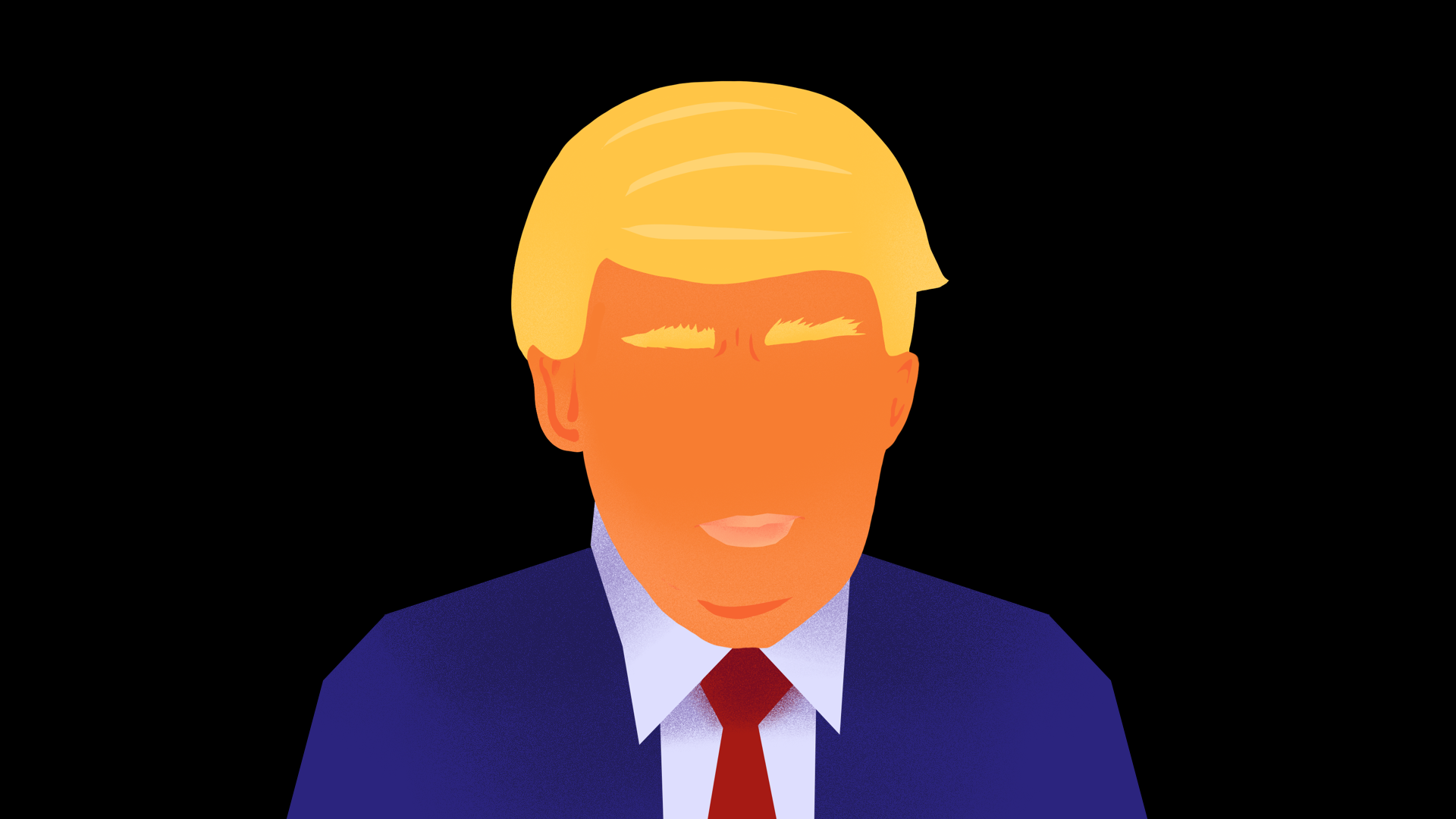
As of Nov. 10, Donald Trump and his administration have taken 1734 actions, 212 of which were executive orders. He has particularly targeted areas of higher education, such as student visas; loans; diversity, equity, and inclusion (DEI); affirmative action; and university funding.
Those who are seeing the most impacts are international students, minorities, and various student loan programs such as Grad PLUS. Though there is a lengthy process that an executive order must go through before getting signed into law, changes are already underway.
“University leaders keep ceding ground in hopes of appeasing an unappeasable threat. Every inch feeds a decades-long right-wing agenda,” law professors Jonathan Feingold and Veena Dubal wrote in Academe magazine.
A memorandum issued by the U.S. Office of Management and Budget directed federal agencies to temporarily pause the use of federal financial assistance and the coordination of activities that violate executive orders, including “financial assistance for foreign aid, nongovernmental organizations, DEI, woke gender ideology, and the Green New Deal.”
“In the meantime, colleges and universities will continue to face efforts to cut their funding,” Samuel Bagenstos, a former member of the general counsel at the U.S. Department of Health and Human Services during the Biden administration, said in an article for Academe magazine about the Trump administration’s assault on federal grants.
It’s a part of what Bagenstos calls “a systematic effort by the second Trump administration to attack the independent institutions that could provide some check on Trump’s illegal and disastrous behavior, and to intimidate those institutions into abandoning speech and programming that the administration disfavors.”
“Instead of trying to lay low in the vain hope of escaping the administration’s wrath,” he said, “institutions of higher education need to fight back in the courts and to make an aggressive public case for the value of our research and teaching.”
According to the “Trump Action Tracker,” a continuously-updated dataset created by Professor Christina Pagel, out of the 1734 actions he has taken since being reelected, 153 have been attacks on education, 345 have weakened civil rights, and 473 have actively undermined democracy.
Here’s what you should know:
Federal aid and grants
Ever since the creation of the U.S. Department of Education by Jimmy Carter and the U.S. Congress in 1979, Republicans have been pushing for its complete removal.
President Donald Trump signed an executive order on March 20 to have the U.S. Department of Education dismantled. Though dismantling the U.S. Department of Education is a long and complex process, the signing of the executive order moved the Trump administration one step closer to that goal.
“This executive order is nothing more than an illegal overreach of executive power designed to
un-employ dedicated civil servants and decimate the critical services they provide to millions of
Americans across this country,” American Federation of Government Employees Local 252 President Sheria Smith said in a statement in response to the dismantling.
Millions of students around the country rely on federal aid distributed by the U.S. Department of Education. If the department’s dismantling were to happen, federal student aid would most likely be handed off to other lenders, which could increase payments for borrowers.
Grad PLUS Loans, a specific loan for students looking to attend graduate school, were eliminated on July 4 as Trump’s One Big Beautiful Bill was signed into law.
The Trump administration has been working to halt funding for grants that serve institutions with diverse populations. In August, the Trump administration announced that they would not be defending grant programs that serve institutions with high numbers of Latino students.
Similarly, in September, the Trump administration announced that the U.S. Department of Education would no longer be allowed to fund Minority-Serving Institutions’ grant programs, which receive federal funding from the U.S. Department of Education and the National Science Foundation under the Higher Education Act. The stated reasoning was that this funding violates the law, and does not align with the administration’s commitment to end discrimination in the United States.
Not only is this untrue, but it takes financial support away from thousands of minorities who were benefiting from these grant programs. A total of $350 million is allocated to these programs yearly. It has not been disclosed what this large sum will be used for in the future.
International students and visas
In 2024, there were over 1.1 million international students in the United States continuing their education at universities. At The New School alone, international students make up 36% of the student population.
On Sept. 19, Trump signed a proclamation that changed the conditions of eligibility for those applying for H-1B visas, meaning they now require a $100,000 payment.
Trump also announced a proposed rule that will limit the amount of time an international student can spend in the United States on their visa. He expressed that this was to combat ongoing “visa abuse.” There is currently a proposal moving through the U.S. Department of Homeland Security that would revoke a rule that allows students to stay until they complete their degree.
Both of these executive orders directly impact international students, as many students often stay in the United States post-graduation or pursue other forms of higher education. These decisions could prohibit them from doing so.
Diversity, equity, and inclusion
Trump signed a presidential action entitled “Ending Illegal Discrimination and Restoring Merit-Mased Opportunity,” which prevents federal contractors from considering race, color, sex, sexual preference, religion, or national origin in their employment, procurement, or contracting practices “in ways that violate the nation’s civil rights laws.”
The order also asks the Office of Federal Contract Compliance Programs to “immediately cease … promoting ‘diversity,’” and “[hold] federal contractors and subcontractors responsible for taking ‘affirmative action.’”
President Trump signed the “Defending Women from Gender Ideology Extremism and Restoring Biological Truth to the Federal Government” executive order on Jan. 20. This cemented the administration’s invalidation of transgender people by rejecting the “false claim that males can identify as and thus become women and vice versa.”
“When administering or enforcing sex-based distinctions, every agency and all federal employees acting in an official capacity on behalf of their agency shall use the term ‘sex’ and not ‘gender,’” the executive order said, defining “gender identity” as an “internal and subjective sense of self … that does not provide a meaningful basis for identification.” Agencies are directed to take steps to eliminate the use of the term and to implement regulations in compliance with this order.
Trump also signed an executive order revoking over 70 previous executive orders having to do with DEI, explaining that “the injection of ‘diversity, equity, and inclusion’ into our institutions has corrupted them by replacing hard work, merit, and equality with a divisive and dangerous preferential hierarchy.”
‘We’ve slid into some form of authoritarianism’
Trump has managed to push his policy at an alarming speed. The Bright Line Watch survey, in which over 500 U.S.-based political scientists and professors rated American democracy on a scale from 0-100, saw the expert rating drop from 67 to 53 in the past year.
“We’ve slid into some form of authoritarianism,” professor of government at Harvard Steven Levitsky told NPR. “It is relatively mild compared to some others. It is certainly reversible, but we are no longer living in a liberal democracy.”










Leave a Reply