
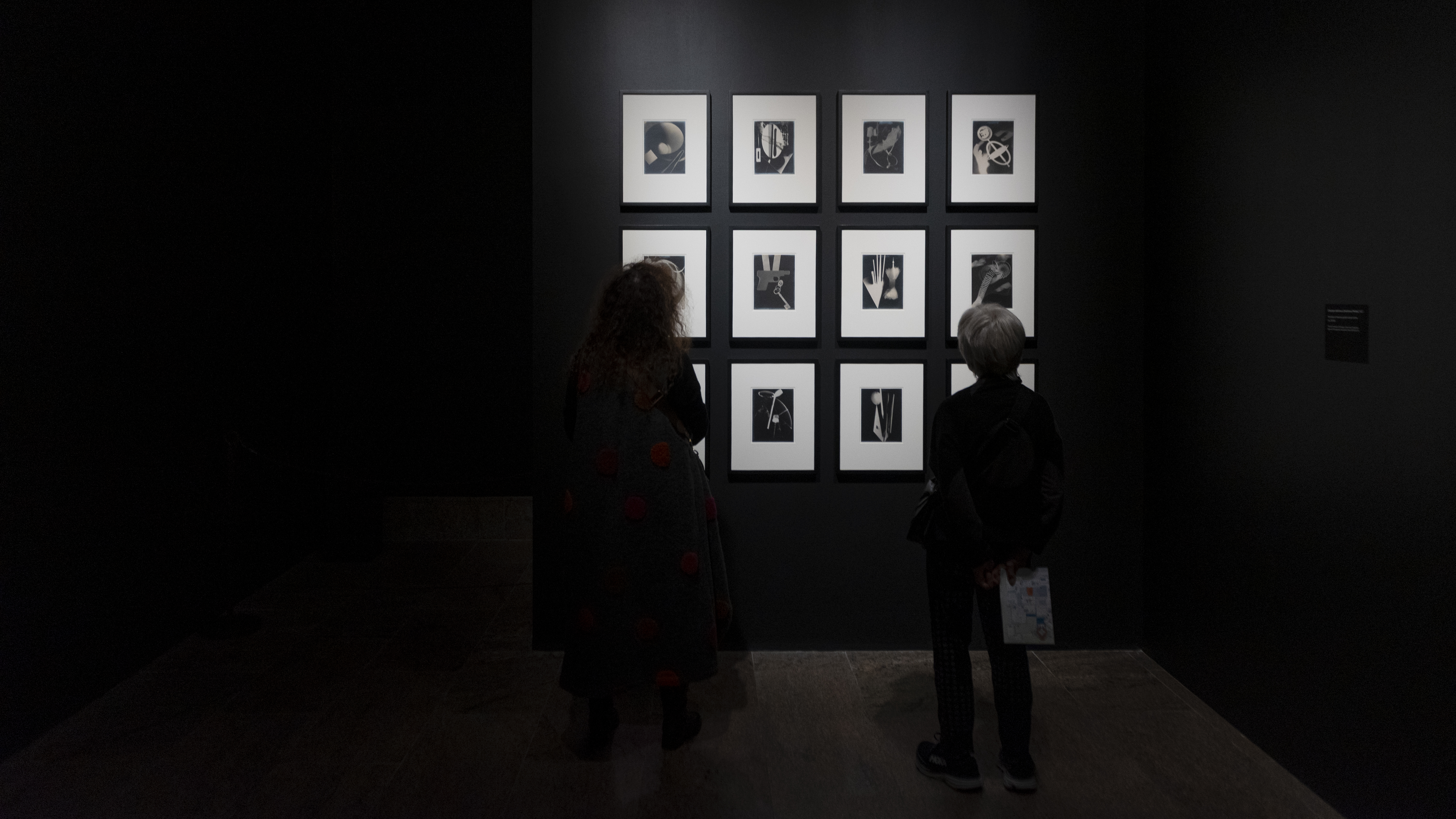
At the Metropolitan Museum of Art, When Objects Dream, on view through Feb. 20, traces the artist’s restless imagination. Open since Sep. 14, the exhibition invites viewers to change their perspectives on art and shape as we know them, and surrender to Ray’s unique angle on the world.
Stepping into the Man Ray exhibition at the Metropolitan Museum of Art in New York is like stepping into a darkroom in the early 20th century. The dim lights, the silent environment, and the muted colors dictate a very specific, almost overbearing atmosphere. Open since Sep. 14 and until Feb. 1, 2026, the exhibition follows the “pay-what-you-wish” formula for New York residents and students, which means New Schoolers can admire Ray’s work for as little as a penny. Tourists and art lovers move silently about the rooms, scattered throughout the exhibition, trying, often unsuccessfully, to focus on and make sense of Ray’s surrealist works. The rooms are small, but dense, dedicated to enclosing the artist’s works on a few walls, and distributed as a maze, suggesting the viewer get lost in their madness.
Like most artists of the post-World War I period, Ray — born Emmanuel Radnitzky in 1890 — drew inspiration from Dada and Surrealism. Both art movements aimed to reject logic and elevate chaos as the only way to deal with the complexity and darkness of modern life and warfare in the first half of the 20th century. Similar to artists like Max Ernst, Joan Miro, René Magritte, and Salvador Dalí, the macabre shadow of the human soul, tested by war, looms large over Ray’s compositions. The works move through shades of black, white, and gray, rarely embracing brighter colors.
Ray’s patchworks and collages originated from his mother, who worked as a tailor and was able to provide clothes for the family. Russian immigrants of Jewish origin, Ray’s parents, Melach “Max” Radnitzky and Manya “Minnie” Radnitzky, moved the family to Philadelphia near the end of the nineteenth century, where Ray was born. They soon moved to Brooklyn, where Ray spent his childhood and adolescence. Growing up, Emmanuel started sketching and painting, and fell so much in love with it that he decided to turn down an architecture scholarship to pursue the painting profession.
In 1908, at the age of eighteen, he found work as a draftsman and graphic artist, and four years later began signing his works with the pseudonym “Man Ray.” He purchased his first camera in 1914 to photograph his artwork, and just a year later, he was introduced to Marcel Duchamp, an American artist and sculptor. A beautiful friendship and collaboration developed between the two, which would shape Ray’s artistic style and push him to embrace the absurdist movement of Dadaism.
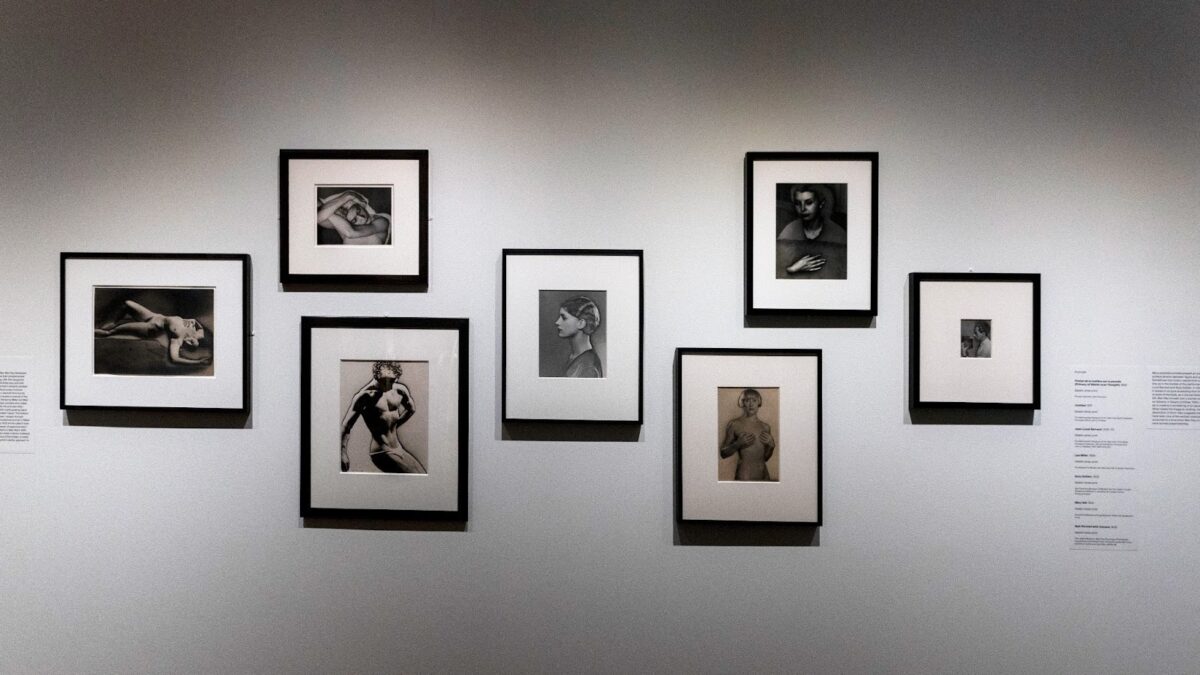
Although the artist’s relationship with his parents was turbulent — they didn’t approve of their son’s passion for art — Ray chose to use techniques related to his mother’s work as a seamstress. Indeed, as a self-taught artist, Ray’s versatility is astonishing, likely linked to the artist’s profound connection with the prolific artistic scene of New York and his wildest, most creative side. Marcel Duchamp regularly influenced Ray’s art through his avant-garde style, as did Lee Miller, American photojournalist and Ray’s first student and lover. The two ended up living together in Paris from 1929 to 1932, and Miller bears her face in the last photograph of Ray’s exhibition.
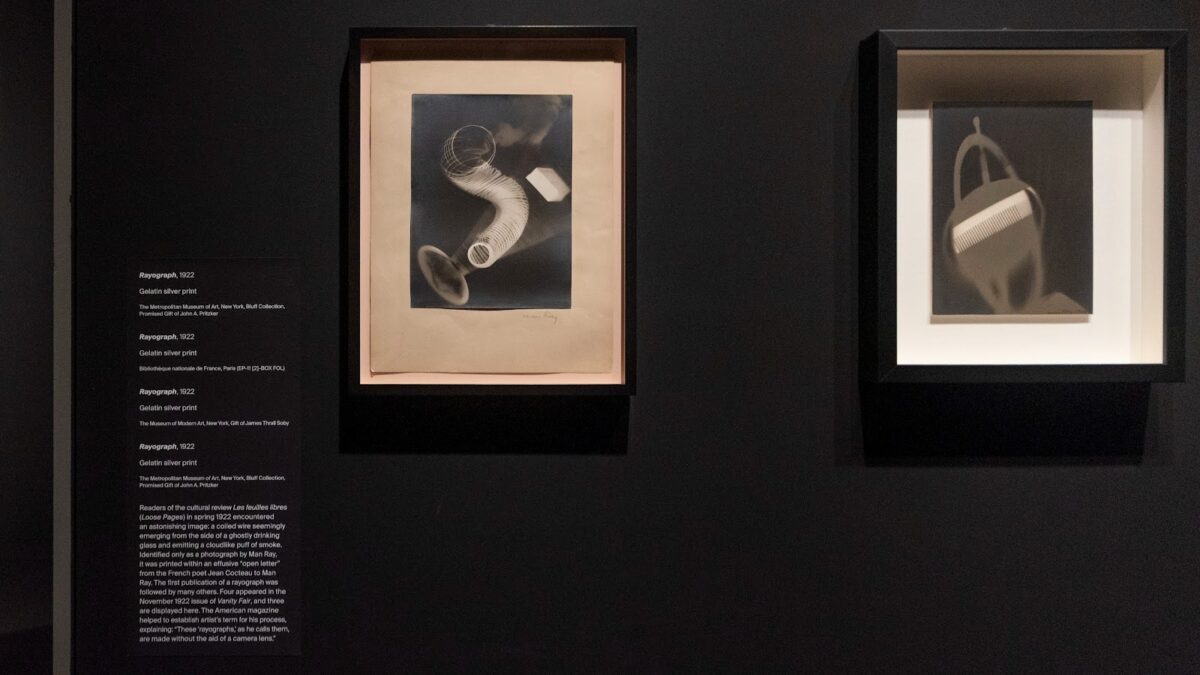
There’s something extremely volatile in Ray’s work, a constant contradiction; he mocks the viewer, yet simultaneously teaches them a harsh lesson in the marvelous duality of Surrealism, balancing absolute chaos and emotional depth. His works feel touching and tasteful, with an embarrassing modernity, as if, almost a century later, we still can’t quite keep up with the artist. He overlaps shapes and silhouettes in his photographs, creating unknown textures, all while playing with collages and materials. Among his favorites to work with, we can observe glass, gelatin silver paper, acrylics, and metals. Ray works with all kinds of media, paintings, sculptures, photographs, and even some invented by the artist himself, such as “space writing,” which includes light rays trajectories in a dark room.
In the exhibition, nothing is exactly as it seems. At first glance, we recognise pictures and objects familiar to us, but when we get closer, they are always paired with clashing elements. An iron with spikes in the center (“Cadeau,” 1921), a woman looking languidly ahead and weeping pearls (“Les Larmes,” 1932), and images that intersect and fold over each other, creating shadows and confusing silhouettes.
In almost all of his works, there is a sign of sarcasm that suggests profound emotional intelligence; he doesn’t want to make fun of the audience, he wants to guide them in seeing life from a different perspective, one that they’re not familiar with. His rayographs, for example, which depict everyday objects overlapped, appear as random compositions, but are aimed at revealing the dreams and visions of Surrealist poets and writers (such as Dalí, Borges, or Abe) with the overlining of shapes and the objects’ silhouettes becoming blurry.
In this riot of browns, blurry subjects, and collages, the real star of the event is a work that was displayed at the end of the exhibition, facing the exit: a portrait of Lee Miller, taken in 1929. Her hair is neatly tucked behind her ear, the darker lines of her profile precisely delineating where the human ends and the world begins.
There is something feminine, subtle, and wild in Miller’s expression, a distant gaze and a tilt of the lips that imitates neither a grimace nor a grin. A true Mona Lisa smile, collected and sly, impossible to read; like a secret exchanged between the subject and the artist himself, completely inaccessible to the public.
When walking through the exhibition, we notice an evolution in the artist’s character: after having met Man Ray, the artist, the visionary, and the provocateur, shrouded in mystery and genius, it is only near the exit door that we finally meet Emmanuel Radnitzky, and his attention to the human subject, through his vision of Lee Miller and her photograph.
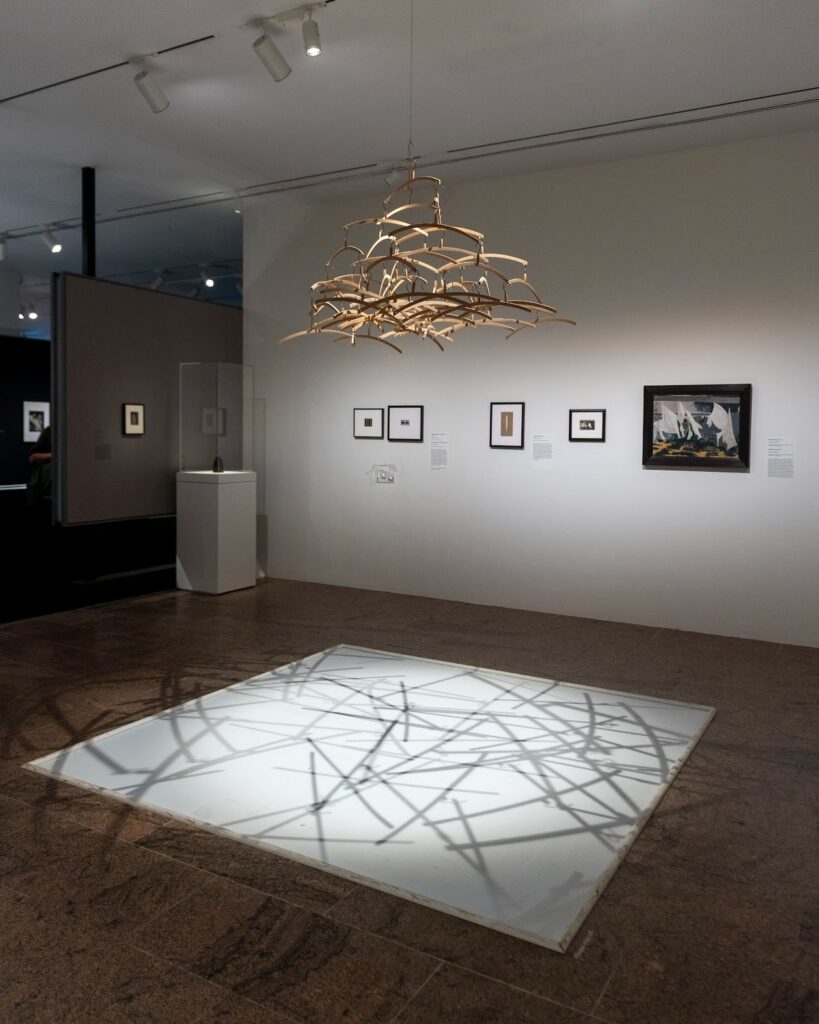
Whether you’re trying to make sense of his twisted world or simply get lost in his madness, one can find comfort in the dissonance of his works. It’s no coincidence that the exhibition is called … When Objects Dream. It allows us to escape reality and access something dreamlike — true, uncomfortable, and at times delicate. The rawness of these dreams led Ray to find a creative outlet in times of war and crisis, a world that was trying to restructure and rebuild itself from the 1920s to the ‘50s. A world that doesn’t sound too different from ours, but perhaps Ray shows us that we can find solace in the uneasiness of reality by focusing on our most human side.







Leave a Reply